



Figured Mahogany Bureau
A figured mahogany bureau brings rich timber grain and private writing space into a room, offering both a practical desk and a handsome storage cabinet.
Figured Mahogany Bureau
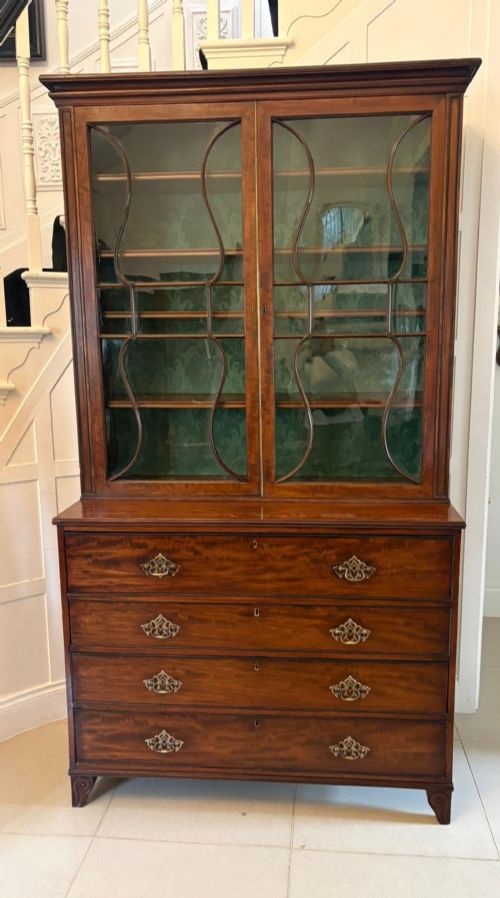
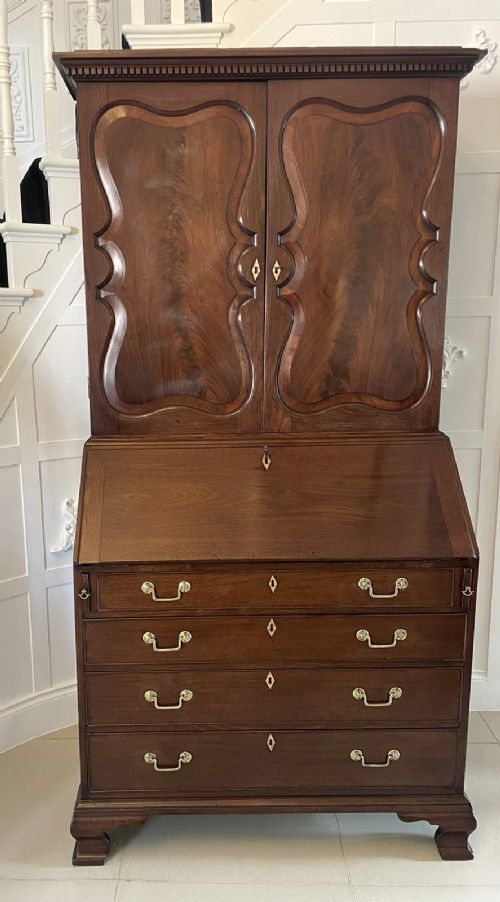
When you search for a figured mahogany bureau, you encounter handsome timber furniture designed for writing and storage across the eighteenth and nineteenth centuries. The pieces on this page span several distinct eras, stretching from George II and mid eighteenth century examples through Regency and Victorian periods.
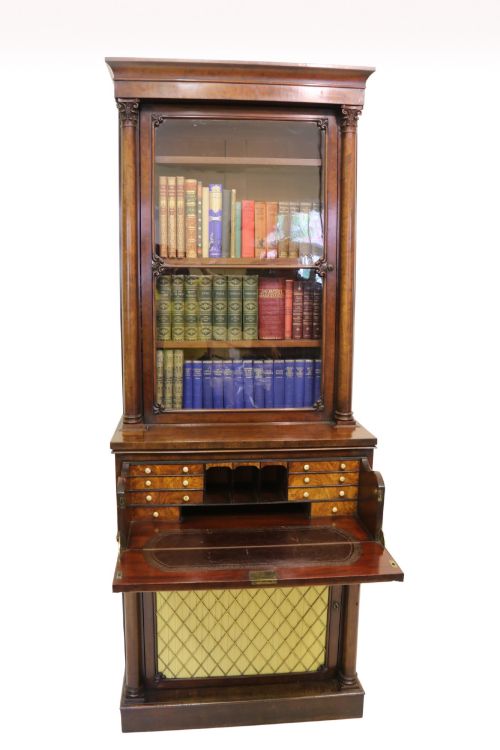
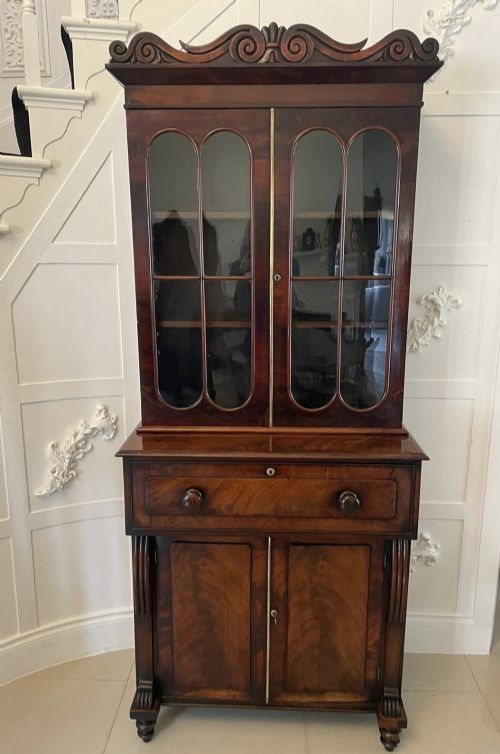
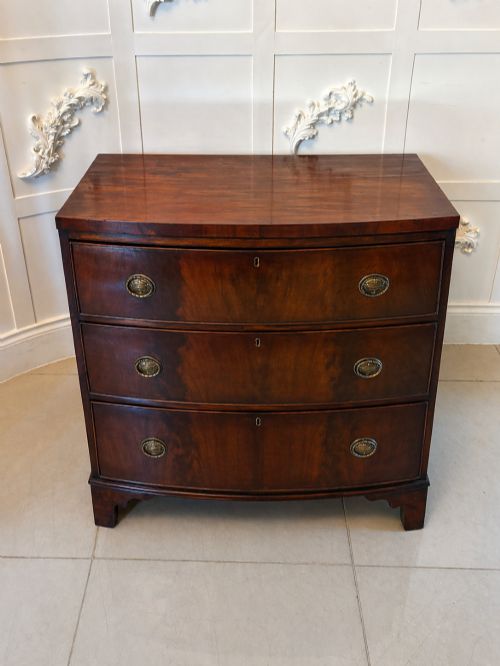
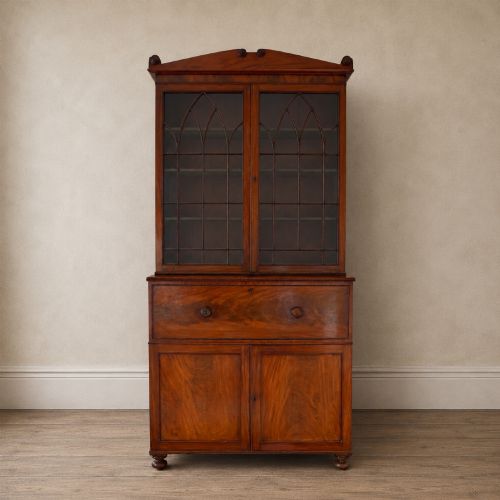
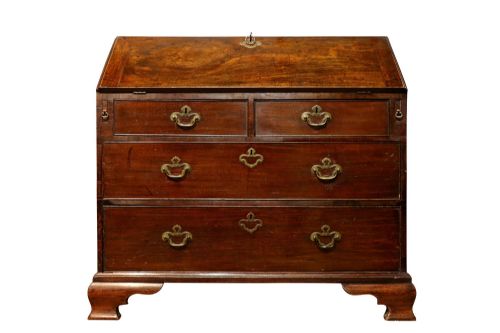
The selection includes tall bureau bookcases, secretaire bookcases with glazed doors and fitted interiors, bow front chests of drawers, and standalone desks. Most common among these are the tall secretaire bookcases and desks, which showcase the characteristic patterned grain of the timber.
Origins range across Georgian, Regency, Grand Regency, and Victorian styles, reflecting how cabinet makers adapted the form over generations. Whether you examine a small Regency piece or a mid eighteenth century bureau, the core function remains a drop front or sliding drawer concealing a fitted writing compartment.
Materials and construction
Cabinet makers relied on rich mahogany timber selected specifically for its dramatic figure, pairing the wood with brass handles and sometimes glass for upper bookcase doors. Interiors frequently incorporated fitted compartments to organise letters and writing materials behind the main writing flap.
Construction techniques evolved from the mid eighteenth century into the Victorian era, incorporating graduated drawers and tailored structural frames to support heavy books and desk fittings. Surviving examples demonstrate how craftsmen matched timber veneers to create symmetrical grain patterns across the fall front and drawer facades.
Figured Mahogany Bureau Retail Price Guide 2026
Typical asking prices for figured mahogany bureau among the pieces listed under this phrase on Sellingantiques today, from the lower quarter to the upper quarter. They describe what is for sale here now, not the wider market.
One cheerful Victorian desk waits patiently to guard your modern laptop inside a cabinet built long before electricity.
Assessing quality and character
Quality rests primarily in the vibrancy of the timber grain and the crispness of the cabinet work rather than any single decorative flourish. Pieces with exceptional figure in the mahogany veneer and well organised fitted interiors stand distinctly apart from simpler iterations.
Proportion and scale also dictate distinction, particularly in smaller Regency pieces where compact dimensions require meticulous carpentry. The integration of original brass hardware and the preservation of the fitted interior drawers further elevate the standing of any given bureau.
Gillows of Lancaster
The Figured Mahogany Bureau Glossary
- Figured mahogany
- Timber showing distinctive, decorative patterns in the grain such as flame or curl. This wood was deliberately chosen for the most prominent exterior surfaces.
- Secretaire bookcase
- A tall cabinet combining a writing drawer or drop front desk with upper shelving enclosed by doors. These units served dual purposes for study and storage.
- Graduated drawers
- A set of drawers decreasing in depth from bottom to top. This arrangement creates a balanced visual weight across the piece.
- Fitted interior
- The arrangement of small drawers, pigeonholes, and compartments concealed behind the writing flap. It provided secure storage for correspondence and valuables.
Figured Mahogany Bureau: Frequently Asked Questions
What is a figured mahogany bureau?
A figured mahogany bureau is a writing desk featuring timber selected for its decorative grain pattern, often combined with drawers or bookcase shelving. These items date primarily from the eighteenth and nineteenth centuries.
They function as both a private writing space and a storage cabinet for papers, books, or household linen.
How do I tell a Georgian bureau from a Victorian one?
Georgian pieces often display restrained classical proportions and fine cabinet work associated with periods like George II or the mid eighteenth century. Victorian examples from later decades tend to show different structural proportions and slightly altered handle styles.
Examining the internal construction and secondary woods helps confirm the exact period of manufacture.
Where should I place a bureau in my home?
A bureau suits studies, living rooms, or hallways where its drop front can remain closed to conceal writing materials when not in use. The compact footprint of smaller Regency models makes them adaptable to tighter corners.
Keep the timber away from direct sunlight and strong heat sources to protect the polished mahogany surface.
What does a fitted interior include?
The fitted interior typically contains small pigeonholes for sorting letters alongside miniature drawers for stamps and nibs. Some designs feature a central locked cupboard door flanked by secret compartments.
This hidden workspace sits directly behind the fall front flap or inside the top drawer of a secretaire.