



Figural Shelf Clock
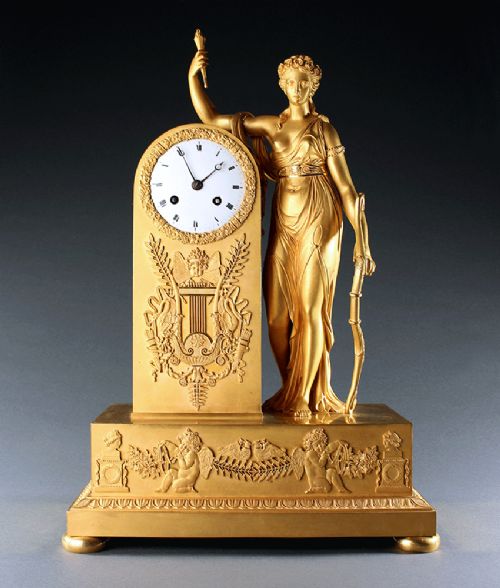
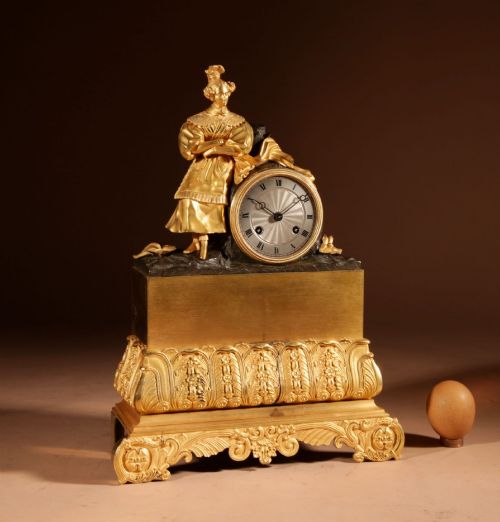
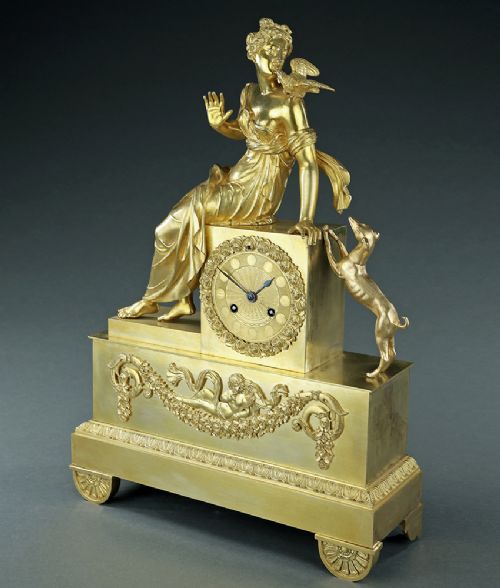
A figural shelf clock is a sculptural timepiece that anchors a room, bringing neoclassical figures, romantic characters or mythological subjects directly to your mantel.
Figural Shelf Clock
A figural shelf clock combines a mechanical timekeeper with expressive cast or carved subjects, often placing human or allegorical figures directly beside or above the dial. When you search for a figural shelf clock, you encounter works produced primarily during the nineteenth century, ranging from Regency and Victorian periods to French Empire, Second Empire, and Rococo Revival styles.
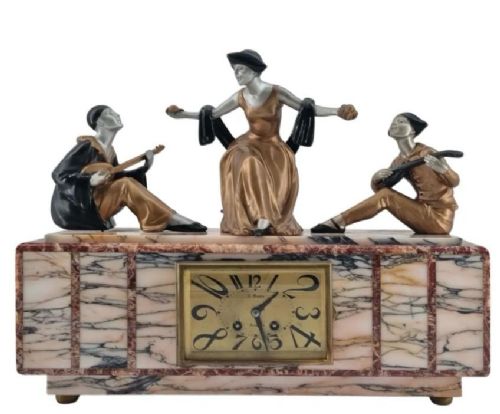
The most frequent examples on this page are French mantel clocks cast in gilt bronze, ormolu, and spelter, frequently incorporating marble bases, enamel dials, and porcelain panels. Makers such as Japy Freres, P.H. Mourey, and Gillion produced these architectural and sculptural timepieces, which often depict specific narratives like love and fidelity, or theatrical characters such as Pierrot and Columbine.
Beyond the predominant nineteenth-century French output, you also find examples spanning the Regency era and the later Art Nouveau and Art Deco movements. These pieces function as decorative sculptures that happen to tell the time, making them central ornaments for grand fireplaces, sideboards, and display shelves.
How They Were Made
These clocks rely heavily on metal casting techniques, utilising gilt bronze, ormolu, brass, and spelter to shape intricate sculptural figures and decorative mounts. Artisans chased and gilded these metal components by hand to achieve rich contrasts between bright highlights and shadowed recesses.
Many examples combine cast metals with carved white marble, slate, or glass enclosures, creating heavy, solid structures designed to sit steadily on a shelf. Dials were frequently constructed from enamel with painted numerals, while internal movements utilised brass gear trains, anchor escapements, and pendulum regulation.
Figural Shelf Clock Retail Price Guide 2026
Typical asking prices for figural shelf clock among the pieces listed under this phrase on Sellingantiques today, from the lower quarter to the upper quarter. They describe what is for sale here now, not the wider market.
Pierrot and Columbine occasionally freeze mid-romance on the mantel, watched over by a remarkably stoic bronze dog.
What Varies in Quality
The standard of a figural shelf clock rests largely on the crispness and depth of the metal casting and the precision of the hand-chasing. Superior examples display sharply defined facial expressions, detailed drapery, and deeply articulated foliage on the bronze or ormolu mounts, whereas lesser pieces show softened details from worn moulds.
Material selection also dictates the hierarchy of these objects, with solid gilt bronze and heavy statuary marble commanding greater artisan skill than lighter spelter or gilt metal alternatives. Furthermore, the presence of signed movements from respected makers like Japy Freres elevates a clock above unsigned workshop production.
Japy Freres·P.H. Mourey·Gillion·Bently & Beck London·Sega
The Figural Shelf Clock Glossary
- Ormolu
- Finely ground high-carat gold applied to a bronze base using a mercury amalgamation technique. This historic process gives the metal a warm, durable finish characteristic of fine French decorative arts.
- Spelter
- A zinc alloy used as a less costly alternative to bronze for casting sculptural figures. It was frequently painted or electroplated to imitate bronze or gilt finishes.
- Fusee
- A conical pulley used in spring-driven clocks to equalise the torque of the mainspring as it unwinds. This mechanism helps the clock maintain more consistent timekeeping.
- Chasing
- The art of manually refining and detailing a metal casting using small steel punches and hammers. Master chasers added texture, hair, and clothing details after the metal came out of the mould.
- Enamel
- A glassy substance fused to a metal dial substrate through high-temperature firing. It provides a smooth, bright white surface for painted numerals and chapter rings.
Figural Shelf Clock: Frequently Asked Questions
Where should I place a figural shelf clock?
These clocks are naturally suited for prominent flat surfaces such as mantelpieces, grand sideboards, or large bookcases where their sculptural forms can be appreciated from multiple angles. Because many of them incorporate heavy materials like marble and cast bronze, ensure the supporting shelf is deep and sturdy enough to bear the weight.
Keep them away from direct heat sources like active fireplaces and out of rooms with excessive dampness, which can harm both the delicate metal gilding and the brass internal movements over time.
How do I tell an Empire clock from a Rococo Revival clock?
Empire clocks, dating from the early nineteenth century, favor strict symmetry, classical military or mythological motifs, architectural columns, and dark patinated bronzes offset by bright ormolu mounts. They draw inspiration from ancient Greece and Rome.
In contrast, Rococo Revival clocks feature asymmetrical forms, flowing C-scrolls, naturalistic floral sprays, and playful sculptural subjects like putti or romantic couples. Their outlines are much more fluid and organic than the restrained geometry of the Empire style.
Can these antique clocks keep accurate time?
Mechanical clocks from the nineteenth century can keep good time if they have been properly serviced and adjusted, though they will rarely match the precision of modern quartz timepieces. Variations in household temperature and humidity can cause them to gain or lose a few minutes over the course of a week.
Regular cleaning and oiling by a qualified horologist are essential to keep the gear trains and escapements functioning smoothly across decades of daily use.