


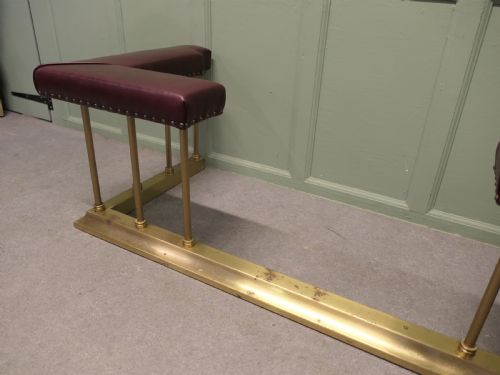


Fender Seat
A fender seat bridges the gap between hearthside warmth and practical seating, offering a low, upholstered perch directly around the fireplace.
Fender Seat
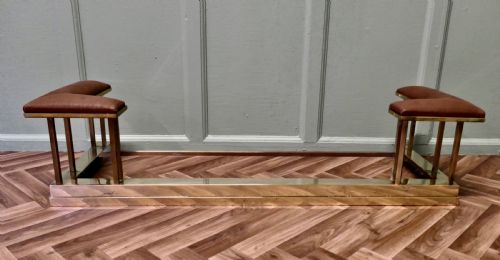
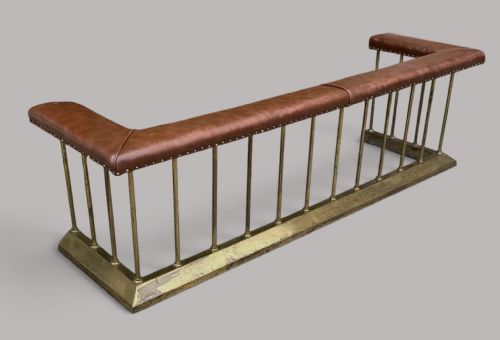
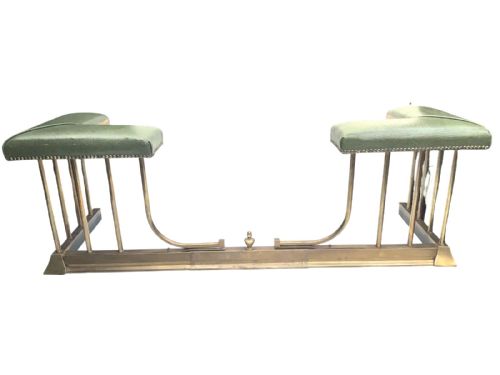
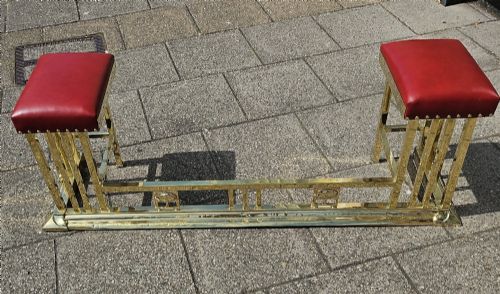
A fender seat, frequently encountered as a club fender, combines a protective metal hearth barrier with padded seats upholstered in leather. These pieces emerge predominantly from the nineteenth and early twentieth centuries, spanning Victorian, Edwardian, and Art Deco periods.
The form rests directly on the floor around the fireplace opening, allowing occupants to sit close to the fire while keeping stray embers contained. Examples range from simple brass frames to substantial designs in wrought iron, oak, and mahogany.
How they were made
Makers constructed the structural framework using tubular brass, wrought iron, or steel, sometimes combining copper accents or carved timber bases in oak and mahogany. These metals provide the rigidity required to withstand heat and daily weight.
The top rails feature cushioned pads upholstered in leather, secured with traditional studwork. Adjustability and extension mechanisms appear in specific workshop designs to fit varying hearth dimensions.
Fender Seat Retail Price Guide 2026
Typical asking prices for fender seat among the pieces listed under this phrase on Sellingantiques today, from the lower quarter to the upper quarter. They describe what is for sale here now, not the wider market.
Early twentieth-century makers thoughtfully built sliding extension bars into certain designs, ensuring nobody had to leave their seat behind during a house move.
What varies in quality
Substantial weight and gauge of the metal framework separate standard production from superior pieces, alongside the quality of the timber bases and joinery. Thicker brass tubing and heavy ironwork endure decades of use without twisting.
The grade of leather upholstery and the execution of the buttoning or studding indicate the original workshop's standing. Finer examples display meticulous metal jointing and well-preserved patination on both the brass and the hide.
William Birch
The Fender Seat Glossary
- Club fender
- A low fireside seat built around a metal hearth surround. It provides padded seating parallel to the fireplace opening.
- Hearth
- The floor area immediately in front of a fireplace. Fender seats enclose this space to protect the room from sparks.
- Patina
- The surface sheen and colour developed through age, handling, and polishing. It indicates the natural oxidation of brass and leather over time.
- Studwork
- The decorative brass nails used to secure leather upholstery to the seat frame. They trace the perimeter of the cushion.
Fender Seat: Frequently Asked Questions
How do I measure for a fender seat?
Measure the width, depth, and height of your fireplace hearth to ensure the internal dimensions of the fender clear the stone surround.
Account for clearance around the fire basket and check whether the design incorporates an adjustable frame for precise fitting.
Were fender seats used for sitting?
These pieces served as functional seats for warming oneself close to the fire in large reception rooms and halls.
The low height kept occupants beneath the smoke drift and close to the radiant heat of the hearth.
How do I care for the leather?
Clean the leather upholstery with a soft, dry cloth and apply appropriate leather balms periodically to prevent cracking.
Avoid placing the fender seat too close to active extreme heat sources that might dry out the hide.
What metal types are most common?
Brass remains the predominant metal seen in these pieces, frequently paired with tan or green leather pads.
Wrought iron, steel, oak, and mahogany also appear across nineteenth and twentieth-century examples.