




Featherbanded Chest
A featherbanded chest brings rich walnut timber and precise banded inlay into a room, offering both history and practical storage.
Featherbanded Chest
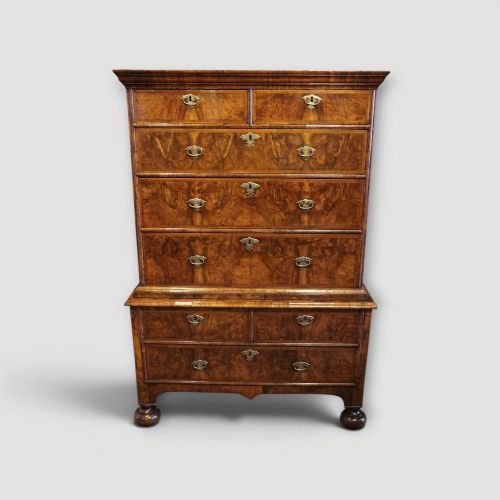
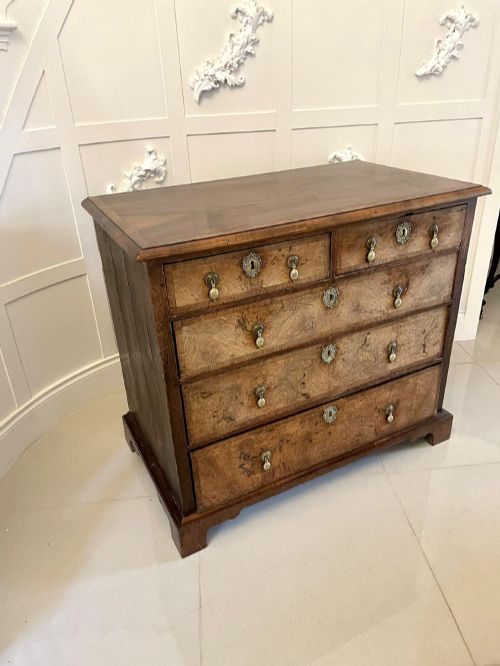
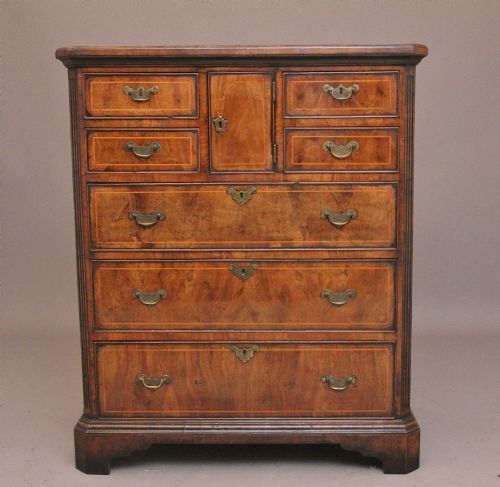
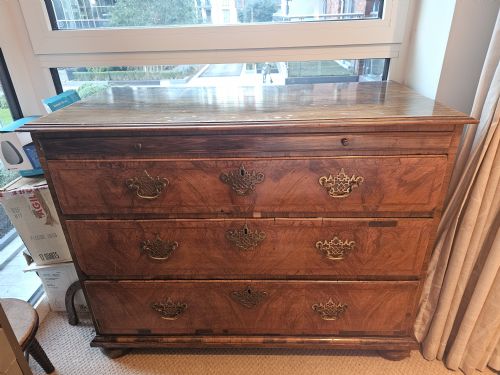
When you search for a featherbanded chest, you encounter centuries-old case furniture defined by distinctive banding around the drawer edges and surfaces. These pieces predominantly date from the eighteenth century, spanning the reigns of William and Mary, Queen Anne, and the Georges.
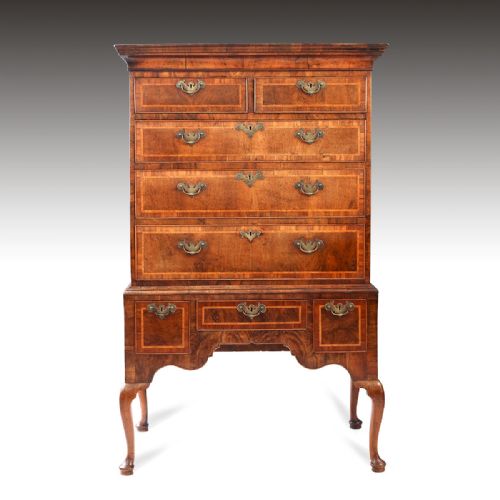
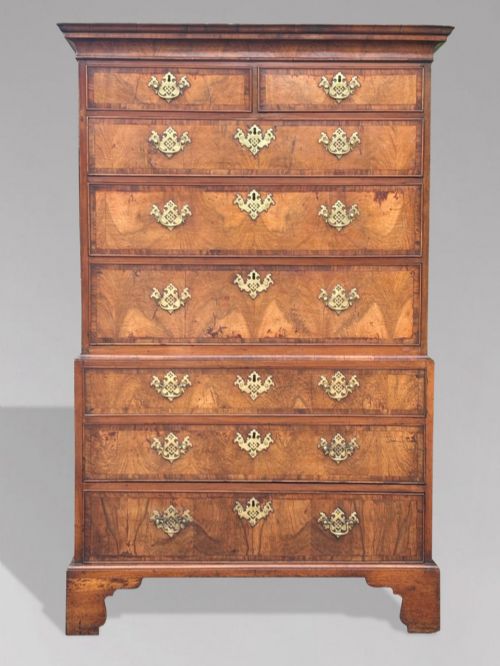
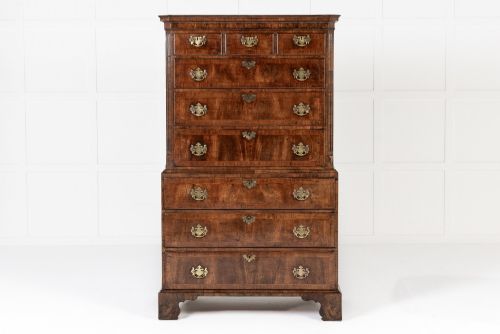
The form most frequently seen on this page is the standard chest of drawers, alongside taller variations such as chests on chests, cabinets on chests, and chests on stands. Bureau desks also appear, showing how cabinetmakers applied the same decorative banding to writing furniture.
Timbers span walnut, burr walnut, and oak, occasionally featuring yew veneer and pine secondary woods. Stylistic markers range from early cabriole legs to traditional bracket feet and brass drop handles.
What varies in quality
Quality rests significantly on the selection of the walnut veneers and the symmetry of the grain matching across the drawer fronts and top surfaces. Finer examples display carefully chosen burr walnut figures that create balanced patterns, whereas simpler pieces utilise plainer grain timber.
The precision of the featherbanded inlay itself dictates the tier of the piece, with tighter, uniform angles showing superior bench work. Construction details, such as the dovetailing of drawer carcases and the retention of original brass hardware or sliding top panels, further separate standard examples from finer ones.
Featherbanded Chest Retail Price Guide 2026
Typical asking prices for featherbanded chest among the pieces listed under this phrase on Sellingantiques today, from the lower quarter to the upper quarter. They describe what is for sale here now, not the wider market.
Selected walnut chests include a sliding top panel designed to conceal secret compartments within the carcase.
The Featherbanded Chest Glossary
- Featherbanding
- A decorative inlay technique using small strips of veneer cut at an angle and arranged in a V-shape resembling a feather or herringbone. This banding frames drawer fronts and top surfaces on period case furniture.
- Veneer
- A thin layer of finely figured wood, such as walnut or burr walnut, applied over a secondary timber carcase. This method allowed craftsmen to utilise striking grain patterns while maintaining structural stability.
- Chest on Chest
- A tall storage unit comprising a lower chest section topped by a slightly smaller upper chest, creating substantial vertical capacity. Also known as a tallboy, this form appeared frequently during the eighteenth century.
- Chest on Stand
- A chest of drawers raised on an integrated support frame, often featuring cabriole legs or barley-twist supports. This elevated form provides a lighter visual footprint in a room.
- Cabinet on Chest
- A dual-section form featuring an enclosed cabinet or bureau top resting upon a lower chest base. These pieces combine multiple storage functions within a single architectural facade.
Featherbanded Chest: Frequently Asked Questions
What is a featherbanded chest?
A featherbanded chest is an eighteenth-century storage piece constructed with walnut or oak and decorated with banded inlay around the drawer edges.
Cabinetmakers used thin strips of veneer arranged in chevron patterns to frame the primary surfaces.
How do I identify periods?
Periods are identified through structural forms, leg styles, and handle designs associated with reigns such as Queen Anne or George II.
Early pieces often feature cabriole legs or stands, while later examples transition to bracket feet and taller carcase forms.
Where were they used?
These chests served as primary storage furniture in principal bedrooms and reception rooms of substantial houses.
They held linens, clothing, and personal documents while displaying the wealth and taste of the household through fine walnut surfaces.
How do I care for walnut?
Walnut furniture requires stable room temperatures away from direct sunlight and extreme humidity fluctuations to protect the underlying veneers.
Regular dusting with a dry cloth and occasional application of appropriate wax maintains the finish of the timber.