

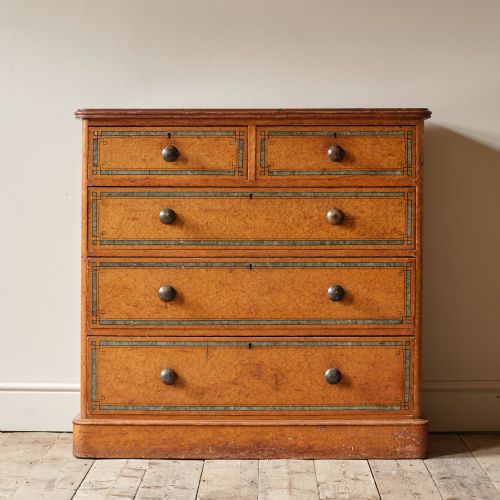
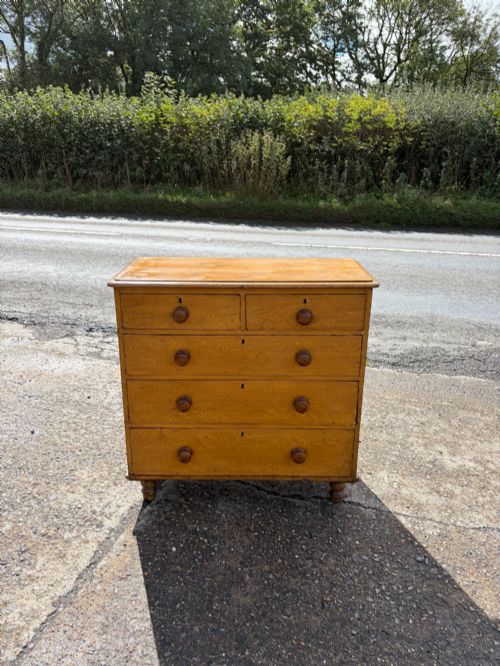
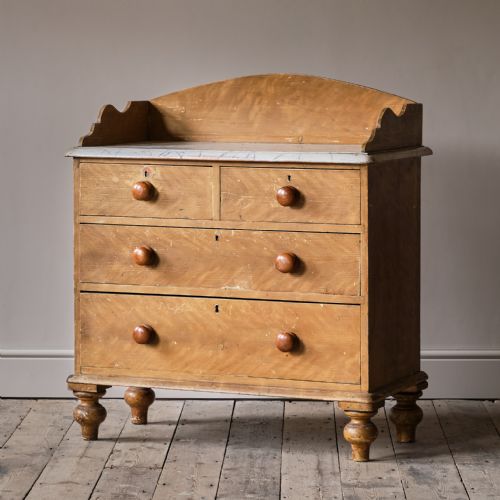
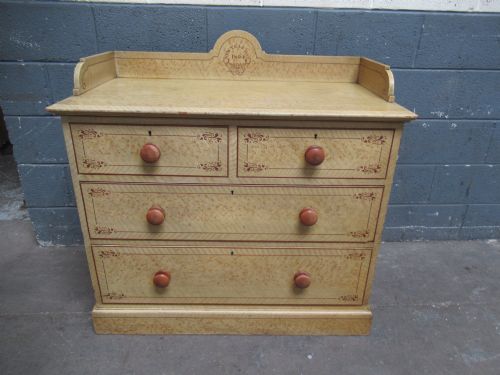
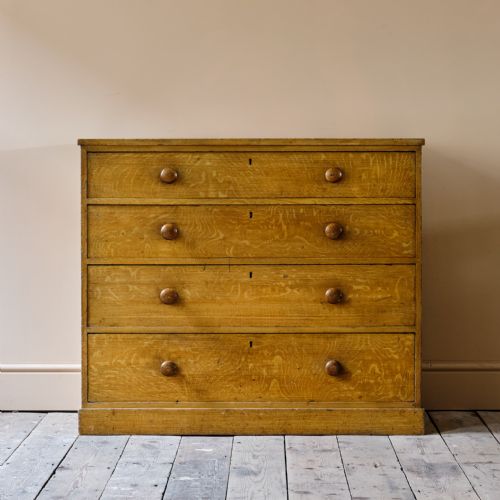


Faux Grain Commode
A faux grain commode brings tactile warmth and domestic history into a room through decorative painted surfaces mimicking expensive timbers.
Faux Grain Commode
A faux grain commode typically takes the form of a chest of drawers constructed from pine and finished to resemble rarer hardwoods. These pieces emerge chiefly from the nineteenth century, encompassing Victorian and country styles.
The buyer encounters various configurations here, from small chests to washstand chests featuring two small drawers over three larger ones. Original paint finishes dominate the selection, showing the enduring appeal of nineteenth-century country craftsmanship.
Makers designed these items for everyday domestic storage while employing decorative painting techniques to elevate humble materials. They bridge the gap between utilitarian furniture and artistic folk traditions.
Materials and construction
Makers relied primarily on solid pine for the carcass and drawer construction, selecting a soft timber that accepted paint readily. Artisans then applied liquid glazes or pigments over a prepared base coat to build up the illusion of grain.
Techniques such as scumbling involved dragging combs, brushes, or rags through wet paint to create feathered patterns that imitated oak, mahogany, or walnut. Ceramic and brass fittings often completed the hardware on these painted chests.
Faux Grain Commode Retail Price Guide 2026
Typical asking prices for faux grain commode among the pieces listed under this phrase on Sellingantiques today, from the lower quarter to the upper quarter. They describe what is for sale here now, not the wider market.
Assessing quality
Quality rests heavily on the preservation and complexity of the original painted surface rather than the underlying softwood. Skilful scumbling yields depth and movement, whereas rushed work appears flat and uniform.
The integrity of the structural joinery combined with untouched period hardware elevates certain examples above standard utilitarian chests.
The Faux Grain Commode Glossary
- Scumble
- A translucent layer of dark paint manipulated over a lighter ground to create decorative grain patterns. This technique forms the primary decoration on nineteenth-century country pieces.
- Commode
- A chest of drawers used for domestic storage. In this context, it describes upright bedroom chests rather than low cabinet forms.
- Washstand chest
- A lower chest of drawers often adapted to hold washing basins or toiletries. These frequently appear among nineteenth-century pine examples.
- Original paint
- The initial decorative finish applied during the period of manufacture. Surviving original paint substantially enhances the character of a piece.
Faux Grain Commode: Frequently Asked Questions
What is a faux grain commode?
A faux grain commode is a chest of drawers made from accessible timber like pine and painted to resemble costly hardwoods.
These pieces capture nineteenth-century domestic styles through decorative paintwork.
How do I care for original painted surfaces?
Keep painted furniture away from direct sunlight and damp conditions to protect the historic finish.
Dust gently with a dry cloth and avoid harsh chemical cleaners.
How can I tell the period?
Dating relies on construction methods, timber choice, and the style of the hardware.
Nineteenth-century examples display hand-mixed paints and traditional joinery techniques.
Where were these pieces used?
These chests served primarily as bedroom storage in period homes and country houses.
Their decorative painted finishes suited domestic spaces that lacked costly hardwood furniture.