

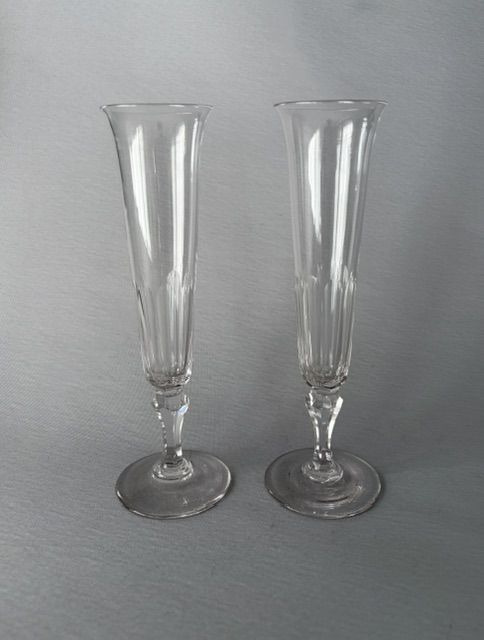





Faceted Stem Glass
Faceted stem glass pieces are drinking vessels featuring cut stems designed to catch the light, offering both historical charm and tactile weight for the serious collector.
Faceted Stem Glass
Faceted stem glass encompasses drinking vessels produced across the eighteenth and nineteenth centuries, featuring stems shaped by flat polished planes. You will frequently encounter Georgian wine glasses, cordials, and ale flutes alongside Victorian champagne flutes.
While most examples function as table glassware designed for wine, spirits, or ale, the category extends to decorative ceiling lights utilising frosted glass and chrome. English and Bohemian production dominates the surviving examples on this page.
What varies in quality
The precision and crispness of the facet cutting on the stem separate superior examples from softer, worn pieces. Sharp, clean angles reflect light intensely and remain smooth to the touch.
The depth and detail of any engraved decoration on the bowl indicate the skill of the original glasscutter or engraver. Clear metal free from excessive bubbles or cloudiness further elevates the piece.
Faceted Stem Glass Retail Price Guide 2026
Typical asking prices for faceted stem glass among the pieces listed under this phrase on Sellingantiques today, from the lower quarter to the upper quarter. They describe what is for sale here now, not the wider market.
Listings feature lead crystal and clear glass spanning the eighteenth, nineteenth, and twentieth centuries, including Georgian and Victorian styles.
James Giles·Moser Bohemian
The Faceted Stem Glass Glossary
- Facet cut
- A stem or bowl shaped by grinding flat planes into the surface of the glass. This technique creates geometric patterns that catch and reflect light.
- Lead crystal
- Glass containing a high proportion of lead oxide, which increases weight, brilliance, and clarity. It allows for deeper and sharper cutting.
- Römer goblet
- A traditional large drinking vessel, often of continental origin, featuring a decorated bowl and a sturdy base. They frequently display elaborate engraving and gilding.
- Jacobite engraving
- Secret symbols or portraits etched onto eighteenth-century glassware to show support for the exiled Stuart dynasty. Common motifs include roses and oak leaves.
- Ale flute
- A tall, slender drinking glass designed specifically for serving ale, often decorated with engraved botanical motifs along the bowl.
Faceted Stem Glass: Frequently Asked Questions
What is a faceted stem glass?
A faceted stem glass is a drinking vessel featuring a stem ground with flat, polished planes to enhance light refraction. These pieces date primarily from the eighteenth and nineteenth centuries.
Collectors prize them for the tactile quality of the cut stem and the clarity of the lead glass used in their construction.
How do I date an antique glass?
Dating involves examining the manufacturing technique, the form of the bowl, and the style of any engraving. Eighteenth-century pieces often show different pontil marks and stem proportions compared to Victorian or Regency examples.
Matching the specific cutting pattern and metal composition provides further clues to the period of origin.
Were these glasses meant for everyday use?
While originally produced for dining and social occasions, surviving eighteenth-century examples are now treated as fragile display pieces or collector items. Victorian and later sets see occasional use for special dinners.
Their heavy lead content makes them durable, but hand washing remains essential to preserve the antique glass and any gilding.
What are Jacobite glasses?
Jacobite glasses are political drinking vessels engraved with hidden symbols supporting the exiled House of Stuart. They were used during secret toasts in the eighteenth century.
Common emblems include the six-petalled rose, buds, and specific Latin mottoes associated with the movement.