

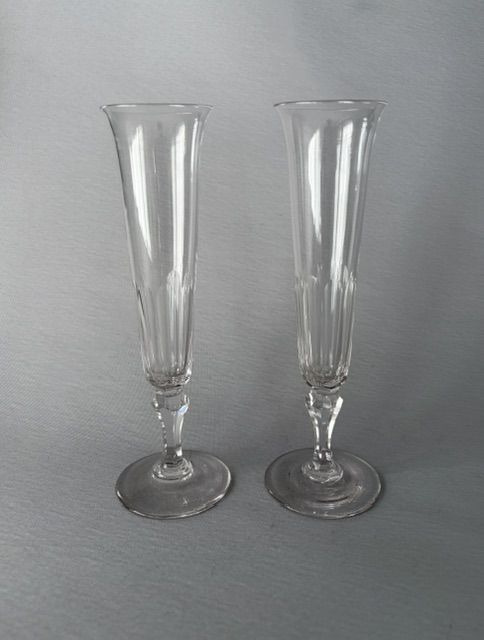





Faceted Stem Crystal Glasses
Faceted stem crystal glasses are historic drinking vessels combining brilliant cut stems with fine bowls, sought after for their tactile geometry and period character.
Faceted Stem Crystal Glasses
Faceted stem crystal glasses include wine glasses, port glasses, champagne coupes, and ale flutes produced across the eighteenth and nineteenth centuries. Buyers searching for faceted stem crystal glasses encounter drinking vessels featuring stems worked with flat polished planes that catch the light.
The pieces on this page span Georgian, Victorian, and Bohemian styles, originating from English and continental workshops. Forms range from small eighteenth-century wine and ale glasses to larger nineteenth-century rummers and champagne coupes.
Earlier examples often display engraved bowls featuring hop and barley or Jacobite motifs above the cut stem. Later nineteenth-century and twentieth-century interpretations include gilded Bohemian goblets and large sets of cut crystal wine glasses.
How they were made
Makers shaped lead glass, lead crystal, and clear glass into bowls and stems using traditional glassblowing techniques. Artisans then applied wheel-cutting to form the characteristic facets along the stem.
Decoration involved hand engraving the glass bowls with floral or symbolic patterns, sometimes complemented by gilding. Workers finished the pieces with wide foot bases to ensure stability.
Faceted Stem Crystal Glasses Retail Price Guide 2026
Typical asking prices for faceted stem crystal glasses among the pieces listed under this phrase on Sellingantiques today, from the lower quarter to the upper quarter. They describe what is for sale here now, not the wider market.
EIGHTEENTH-CENTURY DRINKERS ENJOYED HOP MOTIFS ETCHED ONTO ALE FLUTES.
What varies in quality
Quality rests upon the precision of the facet cutting and the clarity of the lead crystal material. Crisp, even planes along the stem distinguish finer examples from softer, more rounded cutting.
The artistry of the bowl engraving and the overall balance of the vessel separate standard production pieces from exceptional period works.
Moser Bohemian·James Giles
The Faceted Stem Crystal Glasses Glossary
- Facet cut
- A surface cut into multiple flat planes that reflect light. This technique defines the stems of these historic drinking glasses.
- Lead crystal
- A heavy glass containing lead oxide, which increases brilliance and workability. It provides the clear substance for deep stem cutting.
- Rummer
- A large, wide-bowled drinking vessel used in the nineteenth century. These sturdy glasses often featured decorated bowls and cut stems.
- Ale flute
- A tall, narrow glass designed for serving ale. Eighteenth-century versions frequently combined engraved bowls with faceted stems.
- Champagne coupe
- A broad, shallow bowl used for sparkling wine. Late nineteenth-century examples often incorporated facet cut stems for extra grip and visual texture.
Faceted Stem Crystal Glasses: Frequently Asked Questions
What are faceted stem glasses?
Faceted stem glasses are historic drinking vessels featuring stems cut into multiple flat planes. They include wine glasses, rummers, and ale flutes.
These pieces showcase the marriage of glassblowing and wheel-cutting traditions from the Georgian era onward.
How do I identify Georgian glass?
Georgian glass often displays distinct hand-cut facets, thick lead metal content, and polished pontil marks on the base. Decoration frequently includes hand engraving.
Checking the proportions, weight, and wear patterns helps distinguish genuine eighteenth-century pieces from later reproductions.
Can I use antique glasses?
Many collectors use antique faceted stem glasses for special toasts and formal dining. Hand washing is essential to preserve the lead crystal and any gilding.
Careful handling ensures these historic vessels remain functional for modern occasions.
What is Jacobite engraving?
Jacobite engraving refers to secret political symbols, such as roses and oak leaves, etched onto eighteenth-century glassware. Supporters of the exiled Stuart cause used these motifs.
Glasses bearing this iconography hold particular historical significance for collectors.