

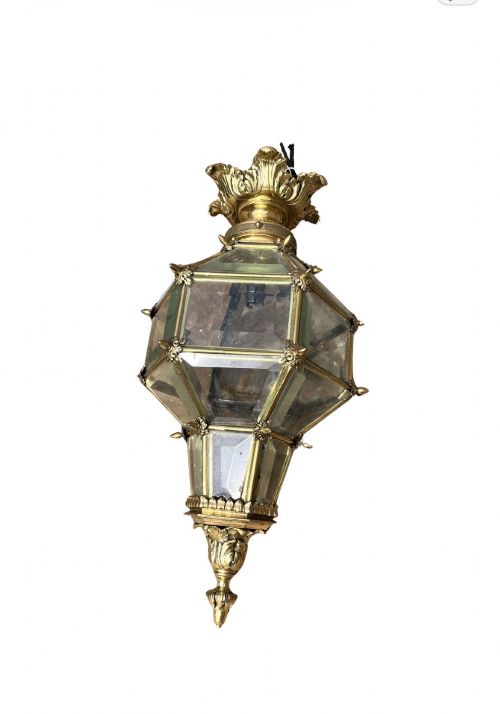


Faceted Glass Fixture
A faceted glass fixture brings brilliant refraction and classic elegance to a room, catching the light across Edwardian, Art Deco, and earlier periods.
Faceted Glass Fixture
A faceted glass fixture comprises chandeliers, hanging lanterns, ceiling lights, and table lamps designed to catch and refract light through cut crystal and glass elements. These pieces span periods from the nineteenth century through the Edwardian era, Art Deco, and into the mid-twentieth century.
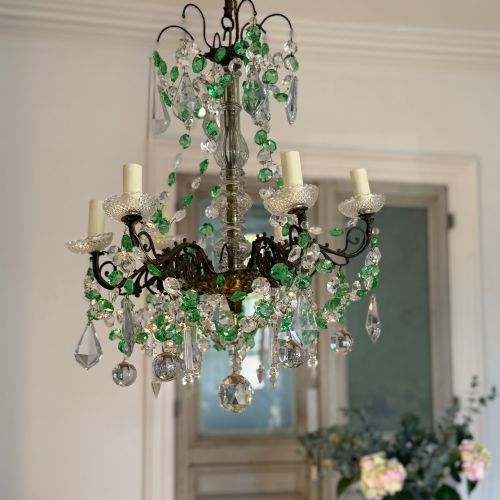
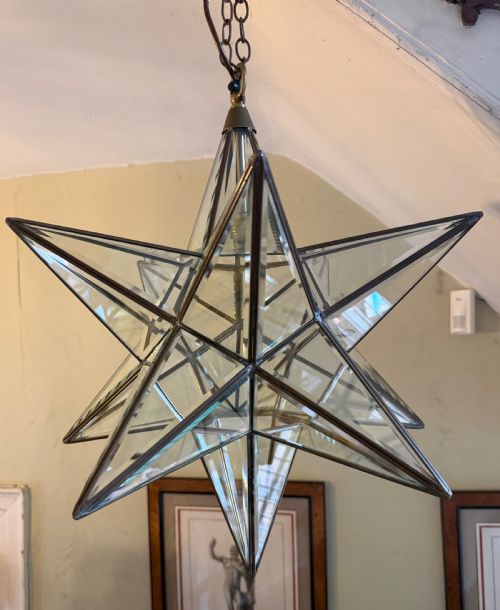
The versions most commonly met on this page include brass-framed hanging lanterns, dome top chandeliers, and frosted glass ceiling lamps. Makers and designers utilised diverse international styles, ranging from French Louis XVI and Versailles influences to Bohemian crystal and Italian Maria Theresa forms.
Buyers seek these fixtures to provide both functional illumination and a distinct decorative focal point within a room. The variety of forms ensures suitability for both traditional classical interiors and spaces favouring geometric Art Deco lines.
How they were made
Makers constructed the structural frames of these pieces using cast or pressed metals such as brass, bronze, chrome, and standard metal alloys to support heavy glass components. These metal mounts frequently reflect stylistic periods, utilising bronze gilt, polished brass, or gleaming chrome.
The optical elements rely on glass, cut crystal, and cut glass shaped into prisms, bevelled panels, or frosted panels. Artisans painstakingly cut and polished the crystal to maximise light refraction, securing the glass elements into the metal frameworks with pins or wiring.
Faceted Glass Fixture Retail Price Guide 2026
Typical asking prices for faceted glass fixture among the pieces listed under this phrase on Sellingantiques today, from the lower quarter to the upper quarter. They describe what is for sale here now, not the wider market.
What varies in quality
Quality in a faceted glass fixture is determined by the depth and precision of the cutting on the crystal or glass panels, which dictates how cleanly the light disperses. Superior examples feature crisp bevelling and high-clarity crystal rather than moulded glass with soft edges.
The substance and weight of the metal frame also separate finer pieces from standard production, with solid brass, bronze, and substantial chrome mounts providing structural integrity. Additionally, the complexity of the design, such as tent and bag configurations or intricate star frames, indicates higher artisanal input.
The Faceted Glass Fixture Glossary
- Faceted glass
- Glass or crystal shaped with multiple flat polished surfaces designed to refract light. These cuts determine the brilliance and sparkle of the hanging lantern or chandelier.
- Bevelled glass
- Glass panes possessing an angled edge cut around the perimeter. This technique adds depth and creates prism effects when struck by direct illumination.
- Tent and bag chandelier
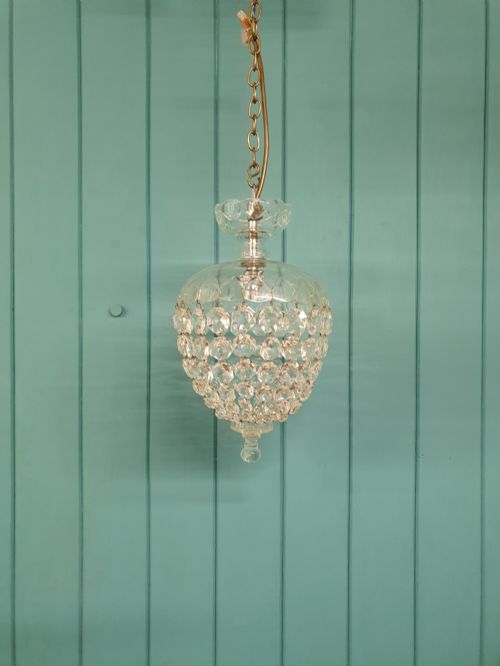
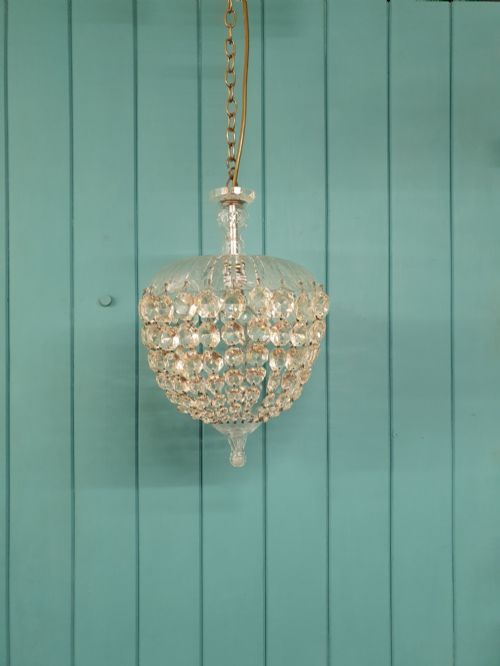
- A lighting form featuring strings of small crystals gathered in a tent shape at the top above a bag-shaped lower basket. This traditional English configuration maximises the quantity of suspended glass.
- Maria Theresa chandelier
- An ornate flat-arm style of chandelier named after the Austrian empress, typically adorned with coloured crystals and elaborate glass crests. They reflect grand classical European interiors.
- Frosted glass
- Glass treated to impart a milky, translucent appearance that softens direct glare. It is frequently utilised in Edwardian and Art Deco ceiling lamps and lanterns.
Faceted Glass Fixture: Frequently Asked Questions
How do I clean a faceted glass fixture?
Carefully wipe each glass or crystal component using a soft cloth dampened with a mild, non-abrasive cleaning solution while the fixture hangs securely. Avoid harsh chemical sprays that might damage the underlying brass, bronze, or chrome metalwork.
For intricate chandeliers, cleaning each prism individually ensures maximum light refraction and prevents dirt accumulation in the wire loops or metal settings.
Can these vintage fixtures take modern wiring?
Most antique and vintage fixtures require professional rewiring to meet modern electrical safety standards and compatibility requirements. A qualified electrician can safely update internal lamp holders while preserving the exterior metal and glass components.
Retaining the original frame ensures the historic character remains intact while safely illuminating your living space.
Where should I hang a glass lantern?
Hanging lanterns suit hallways, entrance foyers, and high-ceilinged rooms where their downward illumination and decorative metal frames can be fully appreciated. Their enclosed designs provide focused ambient light suitable for transitional spaces.
Ensure adequate ceiling height is available so the fixture hangs clear of head height while remaining a prominent visual feature.