
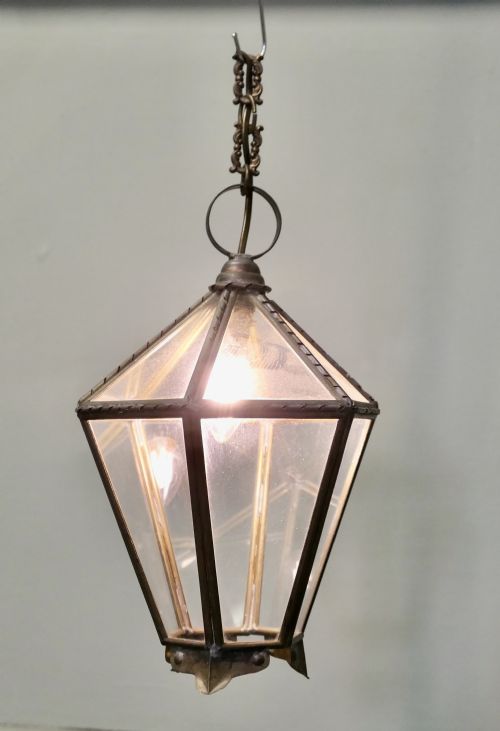


Faceted Glass Ceiling Light
A faceted glass ceiling light catches the light from every angle, bringing a brilliant sparkle to hallways and reception rooms.
Faceted Glass Ceiling Light
A faceted glass ceiling light brings together hanging illumination and intricate surface cutting to scatter brightness across a room. When you browse this selection, you encounter forms ranging from elaborate multi-tier chandeliers to simple hall lanterns and dome top fixtures. These fixtures appear in styles spanning the nineteenth century, Edwardian era, and Art Deco period.
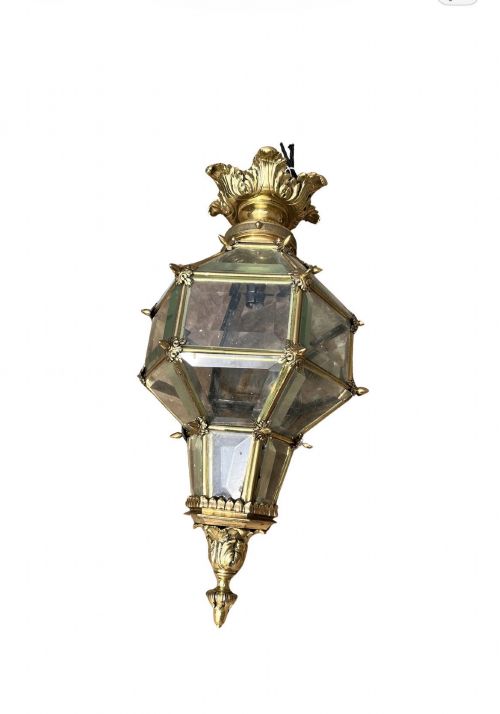
The most common examples you meet on this page are Edwardian and early twentieth century lanterns and chandeliers. Brass and bronze frames support bevelled, frosted, or cut glass panels that diffuse illumination effectively. Origin styles stretch from English tent and bag designs to French Louis XVI models and Bohemian crystal pieces.
How they were made
These fixtures rely on metal frameworks of brass, bronze, chrome, or general metal to support the heavy glass components. Artisans shaped these structures to hold panels, domes, and hanging prisms securely in place.
The glass elements themselves utilise cut glass, crystal, lead crystal, or bevelled glass, often paired with frosted sections. Individual pieces feature precise facet cutting or moulding to maximise the refraction of light.
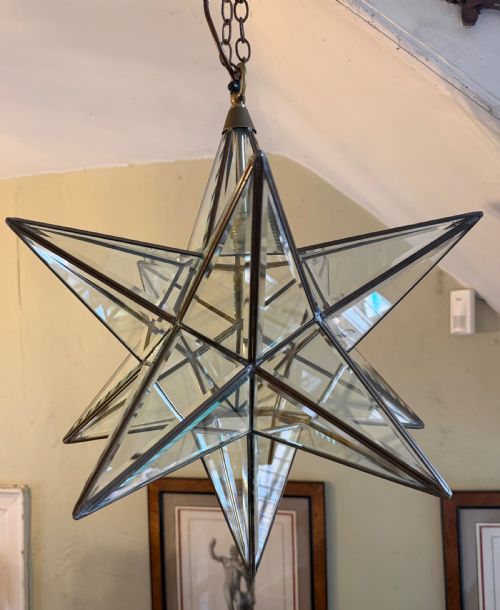
Some twelve-point star lanterns transform modest hallways into miniature planetariums when illuminated at dusk.
What varies in quality
Quality in these lighting fixtures rests on the depth of the metal casting and the precision of the glass cutting. Heavier brass frames and deeply faceted lead crystal create a sharper, more brilliant refraction than lighter stamped metal and plain pressed glass.
The complexity of the design also distinguishes finer examples, such as multi-tiered chandeliers and intricate star lanterns, from simpler dome top pendants. Original period components, including matching prisms and intact frosted panels, elevate the integrity of the piece.
The Faceted Glass Ceiling Light Glossary
- Bevelled glass
- Glass with an angled edge cut around the perimeter. This treatment creates a framed border that catches and bends light distinctly.
- Cut glass
- Glass decorated by grinding facets and patterns into the surface using a wheel. It differs from mould-pressed glass by possessing sharper edges and greater optical clarity.
- Tent and bag chandelier
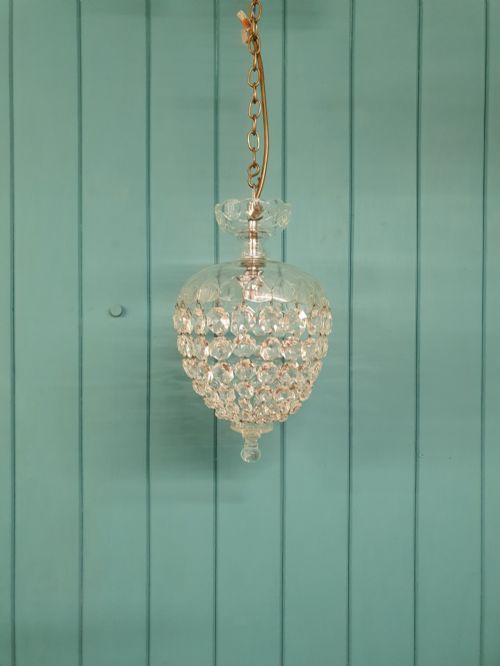
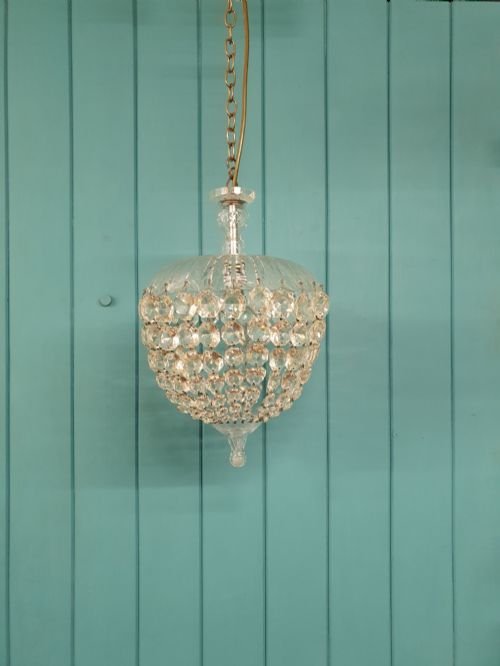
- A lighting form featuring an upper canopy shaped like a tent that drops down into a bag-like mesh of hanging crystals. This classic configuration creates a cascading effect of illuminated glass.
- Frosted glass
- Glass treated to scatter light and produce a translucent appearance. It softens the glare of internal bulbs while maintaining a steady glow.
- Prism
- A geometric glass pendant suspended from the frame to refract light into spectral colours. These small elements multiply the visual impact of the fixture.
Faceted Glass Ceiling Light: Frequently Asked Questions
How do I clean a crystal chandelier?
Cleaning requires a gentle solution of warm water and mild dish soap applied with a soft cloth. Each crystal piece should be wiped individually while supported by hand to prevent strain on the frame.
Avoid harsh chemical cleaners that can damage the metal patina or strip the glass surface. Letting components air dry completely restores their original sparkle before reconnecting power.
Can these antique lights use modern bulbs?
Most of these fixtures accommodate modern screw or bayonet LED bulbs provided the physical dimensions fit within the shade or glass enclosure. Lower heat output from LEDs protects fragile historical glass and older wiring from thermal damage.
It remains advisable to have older fixtures checked by a qualified electrician to ensure safety compliance. Rewiring preserves the original metalwork while bringing internal components up to current standards.
What rooms suit a star lantern?
Star lanterns work particularly well in entrance halls, landings, and high-ceilinged corridors where their geometric shape creates a striking focal point. Their enclosed design directs light downwards while casting patterned shadows through the glass panels onto surrounding walls.
Smaller versions fit comfortably in narrower vestibules without overwhelming the space. Their distinctive silhouette brings architectural interest to transitional areas of a home.
How do I distinguish Edwardian from Art Deco lighting?
Edwardian fixtures typically feature traditional brass or bronze frameworks with ornate detailing, bevelled glass, and classical revival motifs. The overall aesthetic leans towards organic curves and formal elegance reminiscent of late nineteenth-century styles.
Art Deco lighting introduces cleaner geometric lines, frosted glass shades, and alternative metals such as chrome. These later pieces embrace streamlined forms and modern industrial influences that contrast with earlier decorative excess.