





Faceted Crystal Drop
These faceted crystal drop pieces span necklaces, earrings and chandeliers from the late nineteenth century to the mid twentieth century.
Faceted Crystal Drop
A faceted crystal drop is a suspended stone or glass element catching the light, found across various forms of jewellery and lighting. When exploring faceted crystal drop options, buyers encounter delicate Edwardian pendants and substantial chandeliers dating from the late nineteenth century to the mid twentieth century.
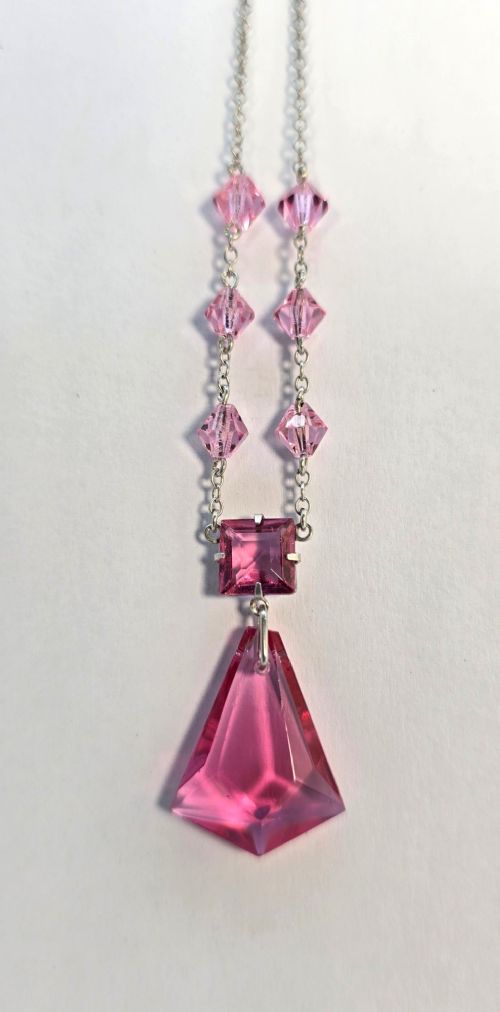
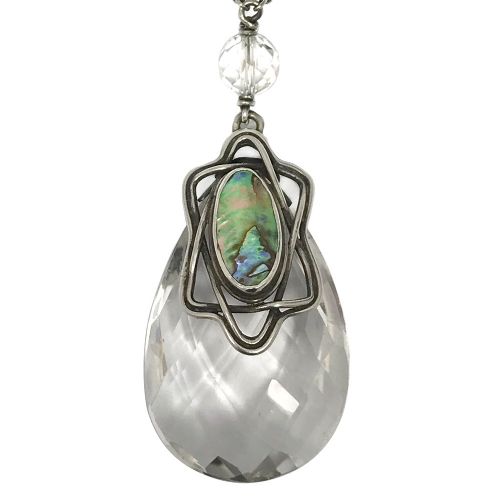
The selection ranges from jewellery featuring rock crystal and cut glass set in silver and gold to large Bohemian and Maria Theresa chandeliers. Pieces span specific periods including the Edwardian era, Art Nouveau, and Art Deco, reflecting shifting tastes in ornamentation.
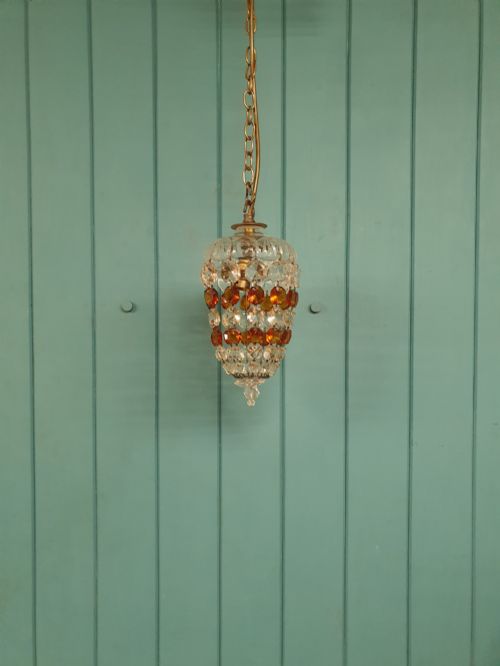
Earrings and necklaces incorporate mounted stones like amethyst, citrine, opal and blue topaz alongside silver and gold settings. Meanwhile, lighting pieces bring cut glass and prisms into domestic spaces through tent and bag chandeliers.
How they were made
Makers shaped glass and quartz into precise geometric facets to maximise light reflection in both jewellery pendants and chandelier prisms. Craftsmen combined these transparent elements with precious metals such as silver, nine-carat gold and brass.
Jewellery pieces often utilise bezel or prong settings to secure cut crystal, rock crystal and gemstones like amethyst and citrine to metal chains and earring findings. Lighting fixtures rely on metal frames to suspend numerous cut glass drops and prisms in structured tiers.
Faceted Crystal Drop Retail Price Guide 2026
Typical asking prices for faceted crystal drop among the pieces listed under this phrase on Sellingantiques today, from the lower quarter to the upper quarter. They describe what is for sale here now, not the wider market.
Periods represented span from 1890 through the Edwardian era, 1910, 1920, 1930 and up to 1950.
What varies in quality
Quality rests on the precision of the cutting and the clarity of the crystal or glass. Sharper facet edges and higher transparency produce a more brilliant play of light.
The choice of setting material also elevates a piece, distinguishing items mounted in nine-carat gold and silver from those using base metals. Original components, such as matching chains or intact crystal configurations, preserve the integrity of the design.
The Faceted Crystal Drop Glossary
- Faceted
- Cut with multiple flat surfaces designed to reflect light. This technique is fundamental to the appearance of both chandelier prisms and gemstone drops.
- Rock crystal
- Colourless transparent quartz used historically in jewellery. It offers durability and clarity distinct from manufactured glass.
- Chandelier
- A branched ornamental light fixture suspended from a ceiling. These fixtures frequently incorporate numerous cut glass drops to diffuse illumination.
- Prism
- A refracting glass body that splits light. In lighting, these elements hang from frames to create sparkling visual effects.
- Bezel setting
- A method of holding a stone in place using a metal collar that wraps around its outer edge. This secure technique appears frequently in antique pendant and earring designs.
Faceted Crystal Drop: Frequently Asked Questions
What periods do these pieces date from?
The items span from the late nineteenth century through the Edwardian era and the 1920s and 1930s, extending into the mid twentieth century.
Designs reflect the distinct aesthetic movements of their respective decades, from ornate Edwardian silverwork to geometric Art Deco styling.
How should I care for antique crystal jewellery?
Clean stone and metal components gently with a soft cloth to preserve the polished surfaces. Avoid harsh chemical dips that might damage softer mounted gems like opal or the surrounding metal.
Store pieces individually to prevent scratching between the faceted crystals and softer gold or silver settings.
What materials are used in these items?
Pieces incorporate silver, nine-carat gold, brass and metal alongside crystal, cut glass, rock crystal and various coloured gemstones. Gemstone varieties include amethyst, citrine, opal, blue topaz and abalone.
Lighting fixtures pair metal frames with glass and crystal prisms, while jewellery combines precious metals with transparent stones.
Are these pieces handmade?
Many items from the Edwardian and Art Deco periods feature hand-cut crystal and individually worked metal settings. Craftspeople shaped the stones and fabricated the mounts by hand before mass production standardisation took over.
Examination of the metalwork and facet edges often reveals the hand of the maker in the execution of the piece.