

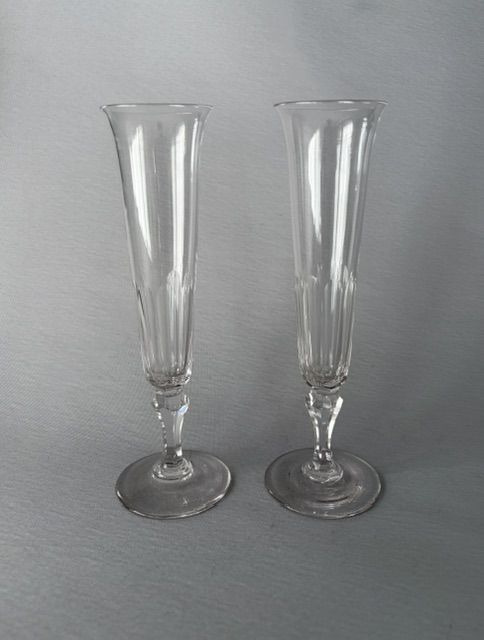





Facet Stem Glass
A facet stem glass brings tactile weight and brilliant light refraction to the table, making every sip feel deliberate.
Facet Stem Glass
When you search for a facet stem glass, you enter the world of Georgian and Victorian drinking vessels designed with distinctive polished stems. The pieces you are most likely to meet on this page date from the eighteenth and nineteenth centuries, taking the form of wine glasses, cordials, and ale flutes.
Makers shaped these drinking glasses with decorated bowls and wide foot bases, sometimes adding detailed engraving or gilding. Alongside standard wine vessels, you also encounter larger rummers and champagne flutes from later periods.
The aesthetic ranges from restrained English lead crystal to elaborate Bohemian and Art Deco designs. Each piece reflects the functional elegance of its era, whether intended for port, sherry, or festive toasts.
Materials and construction
These glasses rely on lead crystal and clear glass, shaped by hand and finished with precise wheel cutting. Artisans ground flat facets into the stem, creating sharp geometric angles that catch the light.
Surface decoration often involved wheel engraving with hop and barley motifs or Jacobite symbols. Some vessels received delicate gilding or coloured glass treatments to enhance their visual impact.
Facet Stem Glass Retail Price Guide 2026
Typical asking prices for facet stem glass among the pieces listed under this phrase on Sellingantiques today, from the lower quarter to the upper quarter. They describe what is for sale here now, not the wider market.
Some eighteenth century drinkers used faceted stems simply because slippery fingers needed extra grip after several rounds of port.
Quality and proportion
The distinction between ordinary and exceptional examples lies in the crispness of the facet cutting and the balance of the proportions. Sharp, clean angles along the stem separate superior pieces from softer, worn down variants.
Clarity of the lead crystal and the fineness of any bowl engraving further define the standard. The weight of the metal and the stability of the wide foot base complete the assessment of a well made vessel.
Moser Bohemian·James Giles
The Facet Stem Glass Glossary
- Facet cut
- A decorative technique involving the grinding of flat planes into the glass surface. This creates reflective edges that catch ambient light.
- Lead crystal
- A high quality glass containing metallic oxides that increase brilliance and weight. It allows for deeper, sharper cutting than standard glass.
- Rummer
- A large, wide bowled drinking glass common in the nineteenth century. These sturdy vessels were frequently used for ale or punch.
- Ale flute
- A tall, slender glass designed to maintain the effervescence of fermented drinks. Eighteenth century examples often feature engraved hop and barley details.
Facet Stem Glass: Frequently Asked Questions
How do I clean an antique glass?
Wash these pieces gently by hand in warm water using a mild detergent. Avoid sudden temperature changes to protect the old material.
Dry them immediately with a soft linen cloth to prevent water spots on the cut facets.
Can I use these for daily dining?
Many collectors prefer to reserve these drinking vessels for special occasions due to their age and delicate nature. Careful handling prevents chips along the thin rims and foot bases.
If you choose to use them, wash them by hand immediately after use rather than placing them in a machine.
What is Jacobite engraving?
Jacobite engraving refers to political symbols and hidden emblems etched onto eighteenth century glassware in support of the exiled Stuart kings. These often include roses and specific botanical motifs.
Such decoration adds historical context to wine glasses and flutes from the period.
How do I date a stem?
Dating relies on the height, weight, and configuration of the facets along the stem, alongside the shape of the bowl. Eighteenth century pieces typically show distinct hand cut angles and pontil marks on the base.
Later Victorian and twentieth century versions often present heavier proportions and different manufacturing signatures.