






Fabric Storage Ottoman
A fabric storage ottoman combines seating with concealed space, offering a practical addition to period interiors.
Fabric Storage Ottoman
A fabric storage ottoman serves a dual purpose as a seat or table and a receptacle for household items. When searching for a fabric storage ottoman, buyers encounter nineteenth-century pieces alongside early twentieth-century examples.
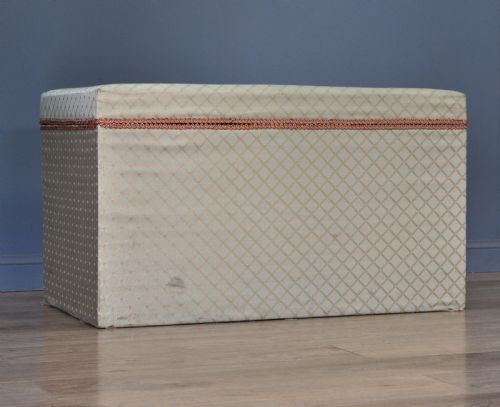
The selections span Victorian, Regency, and William IV styles, alongside traditional English designs and early twentieth-century pieces. Common forms include blanket boxes, storage chests, window stools, and work boxes.
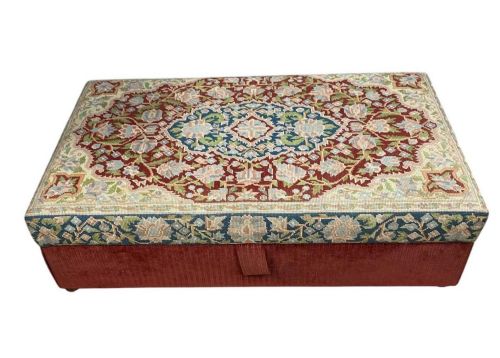
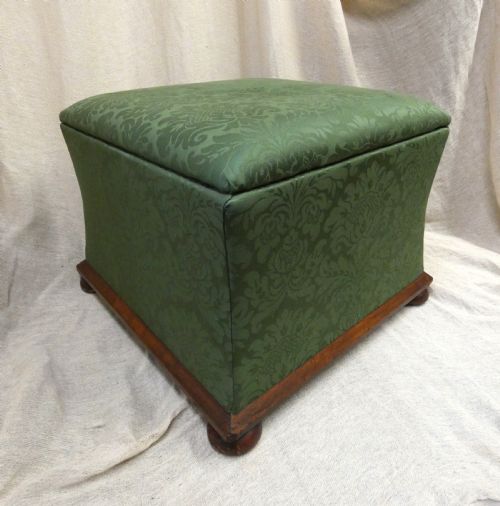
Most examples feature textile upholstery over timber frames, ranging from wool tapestry and needlepoint to damask and Liberty fabric. Buyers are most likely to meet Victorian and nineteenth-century variations upholstered in patterned textiles.
Construction and materials
Makers built the foundational carcases using timber such as mahogany and pine, providing structural strength for storage and seating. These wooden frames were then enclosed and padded for domestic utility.
Surfaces received textile coverings including velvet, wool tapestry, damask, and needlepoint. Details such as waisted profiles, concave shapes, and decorative tapestry tops demonstrate period craftsmanship.
Fabric Storage Ottoman Retail Price Guide 2026
Typical asking prices for fabric storage ottoman among the pieces listed under this phrase on Sellingantiques today, from the lower quarter to the upper quarter. They describe what is for sale here now, not the wider market.
Several pieces double as blanket boxes or work chests, meaning your spare bedding shares accommodation with Victorian sewing supplies.
Distinguishing quality
Quality rests upon the execution of the timber frame and the precision of the upholstery work. Pieces featuring refined forms like concave shapes or waisted profiles represent superior design complexity.
The choice of covering material elevates a piece, with fine needlepoint, wool tapestry, and Liberty fabric indicating higher-status commissions compared to standard upholstery.
The Fabric Storage Ottoman Glossary
- Ottoman
- A padded seat or footstool without a back or arms, often featuring a hinged lid for interior storage. It serves multiple domestic functions within a room.
- Needlepoint
- A type of canvas work embroidery used for upholstery on stools and chairs. It provides a durable and decorative surface texture.
- Damask
- A reversible figured fabric woven on a loom, utilised for formal upholstery. Its pattern is formed through the weave rather than printed.
- Waisted
- A furniture profile that curves inwards towards the centre. This shaping adds visual elegance to nineteenth-century stool bases.
- Kist
- A traditional wooden storage chest or trunk. These robust boxes were historically used for blankets and household goods.
Fabric Storage Ottoman: Frequently Asked Questions
What is a fabric storage ottoman?
A fabric storage ottoman is a multi-functional piece of furniture that provides a upholstered surface for sitting or resting feet, paired with a hollow interior for keeping items out of sight.
Historical examples combine textile coverings with timber frames, functioning as blanket boxes, window stools, or coffee tables.
How were these ottomans used historically?
These pieces served in bedrooms and living spaces for storing blankets, textiles, and personal belongings while offering extra seating.
Work boxes and blanket chests kept domestic paraphernalia organised while doubling as decorative furnishings in nineteenth-century homes.
What materials should I expect?
The primary materials are timber frames made from pine or mahogany, enclosed in various fabrics.
Upholstery choices include wool tapestry, damask, velvet, and needlepoint, often featuring traditional English patterns or Liberty textiles.
How do I identify a Victorian ottoman?
Victorian examples often display characteristic upholstery methods, dense timber frames, and specific nineteenth-century decorative styles.
Look for formal needlepoint tops, pine construction, and traditional forms associated with the nineteenth-century period.