





Fabric Lounge Sofa
A fabric lounge sofa brings heritage comfort to a room, offering deep seating wrapped in historic textiles from Victorian and Art Deco eras.
Fabric Lounge Sofa
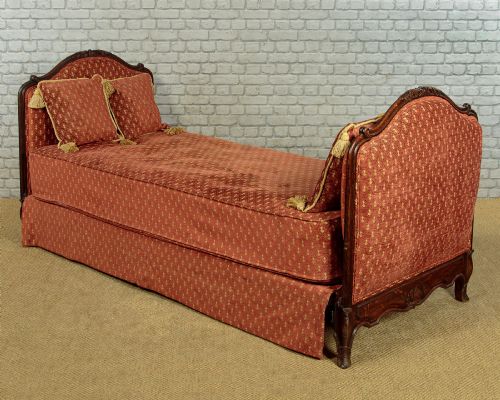
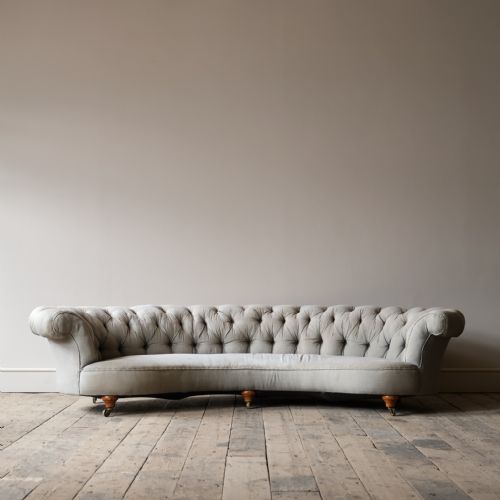
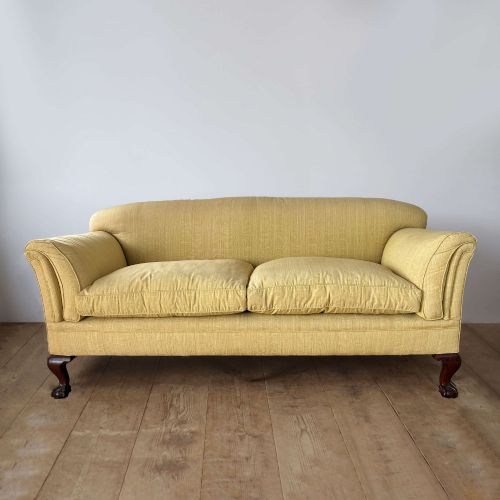
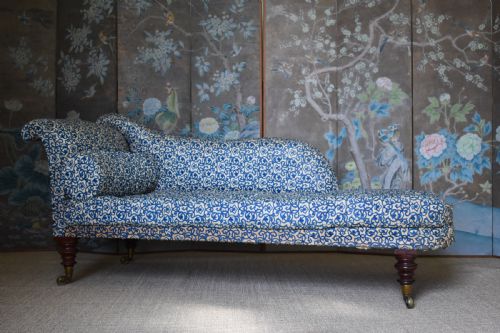
When you search for a fabric lounge sofa, you encounter a diverse selection of seating forms spanning the nineteenth century through to the nineteen-thirties. The options range from traditional daybeds and scroll arm sofas to substantial Chesterfield and Knowle designs.
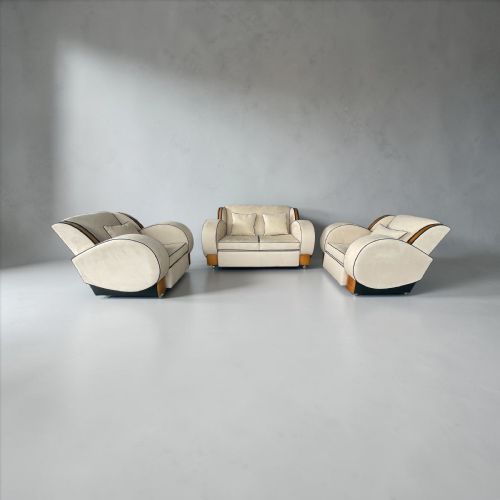
Victorian and Edwardian pieces dominate the selection, often appearing alongside William IV mahogany frames and later Art Deco suites. These pieces encompass various configurations, including setees, chaise longues, and complete lounge suites.
Makers such as Howard and Sons and Hampton and Sons frequently represent the higher end of these listings. Buyers commonly find pieces upholstered in cotton, damask, and general upholstery fabric supported by timber frames of mahogany, walnut, and satinwood.
How they were made
The underlying frames utilise solid timbers like mahogany, walnut, and satinwood, often shaped into scroll arms or supported by turned legs and brass castors. Joinery techniques reflect the period of origin, from William IV mahogany construction to Edwardian joinery.
Upholstery relies on traditional textiles including cotton, damask, and specialised upholstery fabric stretched over supportive internal padding. Exposed wooden elements feature carved details such as lion paw feet or inlaid decoration.
Fabric Lounge Sofa Retail Price Guide 2026
Typical asking prices for fabric lounge sofa among the pieces listed under this phrase on Sellingantiques today, from the lower quarter to the upper quarter. They describe what is for sale here now, not the wider market.
Listings feature mahogany, walnut, and satinwood timber frames paired with cotton, damask, and upholstery fabric across nineteenth and twentieth-century periods.
What varies in quality
Quality differentiates through the integrity of the timber frame and the prestige of the maker, with attributed workshop pieces commanding particular attention. The nuance of carved woodwork, from simple turned legs to intricate lion paw feet, marks the distinction between standard production and superior craftsmanship.
The choice of covering material and the preservation of original textiles also influence the overall character of the piece. Subtleties in upholstery execution and the retention of original castors contribute to the standing of each item.
Howard and Sons·Hampton and Sons
The Fabric Lounge Sofa Glossary
- Chesterfield
- A traditional sofa design characterised by deep buttoning and rolled arms of equal height to the back.
- Chaise Longue
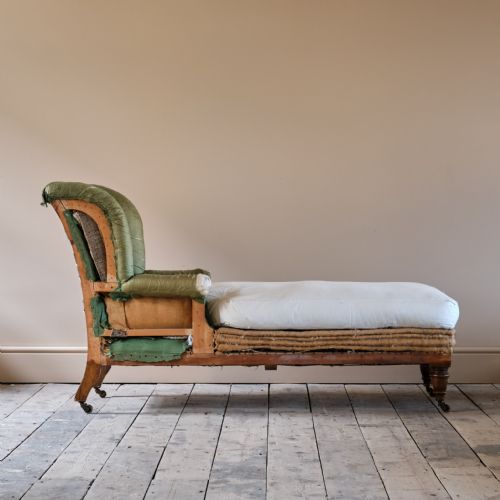
- An elongated upholstered chair intended for reclining, popular throughout the nineteenth century.
- Knowle Sofa
- A historic sofa style featuring adjustable or hinged arms historically held in place by wooden tasselled cords.
- Daybed
- A combined seating and sleeping form utilised for daytime resting, appearing in various period guises.
- Damask
- A reversible figured fabric traditionally woven on a jacquard loom, frequently found on period upholstery.
Fabric Lounge Sofa: Frequently Asked Questions
What defines a Victorian chaise longue?
A Victorian chaise longue is a single-ended reclining seat featuring an asymmetric backrest and an upholstered body supported by carved wooden legs.
These pieces typically utilise mahogany or walnut frames and reflect the ornate aesthetic of the nineteenth century.
How do I identify a Howard and Sons sofa?
Howard and Sons pieces often exhibit signature low profiles, deep seats, and maker stamps on the castors or legs.
They frequently employ traditional upholstery methods paired with robust wooden frames dating from the nineteenth and early twentieth centuries.
What is a Knowle sofa?
A Knowle sofa is distinguished by high backs and distinctive hinged or adjustable arms tied with decorative cords.
This form provides an enclosed seating arrangement suitable for traditional drawing rooms.
Where were daybeds used historically?
Daybeds served as versatile seating and resting furniture in private chambers and reception rooms throughout the nineteenth and early twentieth centuries.
They offered a portable option for daytime relaxation before dedicated lounge suites became common.