

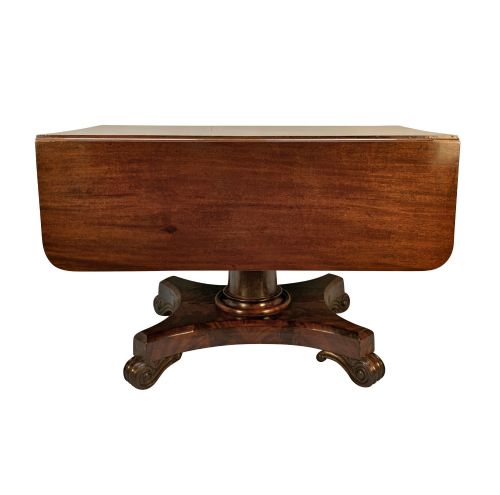
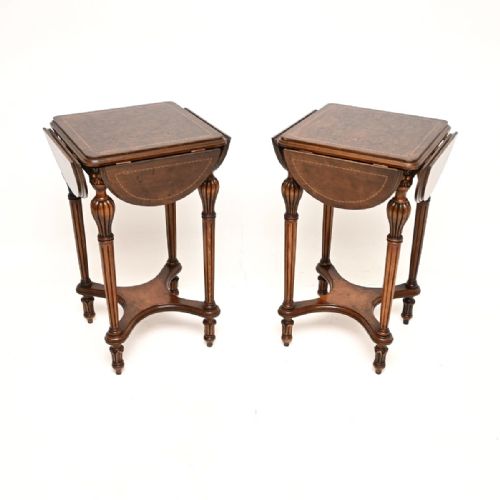
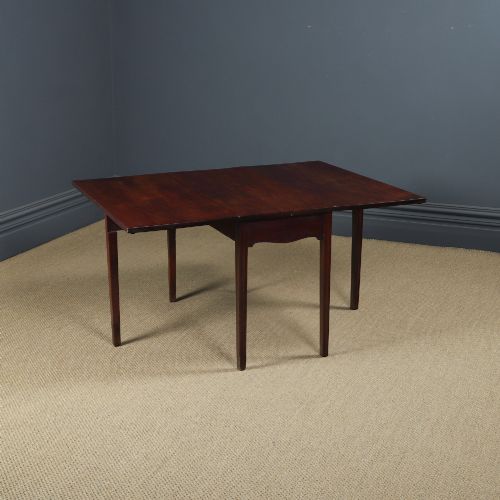
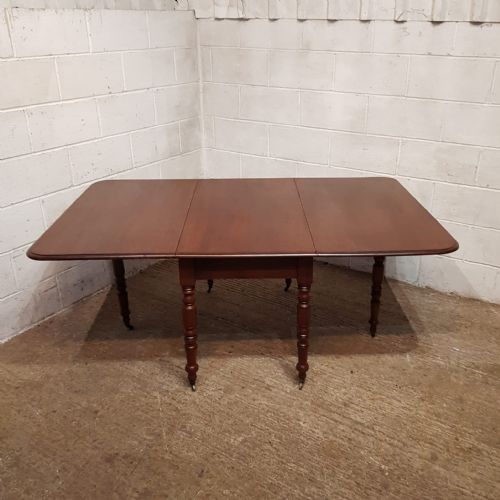


Extending Pembroke Table
An extending pembroke table combines drop leaves with extra leaves, offering a clever surface that expands easily for dining.
Extending Pembroke Table
An extending pembroke table appears across the Georgian, Regency, and Victorian periods, with pieces originating from around 1750 up to the nineteenth century. These tables function primarily as dining tables, drop leaf tables, or supper tables.
The version most commonly met on this page is the mahogany drop leaf dining table, often incorporating gate leg mechanisms or additional leaves to allow the surface to grow.
These English tables span multiple design epochs including George III and Regency styles, presenting flexible proportions that suit both compact rooms and larger dining spaces.
How these tables were made
Cabinet makers constructed these pieces predominantly from solid mahogany and satinwood, applying timber selection to both main surfaces and drop leaves.
Makers integrated brass hardware such as hinges and castors to support the movement of drop leaves and additional leaves without binding.
Joinery techniques like gate leg framing and drop leaf hinges allowed folding sections to bear weight securely when extended for dining.
Extending Pembroke Table Retail Price Guide 2026
Typical asking prices for extending pembroke table among the pieces listed under this phrase on Sellingantiques today, from the lower quarter to the upper quarter. They describe what is for sale here now, not the wider market.
Every table listed here functions as a dining table, drop leaf table, or supper table, incorporating extending frames and gate leg supports.
What varies in quality
The refinement of the timber figures in the mahogany and satinwood sets individual tables apart, alongside the crispness of edge moulding and leg turnings.
The engineering of the extending mechanism and the precision fit of additional leaves determine how smoothly the table transitions between sizes.
Subtleties in the proportions and the quality of original brass fittings indicate the care taken by the original workshop.
The Extending Pembroke Table Glossary
- Pembroke table
- A small drop leaf table with hinged flaps on either side, designed for versatile placement and occasional use. It often includes one or more drawers.
- Drop leaf table
- A table with a fixed centre section and hinged flaps that fold down or lift up on brackets. This design saves floor space when not in use.
- Gate leg table
- A table with hinged legs that swing out like a gate to support the drop leaves. This construction provides robust support for dining.
- Satinwood
- A durable hardwood with a natural golden sheen and fine grain, used for decorative veneers and inlay work. It brings a bright contrast to darker timbers.
- Regency
- A British design period spanning the early nineteenth century, characterised by classical restraint and inspiration from ancient Greece and Rome.
Extending Pembroke Table: Frequently Asked Questions
What is an extending pembroke table?
An extending pembroke table is a form of English drop leaf furniture that incorporates extra leaves or folding mechanisms to expand its surface area.
These pieces typically appear in mahogany or satinwood across Georgian and Regency periods, serving as adaptable dining tables.
How do drop leaves work?
Drop leaves are hinged flaps attached to the fixed centre portion of the table top, allowing them to hang down when not required.
When dining or entertaining, the leaves lift up and are supported by swing legs or gate leg frames to create a larger surface.
How do additional leaves attach?
Additional leaves are loose boards inserted into the centre of the table when the drop leaves or frame are pulled apart.
This mechanism allows the table to grow significantly in length to accommodate more guests around the dining room.
What woods were used?
Cabinet makers relied heavily on mahogany for its strength, rich grain, and stability in large furniture forms.
Satinwood also appears on select pieces, prized for its golden lustre and use in decorative accents.