


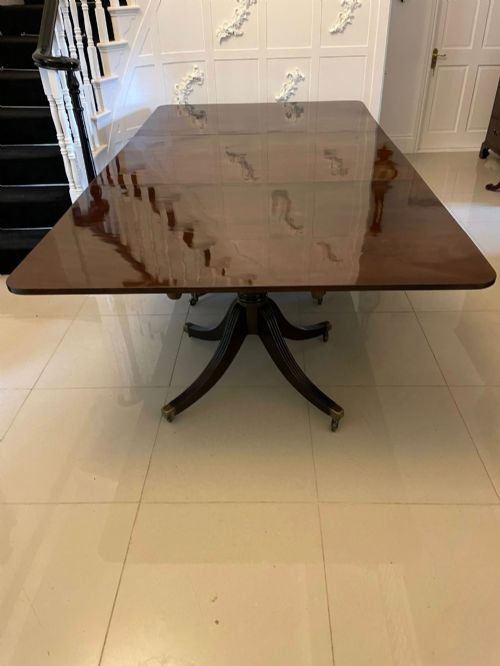
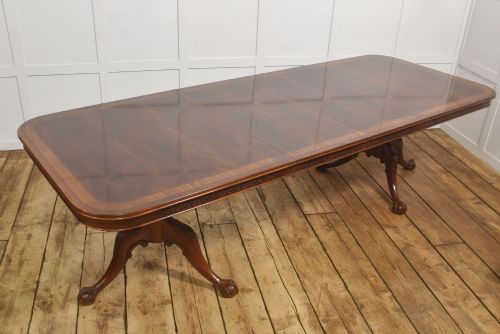
Extending Pedestal Table
An extending pedestal table offers a practical surface for dining that expands on central columns to seat larger gatherings.
Extending Pedestal Table
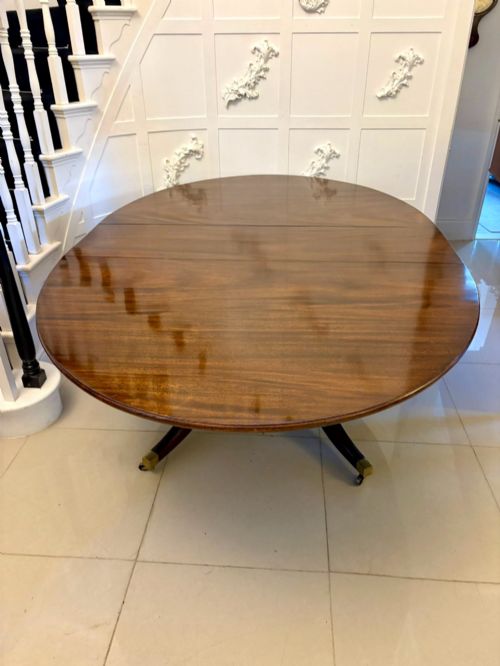
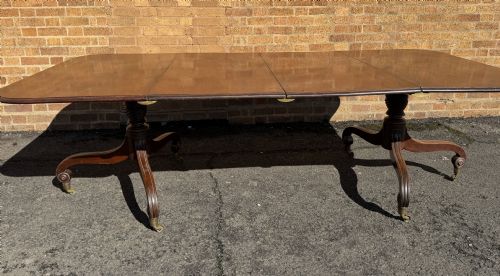
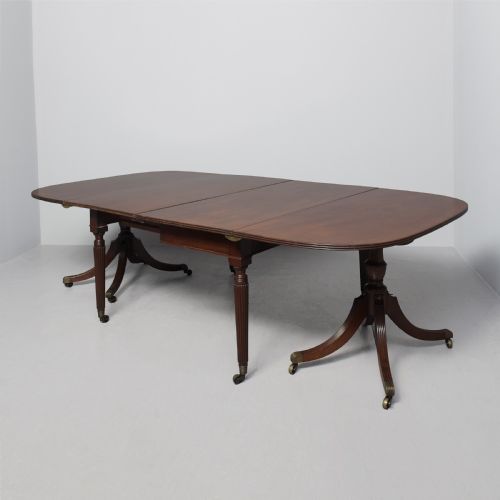
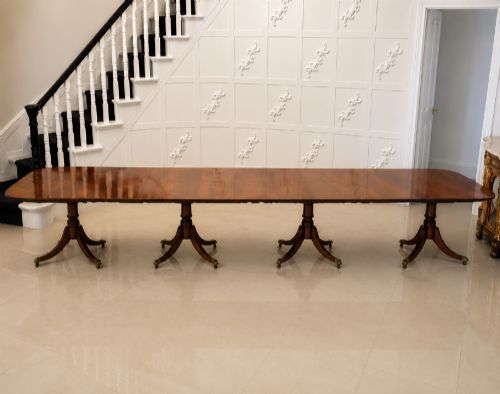
An extending pedestal table provides a versatile dining surface supported by one, two, three, or four central columns rather than traditional corner legs. This configuration allows diners to sit comfortably without legs obstructing their placement.
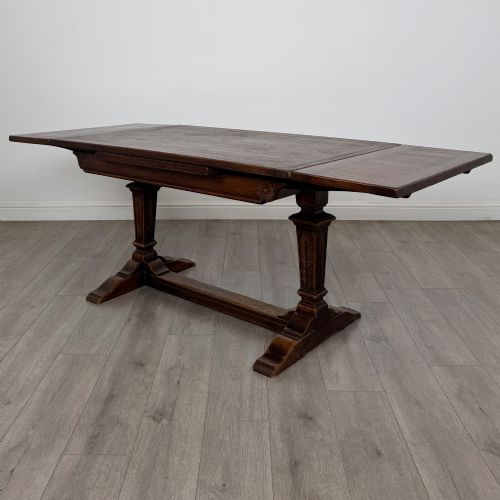
The selections span several periods, most notably the Georgian and Regency eras, alongside later revival pieces from the twentieth century. Mahogany remains the dominant timber across these pieces, supplemented by oak, walnut, and rosewood.
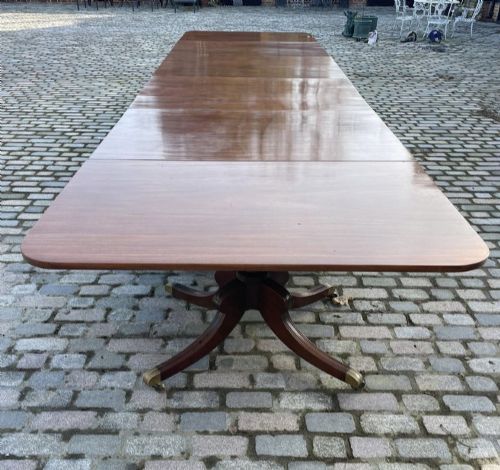
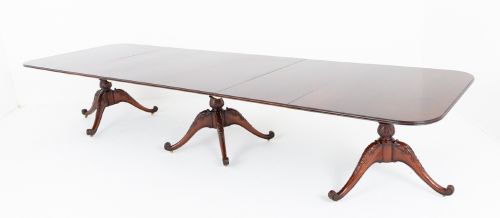
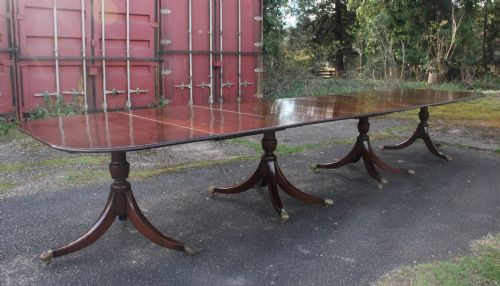
Most examples function as dining tables, ranging from compact twin-pillar formats seating eight people to extensive multi-pillar banquet tables accommodating over twenty guests. Insertable leaves or wind-out mechanisms adjust the overall length of the surface.
Materials and construction
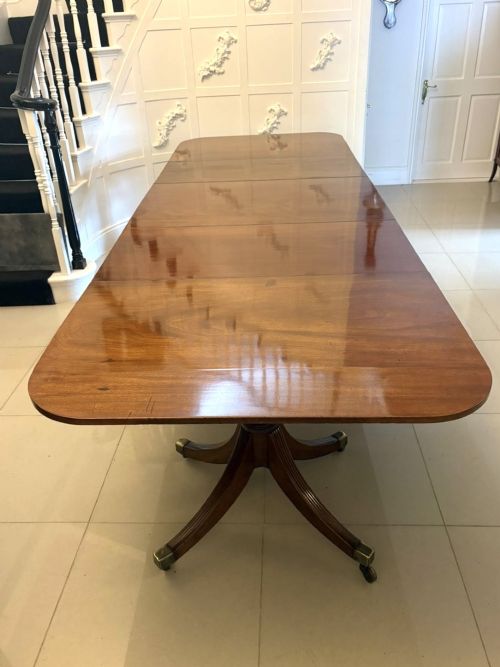
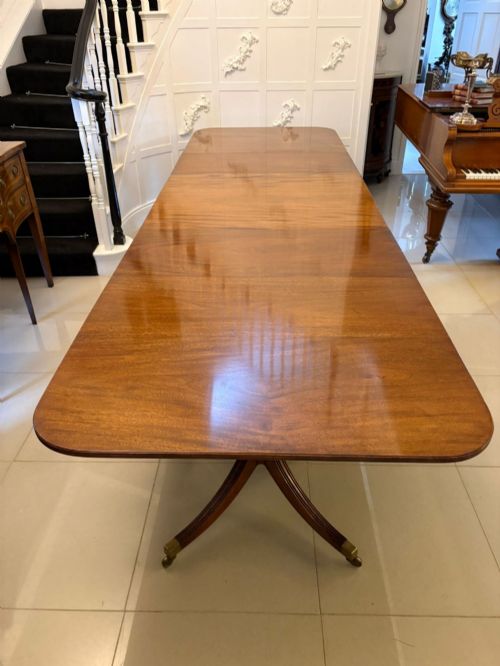
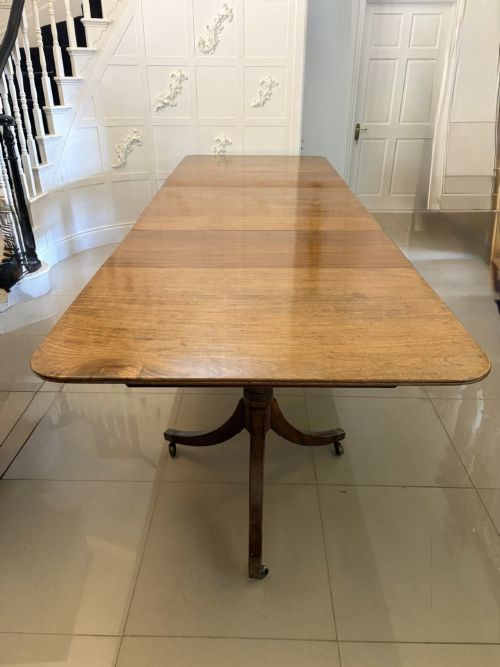
Cabinet makers constructed the primary surfaces from solid or figured mahogany, employing brass clips and castors on the pedestal bases for stability and mobility. Secondary timbers such as oak occasionally support internal framing and extension tracks.
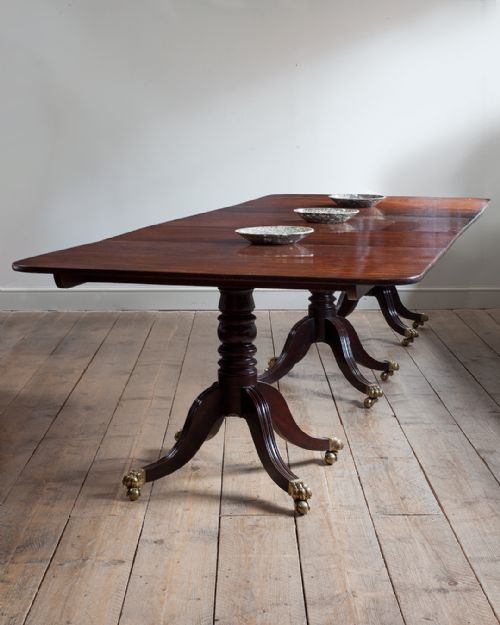
Mechanisms rely on wooden runners, internal winding gears, or drop-in leaves that bridge the central pillars. Pedestals often feature turned columns resting on reeded tripod or quadruped legs.
Certain antique tables stretch long enough to host twenty-four guests, requiring a small workout with the winding handle just to set the dining room for dinner.
Quality variations
Quality rests upon the selection of timber, particularly the grain figuration visible across the mahogany or walnut table top. Dense, well-matched veneer and solid primary timber display superior cabinet work.
Engineering of the extension mechanism dictates structural performance during expansion. Smooth operation of the internal tracks and sturdy column junctions distinguish fine workshop production from simpler builds.
Gillows of Lancaster·Thomas Butler of London·Wylie and Lochead·Whytock and Reid
The Extending Pedestal Table Glossary
- Twin-pillar
- A table design utilising two central pedestals to support the top. This configuration suits medium-length dining formats and accommodates additional leaves.
- Wind-out mechanism
- An internal geared system operated by a handle that parts the table top to accept extension leaves. It enables smooth adjustment of the surface length.
- D-end
- A semi-circular table end resembling the letter D. These sections detach or part when leaves are added to form a longer rectangular banquet surface.
- Draw leaf
- A tabletop construction featuring under-leaves that pull out from each end. This mechanism extends the surface quickly without storing separate loose boards.
Extending Pedestal Table: Frequently Asked Questions
How do extension mechanisms operate?
Many tables utilise a winding handle that turns internal metal gears to pull the table halves apart. Loose leaves are then dropped into the created central gap.
Other formats rely on manual sliding runners where sections pull apart by hand before inserting additional wooden leaves.
How many people can sit at these tables?
Seating capacity depends on the number of pedestals and inserted leaves. Twin-pillar formats typically seat eight to twelve guests comfortably.
Larger triple and quadruple pillar banquet tables extend to accommodate twenty or more diners for formal occasions.
How do I identify a Regency table?
Regency pieces often display figured mahogany surfaces paired with reeded pedestal legs, brass paw castors, and brass toe caps. The timber grain and column turning reflect early nineteenth-century cabinet making.
Revival pieces from the twentieth century replicate these specific design traits but show different internal hardware and secondary wood choices.
Where should I place an extending table?
Position the table centrally in a dining room to allow clearance around the pedestal base and extended leaves. Ensure adequate surrounding floor space for chairs when the table is fully opened.
Keep the timber away from direct heat sources and strong sunlight to protect the polished mahogany or walnut finish.