

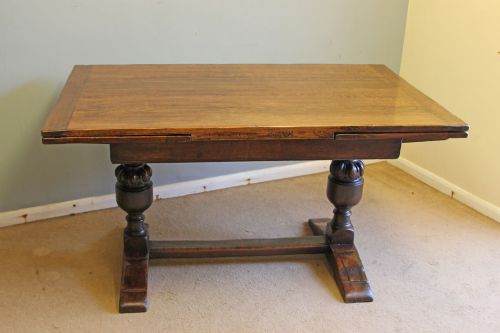
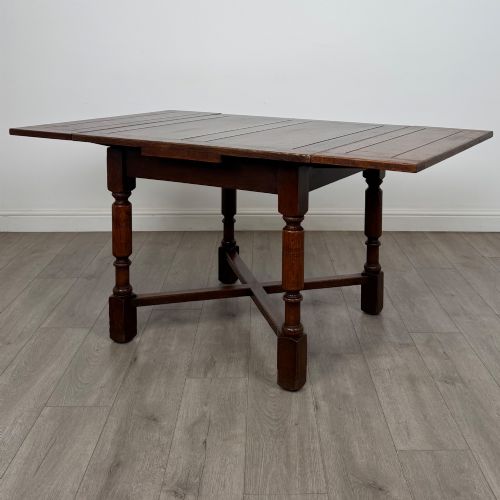


Extendable Refectory Table
These extendable refectory table examples bring enduring timber construction and adaptable surface space to any interior.
Extendable Refectory Table
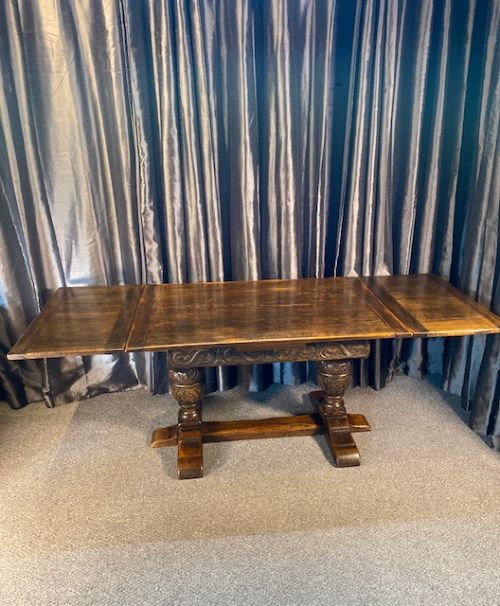
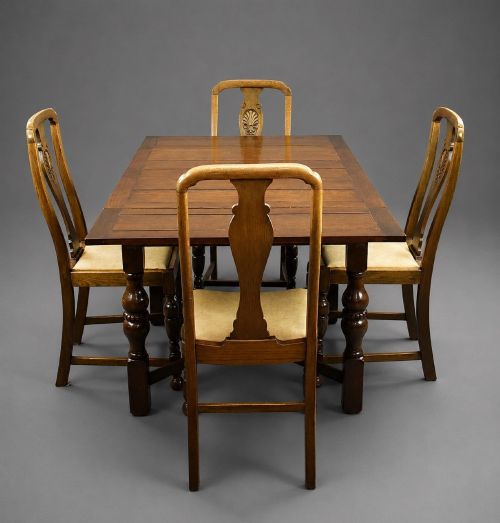
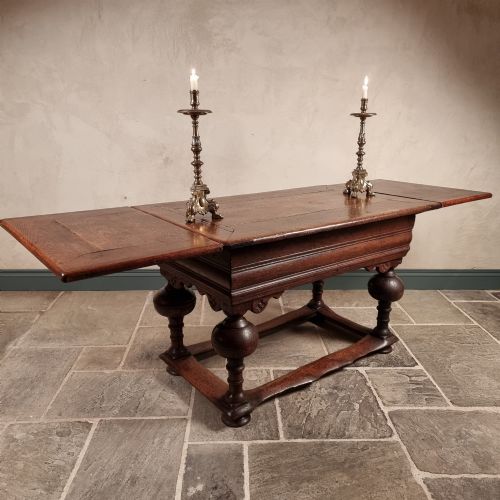
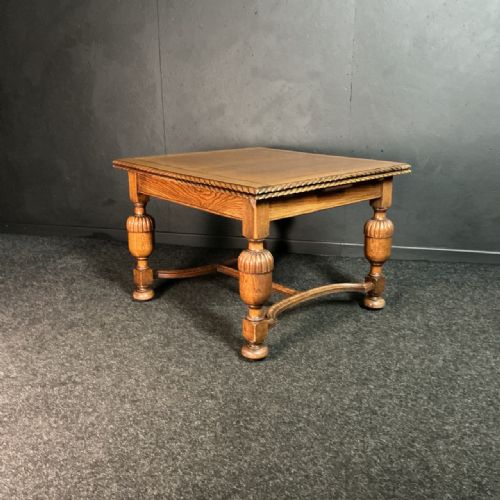
An extendable refectory table provides the long proportions historically suited to communal dining alongside mechanisms that expand the surface. Buyers exploring this phrase encounter forms derived from utilitarian origins, adapted through various eras.
The selections available here lean heavily toward oak construction, frequently manifesting as draw leaf designs. Pieces span from the seventeenth century through to Edwardian and later revival periods.
Variations include rustic farmhouse interpretations, Arts and Crafts examples, and Jacobean revival styles with carved bases. Walnut and pine also appear alongside the dominant oak framing.
How they were made
Makers relied primarily on solid oak, walnut, and pine to construct these large dining surfaces and their supportive underframes. Timber selection governed both the durability and the visual weight of each piece.
Extension mechanisms such as draw leaves or drop leaves were integrated into the structural design to allow the surface area to increase without compromising stability. Joinery techniques ensured the long tops remained flat and supported under daily use.
Extendable Refectory Table Retail Price Guide 2026
Typical asking prices for extendable refectory table among the pieces listed under this phrase on Sellingantiques today, from the lower quarter to the upper quarter. They describe what is for sale here now, not the wider market.
What varies in quality
The sophistication of the timber grain and the depth of the finish distinguish finer examples from simpler vernacular pieces. Superior construction is evident in how seamlessly the extension mechanism operates and aligns with the main top.
Carved detailing on the bases and the proportion of the timber framing create a more refined silhouette. Age and historical integrity also separate straightforward utilitarian boards from expertly worked workshop pieces.
Maple and Co
The Extendable Refectory Table Glossary
- Draw leaf
- A table design featuring leaves stored beneath the main top that pull out to extend the surface length. This mechanism allows the dining capacity to increase with minimal effort.
- Refectory table
- A long narrow dining table historically used in monasteries and great halls for communal meals. Modern iterations retain the elongated proportions.
- Jacobean Revival
- A nineteenth or twentieth-century style imitating the heavy, geometric carved woodwork of the early seventeenth century. It often incorporates dark oak and turned supports.
- Arts and Crafts
- A design movement prioritising traditional craftsmanship and simple forms over mass production. Pieces from this tradition often highlight honest timber construction.
Extendable Refectory Table: Frequently Asked Questions
How do draw leaf tables work?
Draw leaf tables feature two additional panels tucked beneath the main surface. When pulled outward, these leaves slide up and lock into place to lengthen the table.
This clever mechanical setup doubles the usable dining space without requiring separate storage boards.
What is a refectory table?
A refectory table is a long, narrow wooden table historically designed for communal dining in monastic refectories or large halls. Their robust frames were built to withstand heavy daily use.
Contemporary versions adapt these generous proportions for domestic dining rooms and kitchens.
How do I identify a Jacobean revival table?
Jacobean revival pieces typically feature dark oak timber, heavy turned legs, and geometric carved decoration. These elements emulate the seventeenth-century aesthetic popular during later Victorian and Edwardian revivals.
Examining the construction methods and timber ageing helps distinguish genuine older work from later interpretations.
Are these tables suitable for everyday dining?
These tables are constructed from sturdy timbers like oak and walnut, making them well-suited for daily family use. Their extendable formats provide flexible seating arrangements for both quiet meals and larger gatherings.
Routine maintenance with appropriate wood care keeps the surfaces resilient against regular wear.