

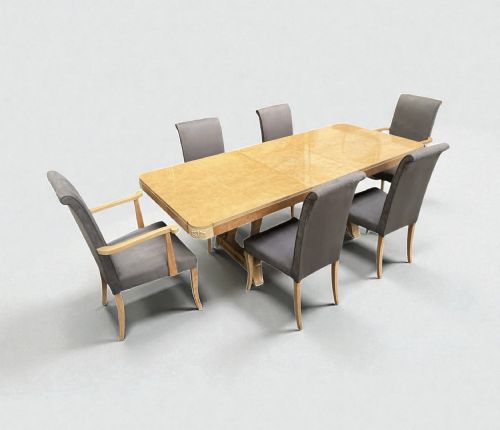


Extendable Dining Furniture
Extendable dining furniture brings together centuries of British and continental craft, offering flexible seating for every gathering through clever leaves and mechanics.
Extendable Dining Furniture
Extendable dining furniture spans centuries of domestic life, taking the form of dining tables, complete dining suites, and drop-leaf tables designed to alter their footprint as needed.
The pieces appearing on this page stretch from the robust oak construction of the seventeenth century through the refined mahogany proportions of the Georgian and Regency eras, extending into the Victorian, Edwardian, and Art Deco periods.
Mahogany remains the dominant wood across these offerings, joined by oak, walnut, and birds eye maple, often accompanied by brass fittings and clever internal mechanisms like wind-out systems and drop leaves.
How they were made
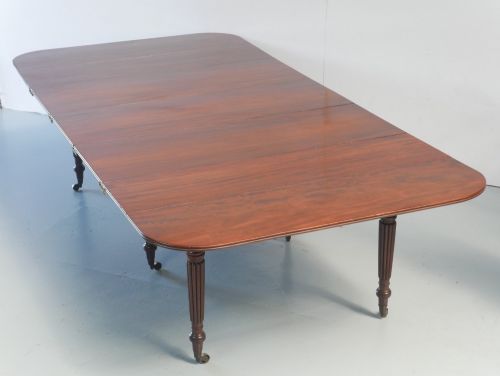
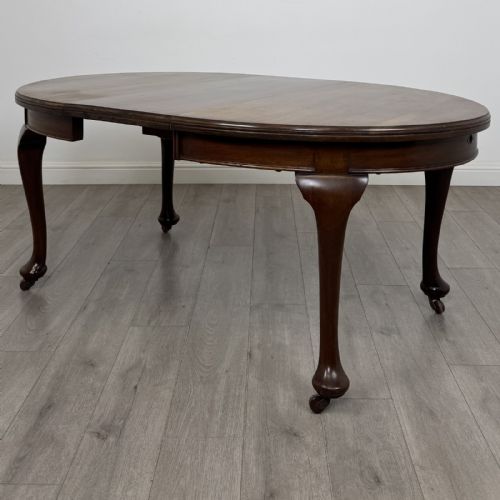
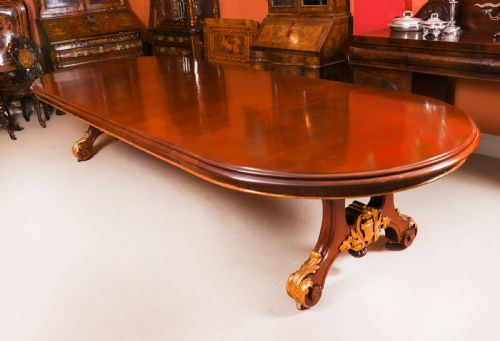
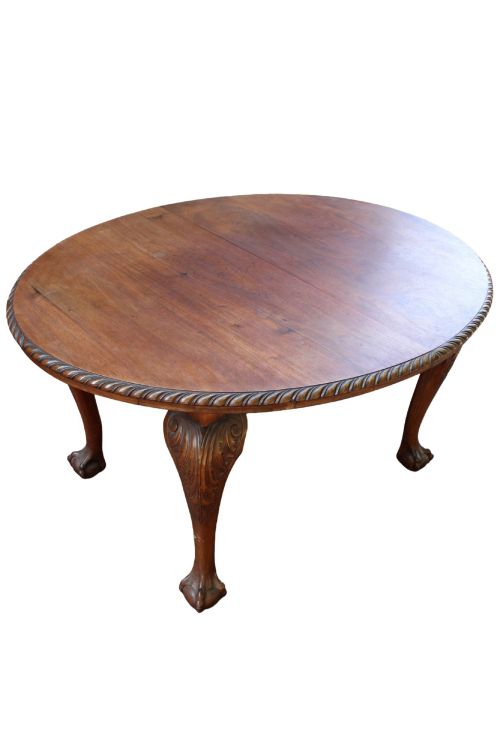
Cabinetmakers built these tables using dense timbers like mahogany and oak, frequently selecting figured veneers for top surfaces and supporting them with sturdy pedestals, gatelegs, or carved cabriole legs.
Mechanisms were engineered to handle repeated expansion, utilising brass tracks, winding screws, and drop-leaf hinges that allowed single pieces to transition smoothly between everyday use and large banquets.
Extendable Dining Furniture Retail Price Guide 2026
Typical asking prices for extendable dining furniture among the pieces listed under this phrase on Sellingantiques today, from the lower quarter to the upper quarter. They describe what is for sale here now, not the wider market.
Tables that once hosted grand Georgian feasts now happily accept modern laptops and homework.
What varies in quality
The distinction between tiers rests upon the choice of timber, such as figured walnut or select mahogany, and the ambition of the carved ornament on bases, legs, and friezes.
Engineering precision sets the finest examples apart, visible in how smoothly internal winding mechanisms operate and how well matching table leaves store and align with the main top.
Wylie & Lochead, Glasgow·Hille·Whytock & Reid of Edinburgh·Gillows·William Trotter
The Extendable Dining Furniture Glossary
- Wind out
- A mechanical system utilising a handle and internal screws to separate table halves so additional leaves can be inserted. This innovation defined many nineteenth-century designs.
- Gateleg
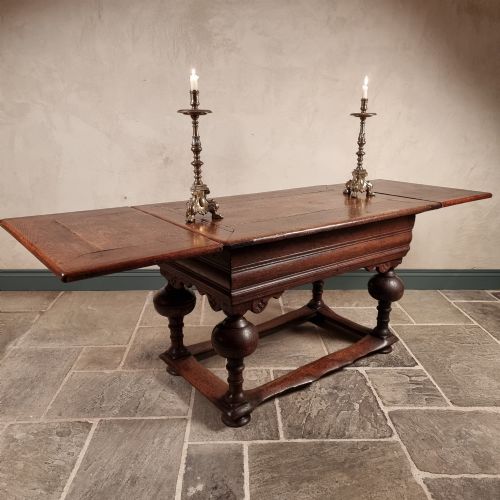
- A table style where hinged legs swing out like gates to support folding leaves. Seventeenth-century oak examples frequently employ this sturdy configuration.
- Drop leaf
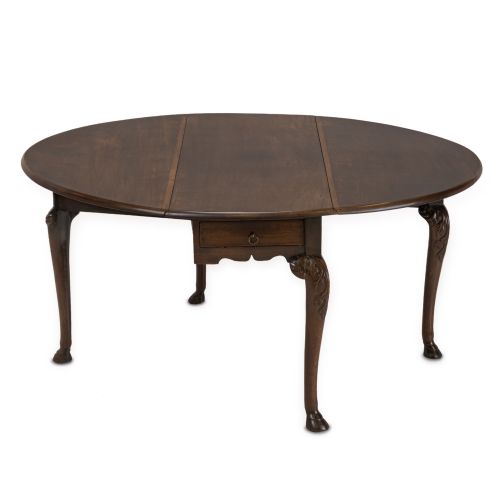
- A table featuring a fixed centre section with hinged flaps on either side that drop down when not in use. Eighteenth-century iterations often rest on slender cabriole legs.
- Pedestal
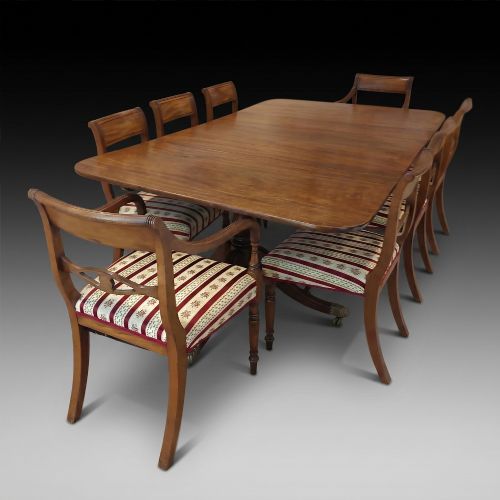
- A central supporting column, sometimes double or triple, that holds up the tabletop and leaves floor space clear. Regency and Victorian makers favoured this form for large dining tables.
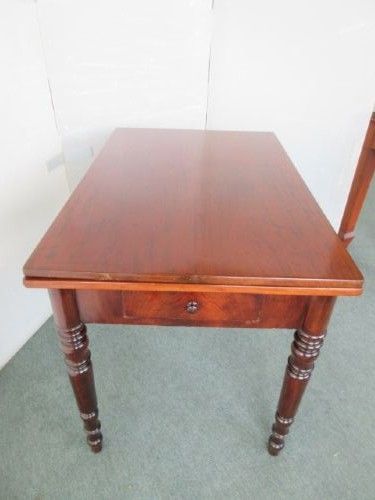
- Draw leaf
- An extension system where auxiliary leaves slide out from beneath the main top. This method provides immediate surface expansion without requiring separate loose leaves to be stored elsewhere.
Extendable Dining Furniture: Frequently Asked Questions
How do wind-out dining tables operate?
These tables rely on a concealed internal screw mechanism operated by a removable crank handle. Turning the handle drives the table halves apart along brass tracks to create a gap for extra leaves.
Once the leaves are dropped into place, the crank is turned in reverse to lock the top tightly together, ensuring a stable surface for dining.
What periods are common for extendable tables?
The selection spans from seventeenth-century oak gateleg tables to nineteenth-century mahogany pedestals and Edwardian oval tops. Georgian and Regency pieces appear frequently alongside later Victorian and Art Deco designs.
Each period brings distinct timber choices, structural forms, and extension methods suited to the domestic habits of its time.
How do drop-leaf dining tables expand?
Drop-leaf tables expand by lifting the hinged side flaps into a horizontal position and swinging supporting wooden legs or gate structures underneath them. This allows the surface area to double with minimal effort.
Earlier examples from the eighteenth century often pair this format with carved cabriole legs and hoof feet.
Are extra leaves usually stored separately?
Loose leaves for wind-out tables are generally stored apart from the table when not in use, requiring dedicated space in a sideboard or cupboard. Draw-leaf tables differ by housing their extensions beneath the main top, ready to pull out instantly.