

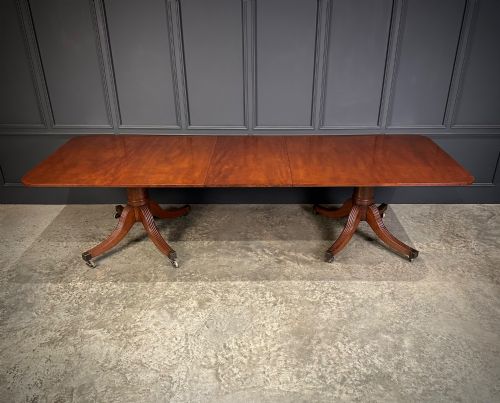
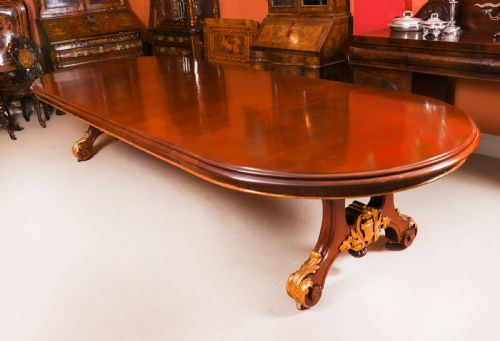
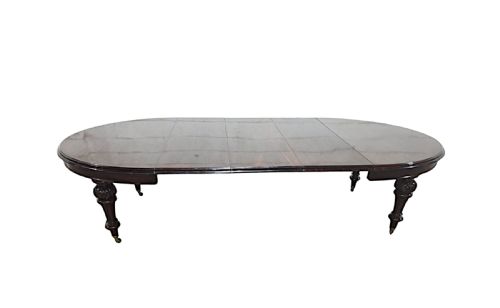
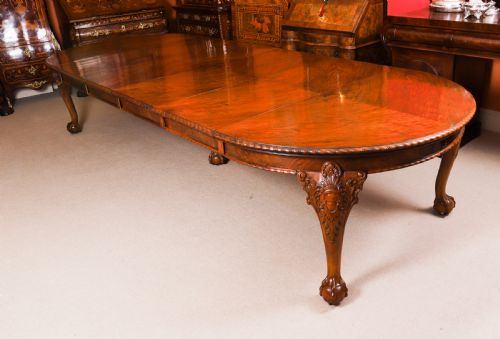


Extendable Banqueting Table
An extendable banqueting table brings scale and hospitality together, designed to seat large gatherings through the addition of leaves or pillar mechanisms.
Extendable Banqueting Table
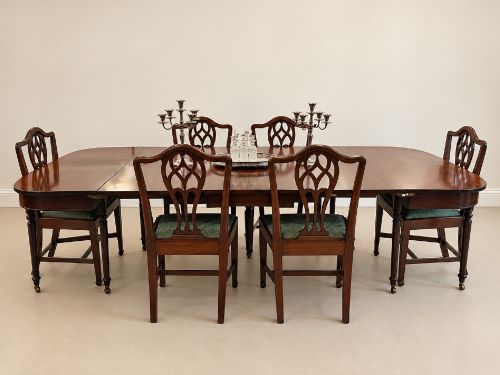
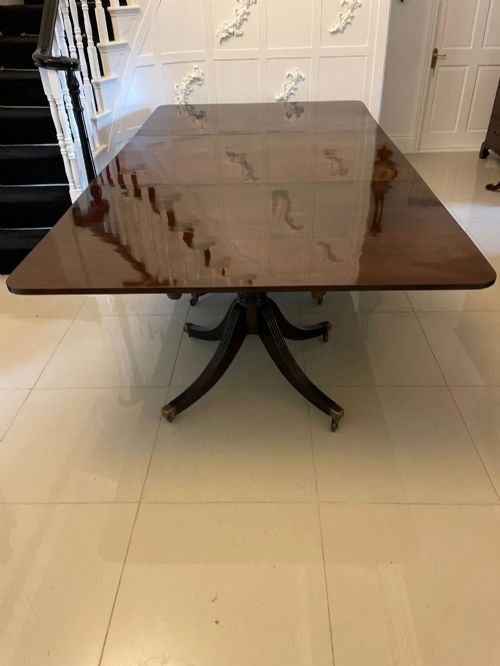
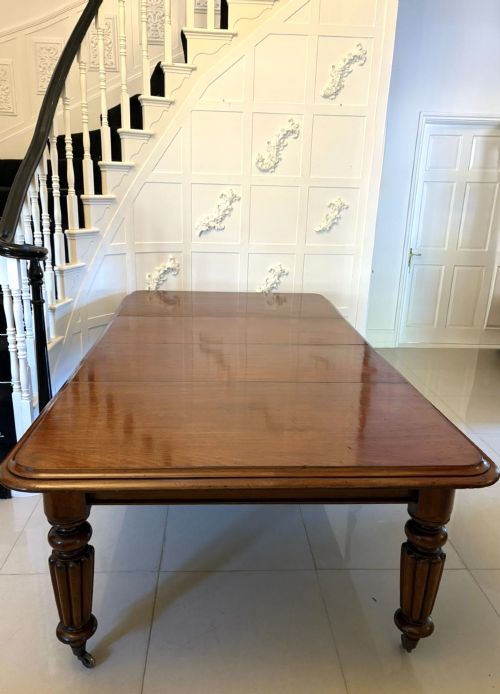
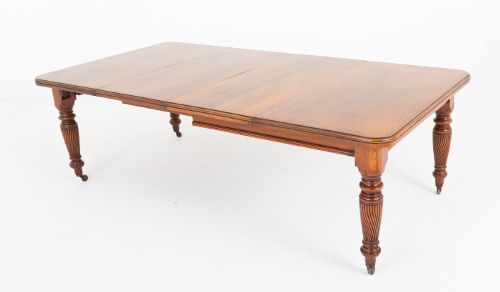
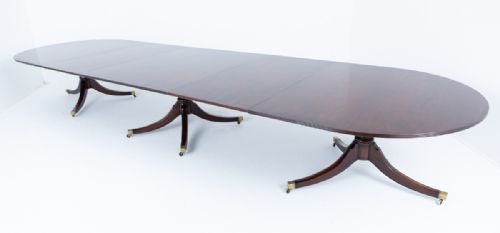
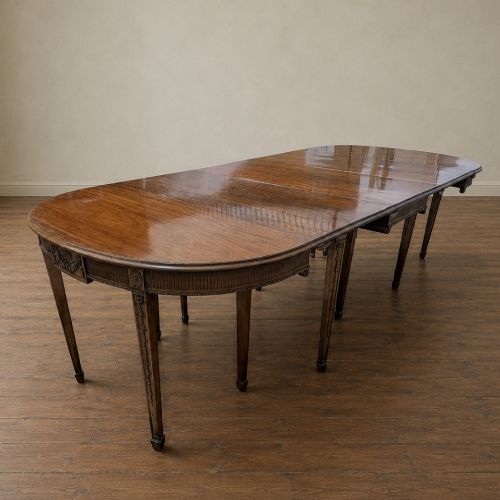
When searching for an extendable banqueting table, collectors encounter substantial dining pieces created to accommodate large assemblies of guests. These large tables originate primarily across the Georgian, Regency, and Victorian periods, utilising sturdy structural forms to handle multiple extra leaves.
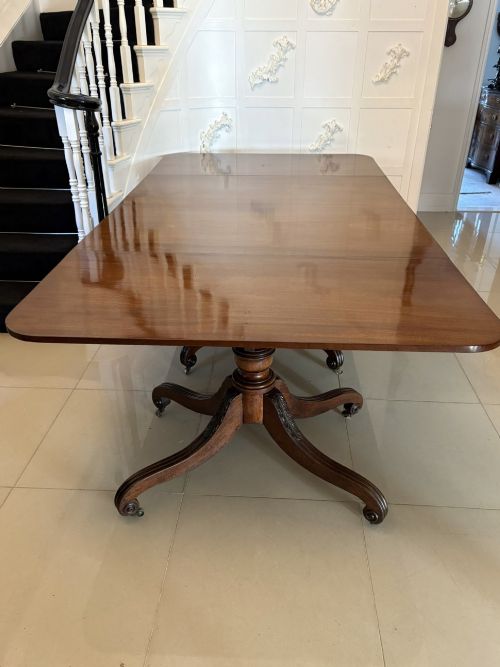
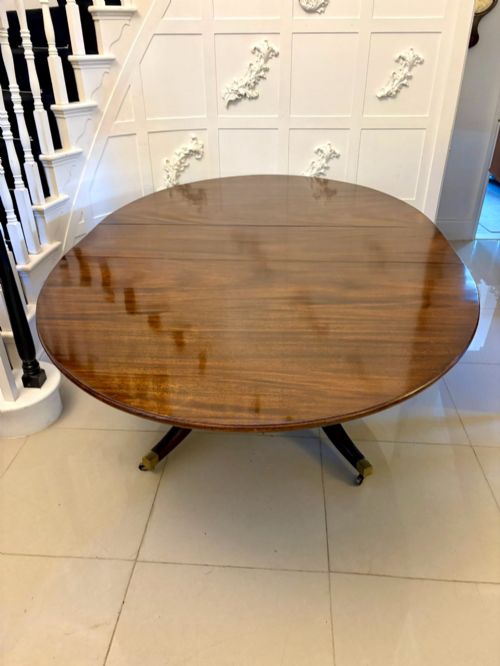
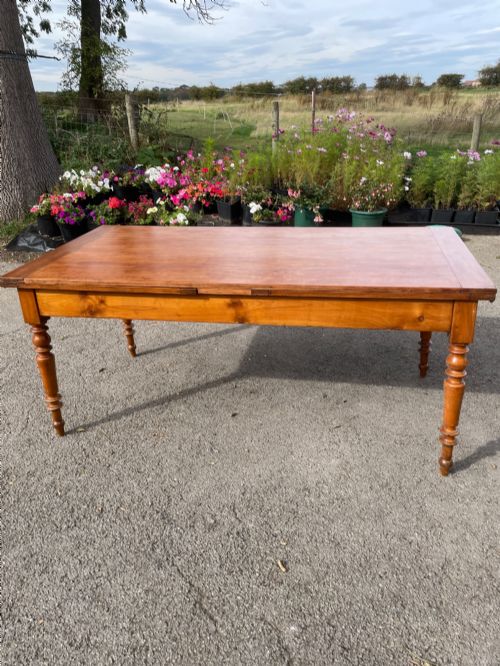
The most common examples on this page are mahogany pedestal or pillar tables spanning significant lengths, often seating ten to twenty people. Alongside traditional mahogany, variations in blonde oak, cherrywood, and burr walnut appear within nineteenth-century and revival designs.
Proportions shift from twin-pedestal formats up to extensive four-pedestal arrangements designed for formal dining rooms. The addition of removable leaves defines the extendable nature of these pieces, allowing the surface length to alter according to occasion.
Materials and Construction
Cabinet makers relied heavily on figured mahogany, Cuban mahogany, and flame mahogany, frequently selecting timbers with rich grain patterns for top surfaces. Walnut, burr walnut, oak, and cherrywood also form the primary structure of these large dining pieces.
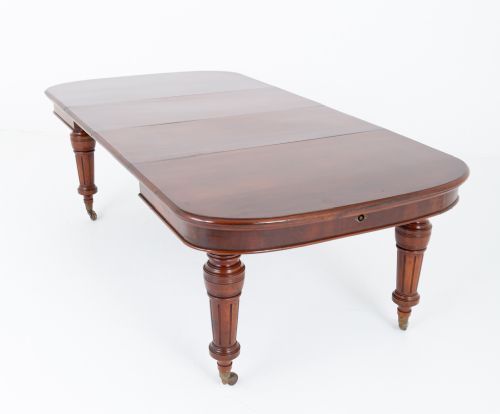
Mechanical ingenuity underpins the extendable banqueting table, utilising screw-driven wind-out mechanisms or stable pillar and pedestal supports that separate to receive extra leaves. Brass components, including castors and locking clips, assist in stabilizing the extended wooden sections.
Extendable Banqueting Table Retail Price Guide 2026
Typical asking prices for extendable banqueting table among the pieces listed under this phrase on Sellingantiques today, from the lower quarter to the upper quarter. They describe what is for sale here now, not the wider market.
Some dining tables require three people and a special crank handle just to reach full banquet length.
Assessing Craftsmanship and Distinction
Distinction in an extendable banqueting table rests upon the selection of timber, particularly matched grains across multiple inserted leaves and the primary top. Superior examples demonstrate rigorous cabinet-making standards in the stability of their pedestal bases and the seamless alignment of the extending mechanism.
Provenance and maker attribution elevate certain pieces, with workshops such as Gillows or Maple and Co representing high levels of nineteenth-century design and execution. The integration of solid brass hardware and precise joinery further separates standard production from exceptional examples.
William and Gibton·Wylie and Lochead·Maple and Co·Robert Adam·Gillows
The Extendable Banqueting Table Glossary
- Pedestal
- A central support column, often single, double, or triple, holding up the weight of long dining surfaces. These columns frequently terminate in splayed legs with brass castors.
- Wind-Out Mechanism
- An internal geared system operated by a crank handle that extends the frame to insert additional leaves. This mechanical development gained widespread adoption during the nineteenth century.
- D-End
- A semi-circular table end shape popular in Georgian and Regency dining furniture. When separated from the middle section, these ends function as standalone side tables.
- Flame Mahogany
- Timber cut to expose a distinctive flickering, flame-like grain pattern. Cabinet makers utilised this veneer on high-status dining surfaces to create visual movement.
Extendable Banqueting Table: Frequently Asked Questions
How do wind-out mechanisms function?
Internal metal screws and wooden runners expand the framework evenly as the crank handle turns. This allows one person to separate the table halves smoothly.
Additional leaves drop securely into the central gap once the frame reaches the desired length. Brass clips underneath lock the sections tightly together.
How were these tables used historically?
Large dining tables served grand households during formal dinners and banquets. Servants adjusted the length using extra leaves depending on the number of attending guests.
Between major gatherings, sections separated to function as side tables or smaller console arrangements. This flexibility made them essential for large country houses and town residences.
How should I care for a mahogany surface?
Apply traditional beeswax polish periodically to nourish the timber and maintain a soft lustre. Avoid placing the wood near direct heat sources or strong sunlight.
Use protective mats beneath hot dishes and moisture-retaining items. Gentle dusting with a soft cloth prevents surface scratches from accumulating.
How do I distinguish Regency from Victorian examples?
Regency tables typically display cleaner architectural lines, brass paw castors, and pillar supports influenced by classical antiquity. Timbers often feature rich flame mahogany veneers.
Victorian pieces tend toward heavier proportions, darker finishes, and more elaborate carved detailing on the pedestals and borders. Mechanical sophistication also advanced rapidly during the Victorian era.