



Executive Library Seating
Executive library seating brings together sturdy timber frames and supple leather upholstery to create commanding chairs fit for grand studies and quiet reading rooms.
Executive Library Seating
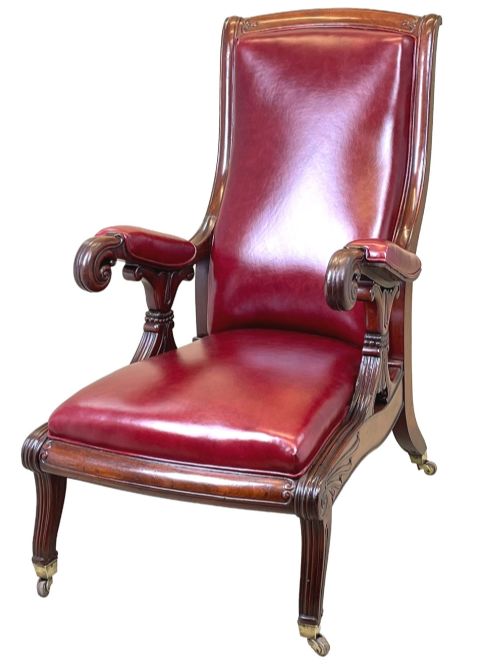
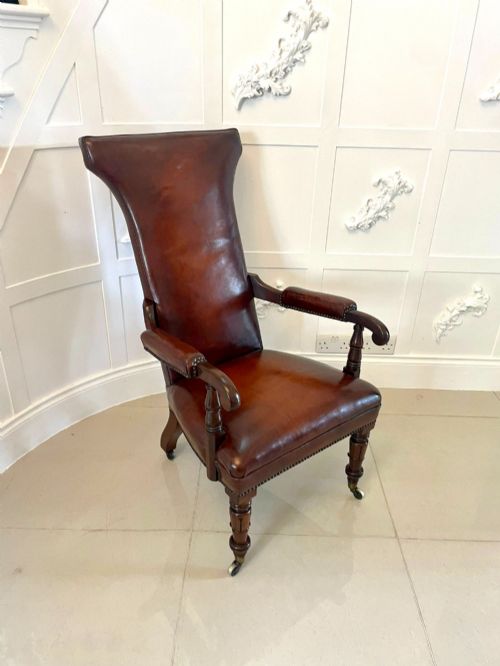
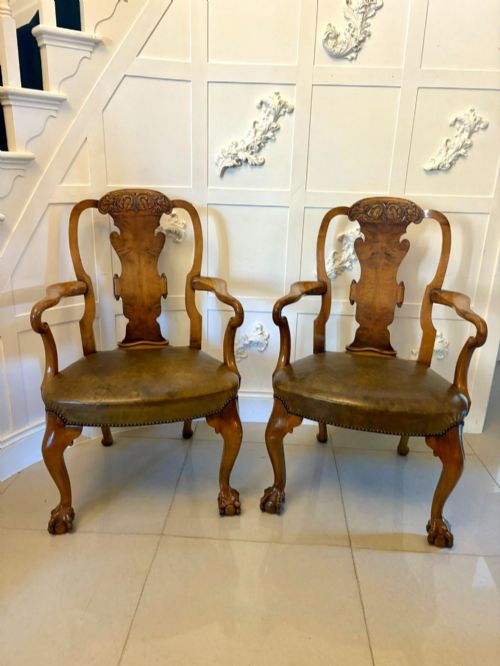
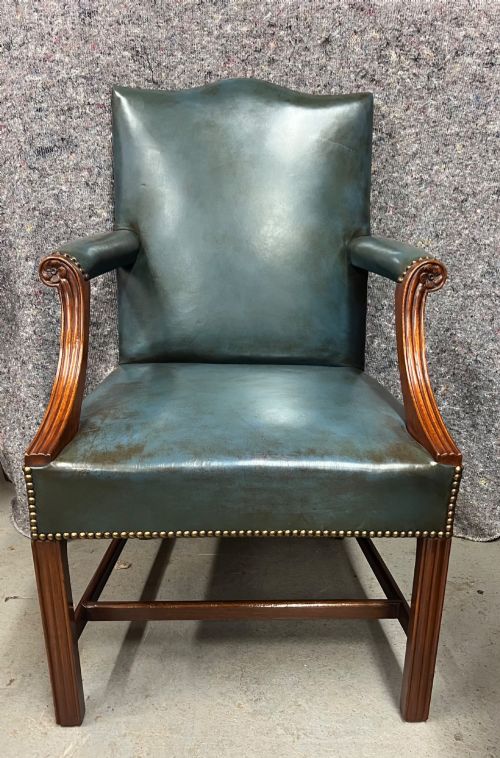
Executive library seating encompasses substantial armchairs and desk chairs designed for study and reading spaces, appearing in forms such as swivel office chairs, open armchairs, and buttoned library armchairs. These pieces emerge from periods ranging through the Regency era, the Victorian decades, and into the early twentieth century.
The selections on this page demonstrate a clear preference for robust timbers like mahogany, walnut, oak, and rosewood, frequently paired with fitted leather upholstery. Buyers encounter formal Gainsborough styles alongside functional revolving office chairs and grand porter's chairs.
Makers and designers from historical workshops such as Gillows influence several of these forms, introducing sophisticated lines and refined turning. Whether opting for a heavy Victorian walnut frame or a lighter Regency mahogany design, the focus remains on combining physical support with formal dignity.
How these chairs were made
Craftsmen built these chairs using dense cabinet timbers including mahogany, walnut, oak, and rosewood, shaping structural elements through traditional joinery and turning. Frames frequently feature carved details or simpler moulded lines depending on the prevailing style of the period.
Upholstery involved stretching supple leather across padded seats and backs, often secured with brass studs and accented by deep buttoning. Revolving variants incorporated cast iron mechanisms to allow movement and height adjustment at the desk.
Executive Library Seating Retail Price Guide 2026
Typical asking prices for executive library seating among the pieces listed under this phrase on Sellingantiques today, from the lower quarter to the upper quarter. They describe what is for sale here now, not the wider market.
Period styles span from Regency and William IV designs through Victorian interpretations to early twentieth-century office seating.
What varies in quality
The grade of timber selection and the sharpness of carved details set finer examples apart from standard workshop output. Dense mahogany and figured walnut display natural grain patterns that elevate the visual presence of the frame.
Attention to structural proportion and the integration of the leather upholstery dictate the overall success of the piece. Superior construction ensures the armrests, legs, and back supports remain rigid and balanced through continuous use.
The Executive Library Seating Glossary
- Gainsborough armchair
- A wide seat with an open upholstered back and arms, designed in the eighteenth century and revived in later periods for desk use.
- Porters armchair
- A high hooded chair originally created to shield inhabitants from draughts in entrance halls, upholstered here in brown leather.
- Library armchair
- A comfortable seated form with upholstered armrests intended for long hours of reading or writing in private studies.
- Revolving office chair
- A mechanical seating option featuring a swivel base and solid timber frame suited for working at a desk.
Executive Library Seating: Frequently Asked Questions
What defines executive library seating?
These pieces comprise sturdy wooden armchairs and desk chairs built for studies and libraries, combining timber frames with leather upholstery.
They appear in styles spanning the Regency, Victorian, and early twentieth-century periods.
How were these chairs used historically?
Owners placed them in private libraries, offices, and reading rooms for tasks requiring prolonged sitting at a desk or table.
The sturdy frames and padded armrests provided comfort during administrative work or reading.
How do I identify a Regency piece?
Regency examples often feature dark timbers like mahogany and rosewood with classical proportions and understated decorative carving.
They reflect the design influence of major workshops such as Gillows from the early nineteenth century.
Can I use an office desk chair daily?
Many solid oak and walnut revolving chairs from the early twentieth century remain robust enough for regular modern use.
Their mechanical swivel bases and timber frames are built to withstand daily workspace demands.