

Executive Desk Furniture
Executive desk furniture brings substantial period presence to a room, offering grand proportions and disciplined workspace organisation.
Executive Desk Furniture
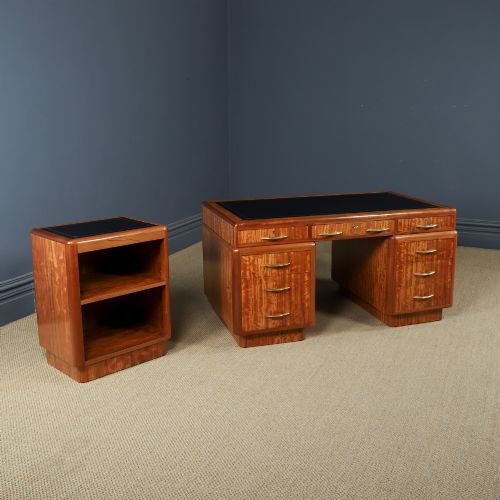
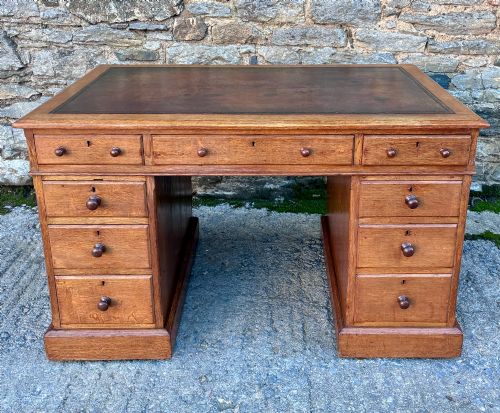
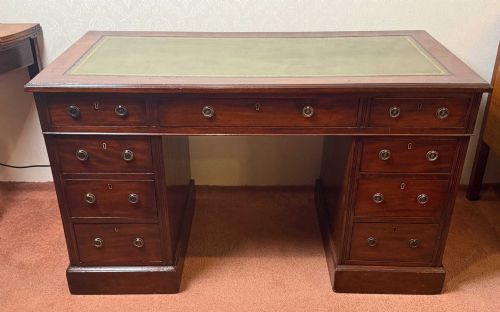
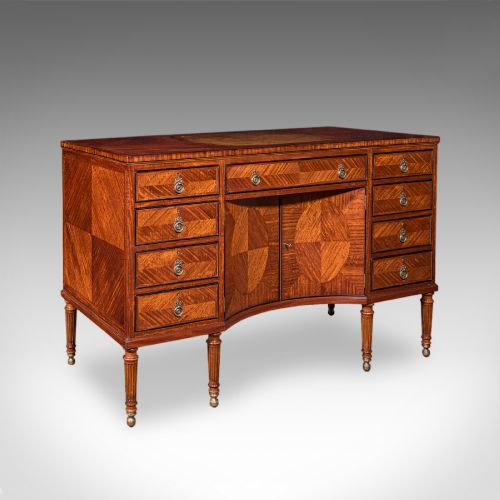
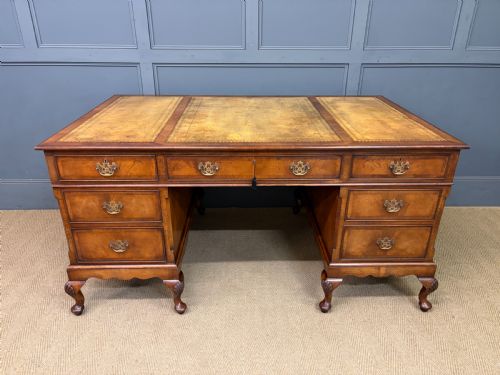
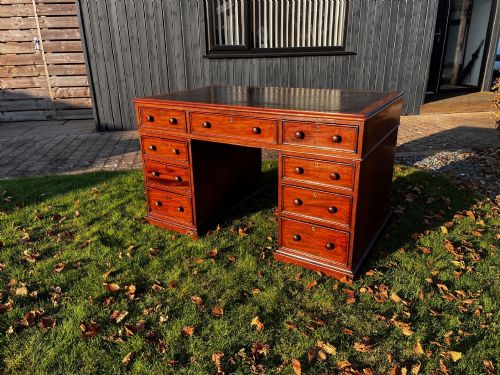
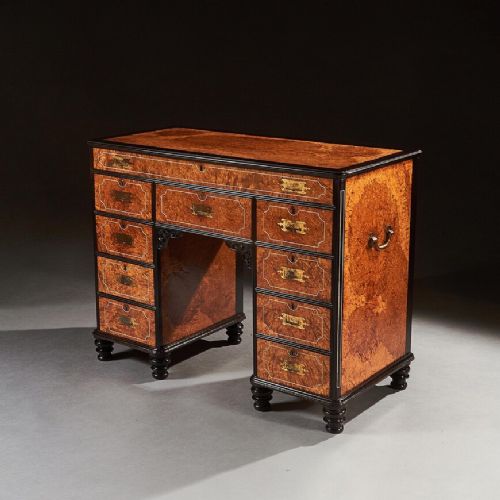
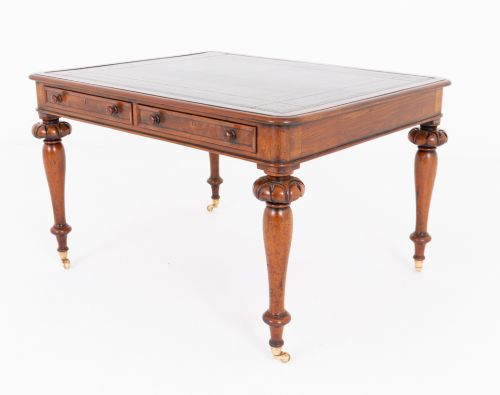
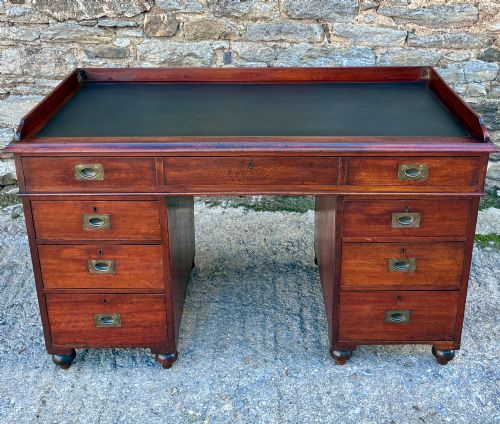
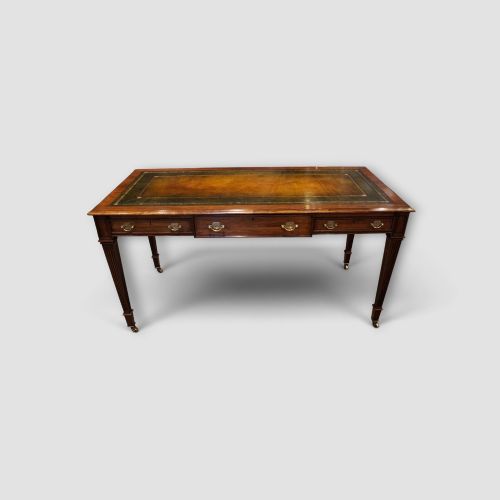
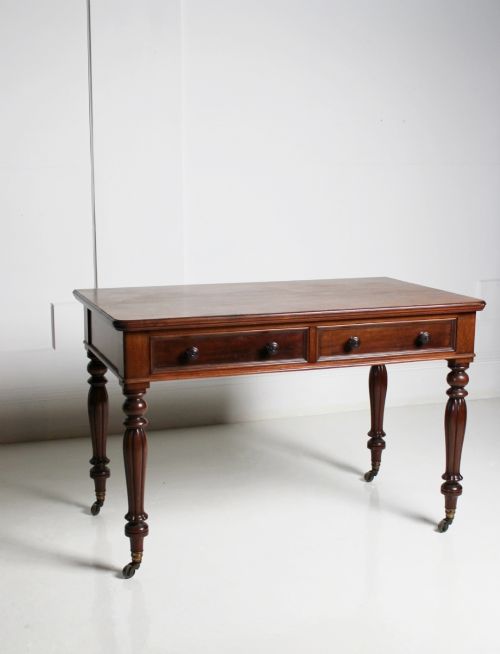
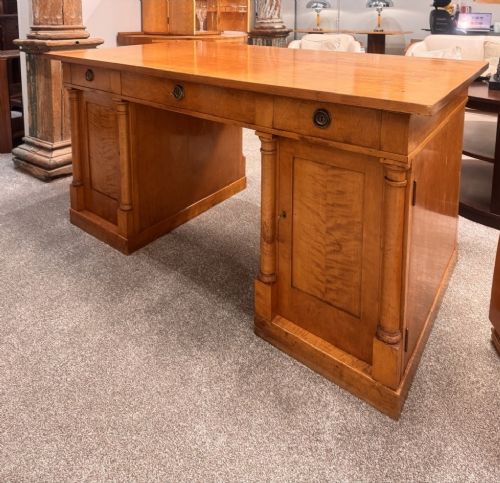
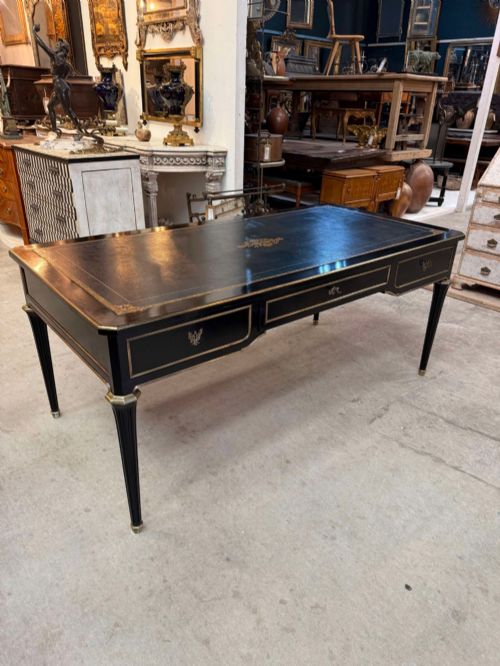
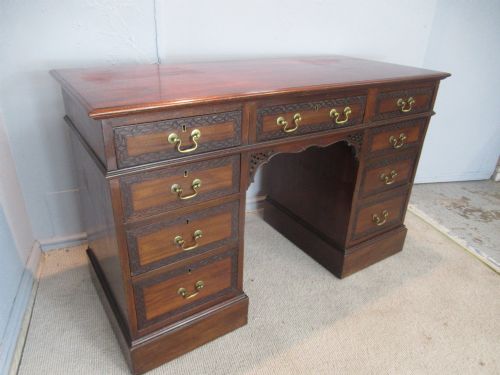
Executive desk furniture covers substantial workspace pieces designed for private studies, libraries, and boardrooms across the eighteenth, nineteenth, and early twentieth centuries. These pieces range from twin pedestal desks and partners desks to writing tables and library tables. Buyers seeking executive desk furniture encounter large foundational items built to anchor a room.
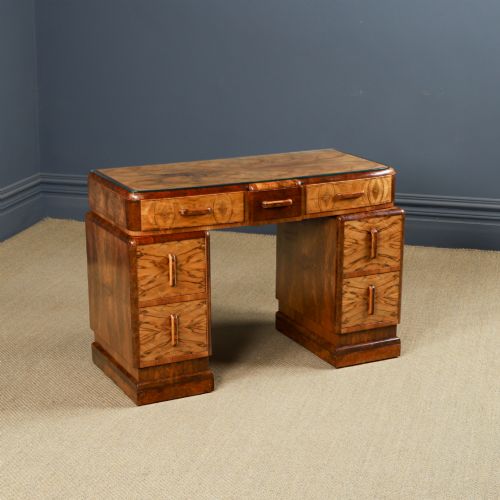
The most common forms on this page are nineteenth-century Victorian pedestal desks and partners desks, alongside Edwardian writing tables and twentieth-century Art Deco desks. These examples often feature leather writing surfaces inset into timber tops. Pieces span multiple stylistic revivals, including Louis XV, Georgian, and Aesthetic Movement designs.
Origin materials vary widely among the listed inventory, moving from traditional mahogany, oak, and walnut to exotic veneers like burr walnut, bird's-eye maple, rosewood, and satin birch. Construction styles include freestanding library tables and double-sided partners desks meant to sit centrally in a room rather than against a wall. The scale of these objects reflects the administrative and domestic demands of their original owners.
How executive desk furniture was made
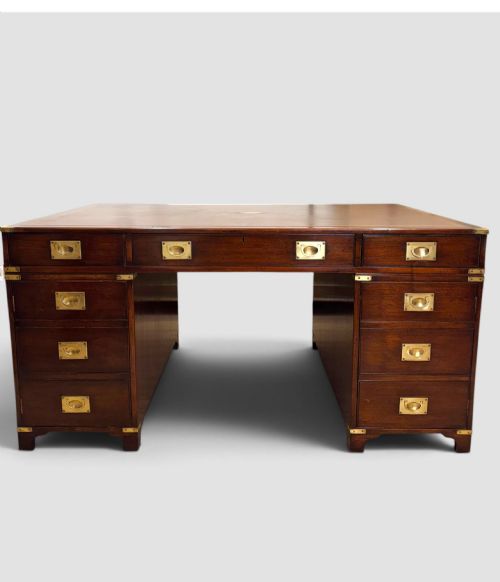
Cabinetmakers constructed these desks using dense hardwoods such as mahogany, oak, and walnut for primary frames and structural carcases. Finer timbers and veneers like burr walnut, satinwood, bird's-eye maple, and kingwood were applied to show surfaces to create decorative grain patterns. Brass hardware, campaign handles, and ormolu mounts frequently accent the timber framework.
Writing surfaces on these desks typically incorporate inset panels of tooled leather, providing a durable and distinct writing plane. Drawers utilise traditional joinery methods within pedestal arrangements, kneeholes, and breakfront configurations. Specialised decorative techniques such as parquetry and Boulle work appear on continental examples from the nineteenth century.
Executive Desk Furniture Retail Price Guide 2026
Typical asking prices for executive desk furniture among the pieces listed under this phrase on Sellingantiques today, from the lower quarter to the upper quarter. They describe what is for sale here now, not the wider market.
The inventory covers multiple eras, including eighteenth-century George III pieces, nineteenth-century Victorian works, Edwardian designs, and 1930 Art Deco creations.
What varies in quality
Quality in these desks is determined by the selection and matching of timber veneers, such as burr walnut or figured mahogany, across large expanses. Superior examples exhibit continuous grain alignment and careful timber choice on all sides, including back panels intended for freestanding placement. Cabinetmaking standards show in the precision of drawer construction, structural stability, and the crispness of carved details.
The integrity of secondary materials, such as original brass mounts, campaign handles, and properly tooled leather writing surfaces, elevates a piece. Maker attribution, through stamps or known workshop signatures, distinguishes standard workshop production from exceptional high-status commissions. The balance of proportions and restraint or execution of period-specific ornamentation dictate the overall standing of an item.
Trollope & sons·Charles Andrea Nosotti·Maple & Co.
The Executive Desk Furniture Glossary
- Partners desk
- A large double-sided desk designed for two people to work opposite one another, featuring drawers and cupboards on both faces.
- Pedestal desk
- A freestanding desk comprising a top surface resting upon two separate drawer pedestals, often joined by a modesty panel.
- Boulle work
- An elaborate form of marquetry utilising tortoiseshell and brass inlay, popular in French decorative arts.
- Parquetry
- Geometric mosaic woodwork used for decorative surfaces on table tops and desk panels.
- Kneehole desk
- A compact desk featuring a central recessed space for the legs, flanked by banks of drawers.
- Secretaire
- A piece of furniture incorporating a writing drawer or fold-down writing surface concealing small compartments.
Executive Desk Furniture: Frequently Asked Questions
What is a partners desk?
A partners desk is a large, double-sided workspace built with drawers and cupboards accessible from both faces. This configuration allowed two individuals to sit opposite each other and work simultaneously.
These pieces were traditionally utilised in libraries, banks, and large administrative offices. Their freestanding design means they are finished on all sides and sit prominently in the centre of a room.
How do I identify a Victorian desk?
Victorian desks are typically constructed from dense timbers like mahogany, oak, or walnut, often featuring deep pedestal configurations and brass hardware. They span the nineteenth century and frequently incorporate inset leather writing surfaces.
Stylistic markers range from heavy, carved academic ornamentation to campaign styles with recessed brass handles. Examining the construction of the interior drawer linings helps confirm nineteenth-century production methods.
Where should I place a large pedestal desk?
Pedestal desks with finished back panels are designed to sit freestanding in the centre of a study or home office rather than pushed against a wall. This positioning displays the craftsmanship of the rear facade and allows easy access to all sides.
Ensure adequate floor space around the desk to accommodate chair movement and drawer extension. Pairing the scale of the desk with an appropriately sized room prevents the furniture from overwhelming the interior.
What is Art Deco desk furniture?
Art Deco desk furniture emerged around 1930, favoring sleek geometric lines, modernist silhouettes, and exotic veneers such as macassar ebony, rosewood, and burr walnut. These pieces often feature contrasting satin birch or maple elements alongside streamlined leather tops.
Unlike nineteenth-century revival styles, Art Deco design minimises heavy carved ornamentation in favour of clean architectural forms. The aesthetic emphasises smooth polished finishes and dramatic wood grain patterns.