

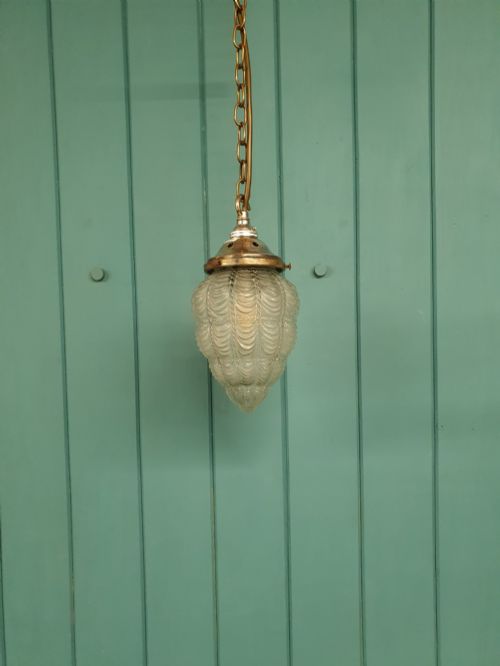


Etched Glass Pendant Shade
An etched glass pendant shade filters light with quiet texture, bringing period character and diffuse illumination to a hall or room.
Etched Glass Pendant Shade
When you search for an etched glass pendant shade, you are looking at single hanging light fixtures designed to suspend from ceilings in halls and living spaces. These pieces combine a glass shade with metal mounts, often paired with brass or other metal frames.
The versions you are most likely to meet on this page span from the nineteenth century through the Edwardian period, 1900, and into the nineteen-twenties and nineteen-thirties. Forms range from simple bowl shades and hall lanterns to large domes and individual pendant lamps.
Makers and designers drew upon styles such as Edwardian, Art Deco, Arts and Crafts, and Italian Rococo Revival. These varied aesthetics mean you can find simple domestic lighting alongside grander crystal bowls and silver gilded lanterns.
Materials and construction
The primary material combination unites glass and metal, specifically utilising brass alongside etched glass, frosted glass, cut glass, crystal, or pressed glass. Metal components such as brass frames and chains provide the structural support for hanging the glass shades safely from ceilings.
Decoration relies on surface techniques where glass is etched, frosted, or cut to create decorative patterns and soften the glare of the bulb. Some examples incorporate tinted glass, such as pink and clear elements, adding warmth to the transmitted light.
Listings feature items spanning the nineteenth century, Edwardian era, nineteen-hundreds, nineteen-twenties, and nineteen-thirties, constructed from brass, crystal, and etched glass.
Judging quality and character
Quality rests in the depth and clarity of the glasswork, where crisp etching and substantial crystal or cut glass elevate a piece above standard pressed alternatives. The heaviness and finish of the metal mountings, particularly solid brass or silver gilt work, also distinguish finer examples.
Proportion and the integrity of the original components dictate desirability. Fixtures retaining their original matching shades and metalwork carry greater architectural presence than assembled or altered pieces.
The Etched Glass Pendant Shade Glossary
- Etched glass
- Glass treated with acid or abrasive materials to wear away the surface and create opaque decorative patterns. This technique softens light distribution while adding visual detail to the shade.
- Pendant light
- A light fixture suspended from the ceiling by a chain, cord, or metal rod. These fixtures hang downward to illuminate specific areas of a room or hallway.
- Hall lantern
- An enclosed ceiling light designed specifically for narrow entranceways and corridors. They often feature protective metal frames enclosing glass panels or shades.
- Cut glass
- Glass decorated by grinding and polishing facets into the surface. The resulting cuts refract light to produce bright highlights and sparkle.
- Frosted glass
- Glass with a textured, cloudy surface that diffuses light evenly across the room. It reduces the harsh glare of internal bulbs.
Etched Glass Pendant Shade: Frequently Asked Questions
How do I hang a pendant shade?
These fixtures suspend from ceiling hooks or electrical junction boxes using their existing chain, cord, or metal mounting. Ensure the ceiling structure supports the weight of the metal and glass components before installation.
Consult a qualified electrician to handle the wiring, particularly when dealing with vintage brass fittings and restored or rewired lamps.
What rooms suit a hall lantern?
Hall lanterns provide concentrated yet diffused illumination suited for narrow entranceways, corridors, and stairwells. Their enclosed design protects the bulb and directs light effectively in transitional spaces.
They also work well in smaller rooms or cloakrooms where a flush or semi-flush hanging light maintains adequate headroom.
How do I date an etched shade?
Dating relies on stylistic markers, such as the geometric lines of Art Deco pieces, the ornate motifs of Italian Rococo Revival, or the restrained elegance of Edwardian designs. The manufacturing techniques and metal patination also provide clues to the period.
Comparing the form and glass type against documented examples from the nineteenth century through the nineteen-thirties helps narrow down the era of production.