



Etched Glass Dish
An etched glass dish brings texture and quiet utility to a table, spanning Victorian geometric patterns and Art Deco crystal.
Etched Glass Dish
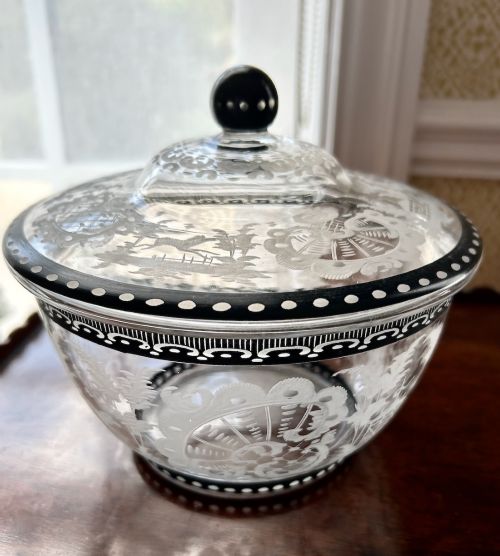
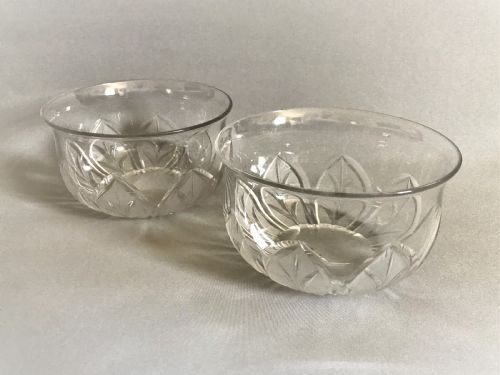
An etched glass dish takes several forms across the Victorian, Edwardian, and Art Deco periods, including finger bowls, tazzas, custard cups, and decorative bowls. Buyers seeking an etched glass dish encounter clear glass, crystal, and cobalt blue vessels shaped for service or display.
The Victorian examples often feature geometric borders such as Greek Key designs or frosted surfaces. Later twentieth century pieces bring in styles like Arts and Crafts and Bohemian influences, adding variety to the standard table service items.
How they were made
Makers utilised clear glass, crystal, and cobalt glass, often combining the vessel body with silver plated mounts or enamel details. Surface decoration relied on cutting, etching, and frosting to create contrast against polished or transparent panels.
Techniques ranged from acid etching precise geometric motifs to hand-cutting heavy crystal profiles. Lead crystal provided the weight and clarity necessary for the tazza stands and bowls produced around the turn of the twentieth century.
Etched Glass Dish Retail Price Guide 2026
Typical asking prices for etched glass dish among the pieces listed under this phrase on Sellingantiques today, from the lower quarter to the upper quarter. They describe what is for sale here now, not the wider market.
Bears occasionally turn up in unexpected places among nineteenth-century Victorian woodwork.
What varies in quality
Quality rests on the crispness of the etching and the purity of the glass metal itself. Heavy crystal and deep, clean cuts separate finer cabinet pieces from simpler utilitarian tableware.
The integration of secondary materials, such as silver plated mounts, determines the relative sophistication of the piece. Matching sets demand a higher regard than isolated survivors due to the survival rate of domestic glass.
The Etched Glass Dish Glossary
- Etched glass
- Glass decorated by applying acid to eat away the exposed surface and leave a matte design. This method allowed for intricate borders and pictorial scenes.
- Tazza
- A shallow bowl raised on a stem and foot, used for serving fruit or small cakes. These pieces stand higher than standard table bowls.
- Finger bowl
- A small bowl filled with water for rinsing fingers between courses at formal dinners. They appear frequently in matching sets from the nineteenth century.
- Cut glass
- Glass shaped and patterned by holding it against rotating abrasive wheels. The process creates deep facets that catch the light.
Etched Glass Dish: Frequently Asked Questions
Were these dishes used daily?
Many examples served practical roles in dining rooms, from holding custards to rinsing fingers. Other forms, such as tazza stands, occupied central positions on dining tables for display.
Durability depended on the thickness of the glass and whether the piece was intended for formal service or kitchen use.
How can I tell Victorian glass from later periods?
Victorian pieces often feature heavier lead crystal and specific motifs like Greek Key borders or frosted finishes. Edwardian and Art Deco items shift toward lighter forms and different geometric cuts.
Examining the base for wear marks and pontil scars helps indicate the manufacturing period.
What is the difference between etched and cut glass?
Etching uses acid or chemical agents to create shallow, matte surface patterns on the glass. Cutting involves mechanical grinding wheels that carve deep facets into the material.
Some objects combine both techniques to produce contrast between frosted and polished areas.