



Etched Glass Chimneys
These etched glass chimneys are the luminous nineteenth-century shades and lamp components that diffuse bright flame light while lending refined pattern to a room.
Etched Glass Chimneys
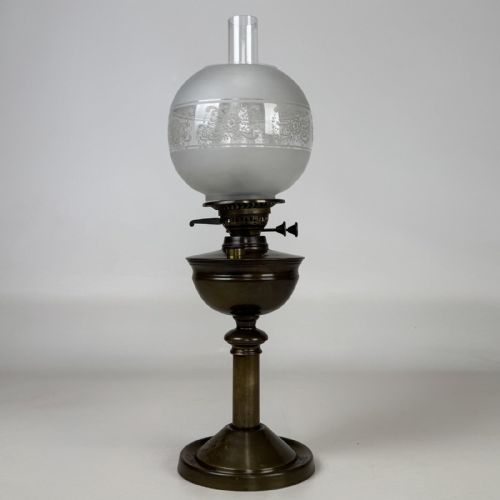
When you search for etched glass chimneys, you are looking at nineteenth-century lighting components and complete oil lamps that utilise frosted, tulip, or cranberry glass shades. The pieces meeting this description on this page range from the Victorian era down to nineteen hundred, encompassing both English and continental workshops.
The dominant forms are tall oil and paraffin lamps featuring brass columns, porcelain bases, and silver-plated reservoirs paired with patterned glass. Overmantel mirrors also appear in the broader selection, yet the core of the group remains functional Victorian lighting with decorative shades.
How they were made
The makers of these nineteenth-century items combined blown glass with metal mounting, utilising brass, silver plate, and giltwood to support the delicate shades. Glass was shaped into tulip and cranberry forms before receiving frosted or acid-etched decoration to soften the glare of the oil flame.
Porcelain and composition materials frequently formed the ornate bases of the oil lamps, whilst crystal and brass provided the structural weight necessary for tall duplex burners and columns.
Etched Glass Chimneys Retail Price Guide 2026
Typical asking prices for etched glass chimneys among the pieces listed under this phrase on Sellingantiques today, from the lower quarter to the upper quarter. They describe what is for sale here now, not the wider market.
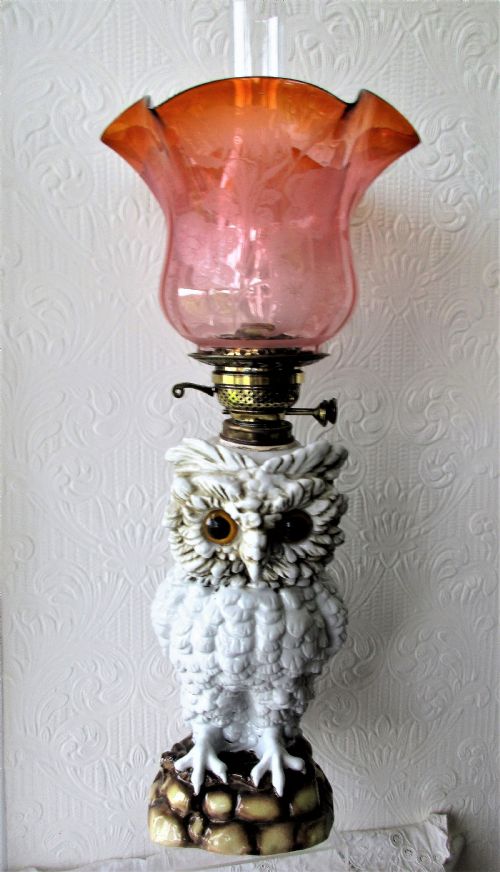
Some nineteenth-century makers styled entire porcelain oil lamps as owls, proving that Victorians thoroughly enjoyed unusual fauna lighting their parlours.
What varies in quality
The difference between ordinary production and finer work lies in the crispness of the glass etching and the substance of the metal mounts. Heavier brass columns and deeply cut crystal or cranberry glass mark out the pieces that demanded greater skill from the nineteenth-century artisan.
Proportion and decorative ambition separate standard lighting from exceptional examples, such as those bearing porcelain figural elements or integrated ceramic bodies from known retailers like Harrods.
Sitzendorf·Messengers·Harrods
The Etched Glass Chimneys Glossary
- Duplex burner
- A twin-wick mechanism designed to burn paraffin or oil with heightened brightness. It requires a specific gallery and chimney to feed oxygen to both flames.
- Cranberry glass
- A rich pink transparent glass created by adding gold chloride to the molten batch. It is frequently seen in Victorian lamp shades.
- Overmantel mirror
- A large decorative looking glass designed to hang above a fireplace mantel. These often feature arched wooden frames finished in giltwood.
- Acid etching
- A decorative technique utilising acid to eat away exposed portions of the glass surface. This creates a frosted design against clear glass or vice versa.
Etched Glass Chimneys: Frequently Asked Questions
What are etched glass chimneys?
They are nineteenth-century glass lamp components and shades treated with acid-etching or frosting techniques. They sat atop oil and paraffin lamps to steady the draught and diffuse the light.
Today, they survive largely as components of Victorian oil lamps, prized for the decorative patterns cut into the glass surface.
How do I date a Victorian oil lamp?
Dating relies on examining the materials, burner technology, and manufacturing style recorded in the piece. Nineteenth-century examples often feature brass columns, ceramic bodies, and duplex burners.
Specific periods within the Victorian era, such as the eighteen-eighties or nineteen-hundred, are identified through registration marks and the evolution of glass colours like cranberry.
How were these lamps used?
Victorian households utilised these oil lamps for interior illumination before domestic electricity became widespread. The chimney created the necessary air draught to ensure a clean, steady flame.
The decorative shades simultaneously served to soften the harsh yellow light produced by burning paraffin or mineral oils.
How do I clean an etched glass shade?
Careful washing in warm water with mild soap is generally sufficient for removing dust and soot from nineteenth-century glass. A soft cloth prevents scratching the delicate frosted or etched surfaces.
Metal components like brass and silver plate require separate attention to avoid damaging the surrounding glass panels during maintenance.