

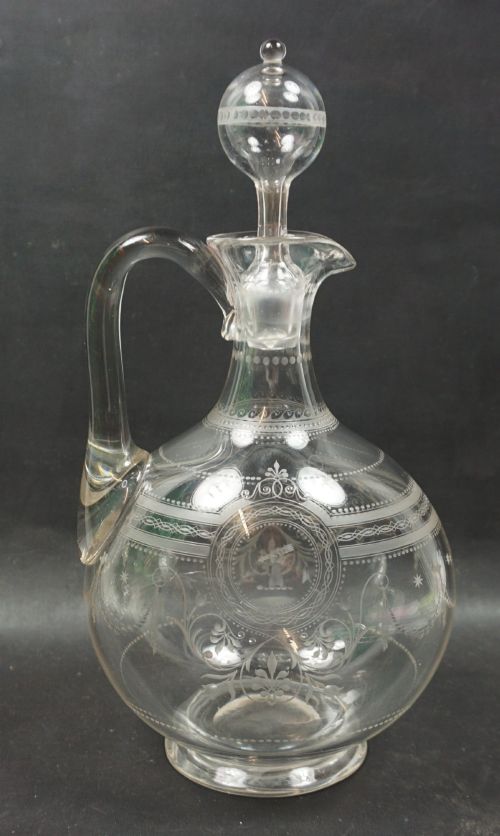
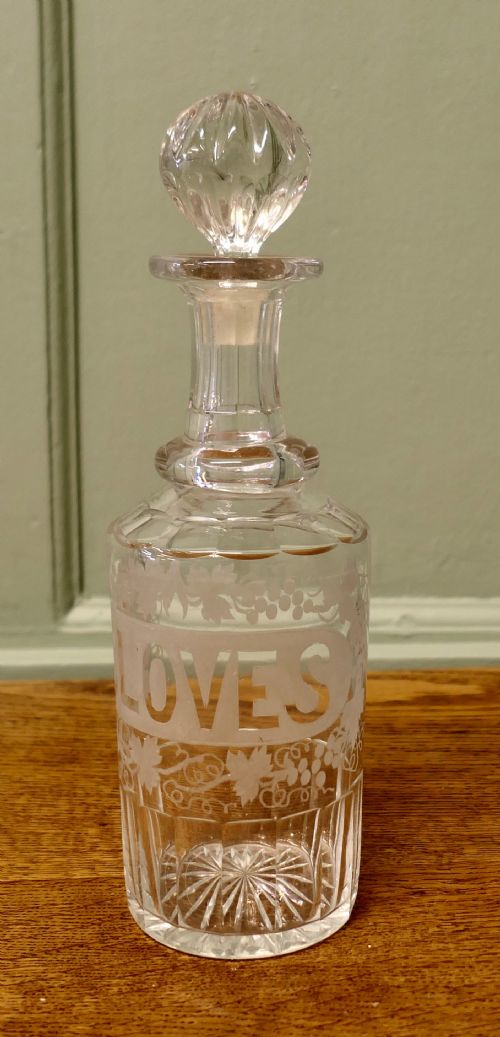


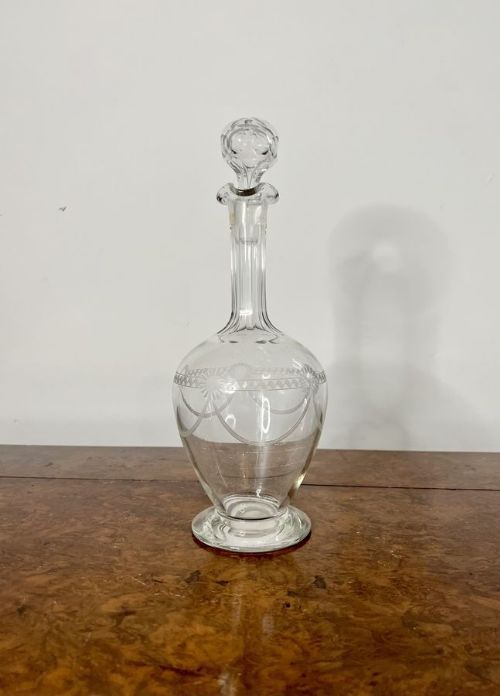


Etched Crystal Decanter Stopper
These etched crystal decanter stopper examples complete a table setting, bringing nineteenth-century craft and brilliance back to the dining room.
Etched Crystal Decanter Stopper
An etched crystal decanter stopper serves as the crowning closure for antique vessels, sealing spirits and wine while adding sparkle to the neck. When searching for this specific component, collectors often find themselves examining matching stoppers paired with Victorian and Edwardian decanters or glass ewers.
The pieces appearing on this page span several decades, notably the Victorian era alongside Edwardian and French Art Nouveau periods. Common forms include hourglass shapes and tall cut glass profiles that rely on precise grinding to fit securely into their respective bottles.
How they were made
Makers shaped these items using clear glass, lead crystal, and cut crystal, working the material while hot before applying wheel-engraved decoration. Artisans then ground the lower peg by hand so that each stopper formed an airtight seal within the decanter neck.
Later examples integrate precious metals such as ninety-five-percent silver collars, marrying glass-blowing traditions with silversmithing techniques. The surface ornamentation ranges from delicate etched flora to deep geometric cutting executed across nineteenth-century workshops.
Etched Crystal Decanter Stopper Retail Price Guide 2026
Typical asking prices for etched crystal decanter stopper among the pieces listed under this phrase on Sellingantiques today, from the lower quarter to the upper quarter. They describe what is for sale here now, not the wider market.
The current listings span the Victorian era, the Edwardian period, and French Art Nouveau, utilising glass, lead crystal, and silver.
What varies in quality
The distinction between ordinary and superior examples lies in the crispness of the wheel engraving and the optical clarity of the crystal itself. Heavy lead content yields a resonant ring and a brighter refractive index, lifting a simple closure into an item of fine display.
Fit and proportion also dictate worth, as a stopper designed specifically for its vessel sits flush without wobbling. Hand-polished facets show smooth transitions rather than cloudy friction marks left by hurried production.
The Etched Crystal Decanter Stopper Glossary
- Lead crystal
- Glass containing metallic oxide that increases weight, brilliance, and workability for deep cutting. This material characterises many Victorian pieces.
- Wheel engraving
- A surface decoration technique where a spinning abrasive wheel cuts designs into the glass. Artisans use various wheel sizes to achieve fine shading.
- Silver collar
- A band of precious metal fitted around the mouth of a vessel or the base of a mount. It frequently carries hallmarks indicating purity and origin.
Etched Crystal Decanter Stopper: Frequently Asked Questions
Are these stoppers interchangeable between different decanters?
Most antique stoppers were ground by hand to fit one specific bottle during production. Swapping them between different decanters rarely works without slight rocking or gaps in the seal.
Collectors therefore look for matched pairs or single components whose ground glass pegs match the exact diameter and taper of the target vessel's neck.
How do I clean an old glass stopper safely?
Warm water and a soft cloth suffice for removing dust and light residue from antique crystal. Avoid harsh detergents and extreme temperature changes that might stress the aged material.
Soaking a stubborn stopper in vinegar can help loosen historical sediment without scratching the delicate wheel-engraved surfaces.
What period do most of these pieces come from?
The available evidence points predominantly to the Victorian and Edwardian eras, spanning the late nineteenth and early twentieth centuries. These decades saw high demand for decorative dining accessories.
Occasional French Art Nouveau items and later twentieth-century silver-mounted examples also appear within the selection.
How can I tell cut crystal from plain glass?
Lead crystal displays greater weight and a distinct ringing sound when gently tapped. It also refracts light into spectral colours more intensely than standard soda-lime glass.
Close inspection under natural light reveals sharp, polished facets on true cut crystal rather than the rounded edges typical of moulded glass.