



Equestrian Leather Decor
Equestrian leather decor brings together hand-stitched hides, polished brass and aged timber to capture the character of the traditional stable.
Equestrian Leather Decor
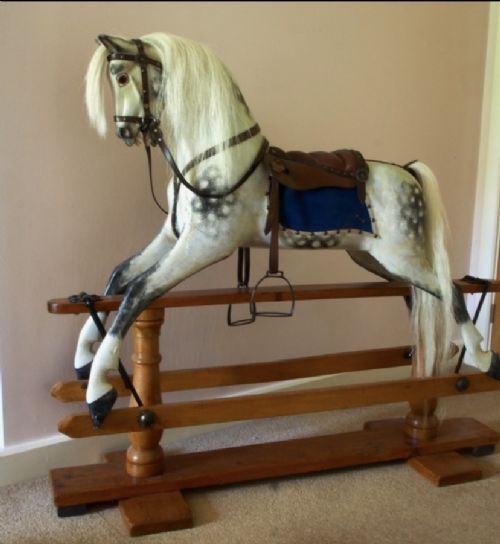
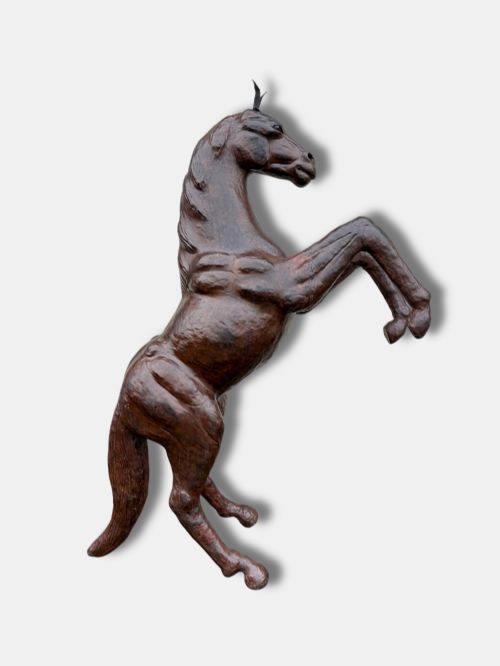
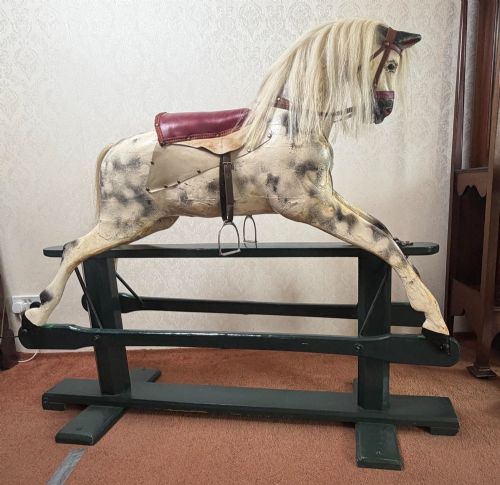
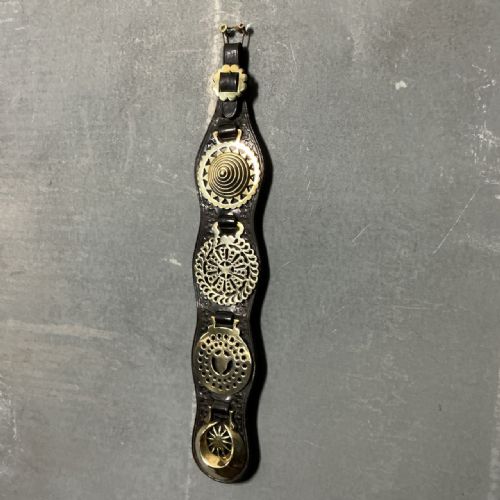
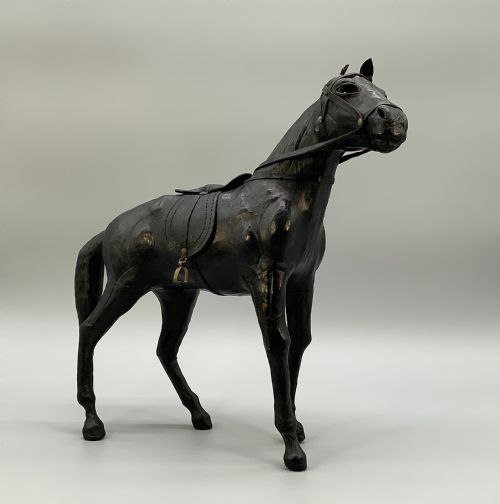
Equestrian leather decor encompasses a diverse range of objects linked to riding and stable life, spanning from Victorian rocking horses to mid-century leather sculptures. You will frequently encounter large leather-bound models of horses, alongside smaller accessories like brass martingales and hunting whips.
The pieces on offer draw upon distinct periods, running from late nineteenth-century traditional items through to Arts and Crafts and Art Deco interpretations. English country house aesthetics heavily influence the selection, alongside occasional French traditional elements.
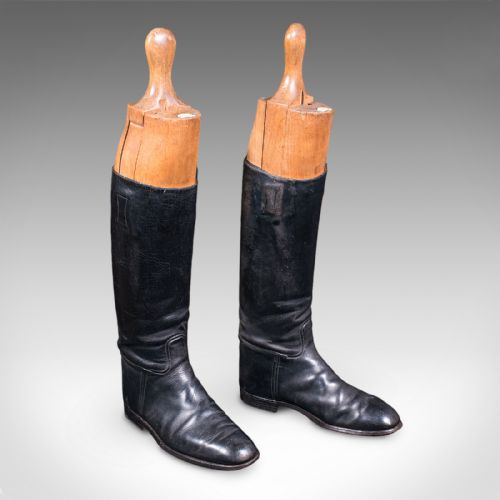
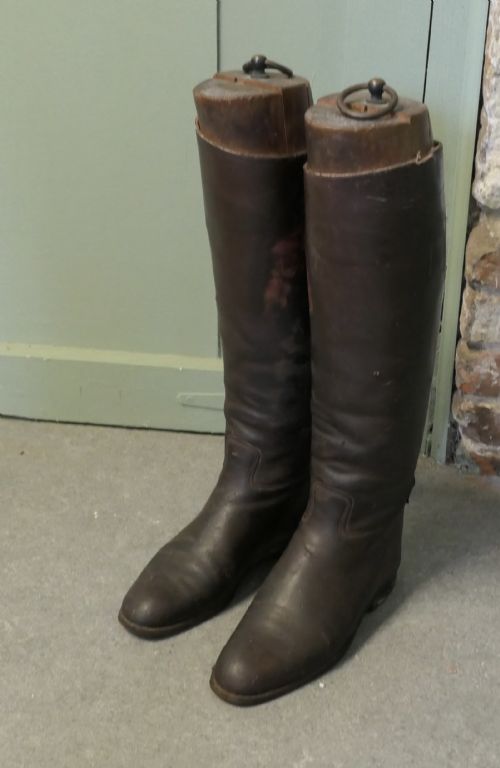
Functional items adapted for display, such as boot trees and antique saddles, sit alongside purely decorative sculptures and pull-along toys. The common thread across these objects is the prominent use of leather, often combined with wood and metal elements.
Materials and construction
Makers utilised durable leather as the primary medium, frequently shaping it over carved wooden frames or internal armatures to create substantial sculptural forms. Beech and other timbers provide structural support, particularly in rocking horses and boot stretchers.
Metal components appear widely, with brass and silver providing functional hardware, collars and decorative brass martingales. Horsehair and glass sometimes complete the detailing on sculptural pieces.
Traditional saddlery and bootmaking techniques govern the stitching and shaping of the leather, visible in the hand-finished seams and fitted wooden trees.
Equestrian Leather Decor Retail Price Guide 2026
Typical asking prices for equestrian leather decor among the pieces listed under this phrase on Sellingantiques today, from the lower quarter to the upper quarter. They describe what is for sale here now, not the wider market.
Listings feature items spanning the Victorian era through the 1950s, employing leather, wood, brass, silver and horsehair.
Assessing quality and craftsmanship
Quality rests upon the integrity of the underlying structure and the skill evident in the leatherwork. Finer examples display precise stitching, well-modelled anatomical proportions and original patination on both the hide and any timber components.
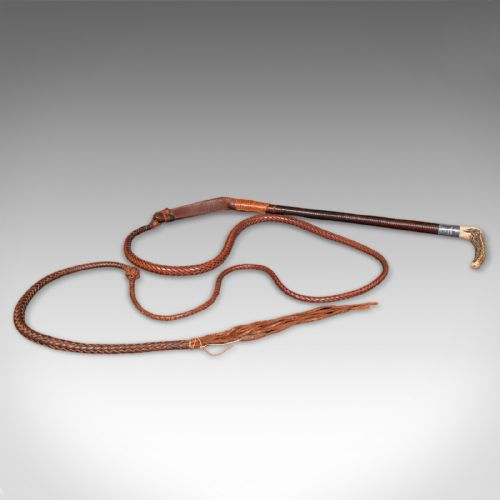
The presence of identified makers or retailers elevates an object, as seen in pieces associated with firms like Liberty of London or Maxwell London. Associated hardware in precious metals, such as silver collars on whips, also signals a higher tier of production.
Originality of components matters significantly, whether evaluating a rocking horse on its original rocker or a pair of riding boots retaining their matching wooden trees.
Liberty of London·Maxwell London·Swaine Adeney
The Equestrian Leather Decor Glossary
- Horse brass
- A polished brass ornament traditionally displayed on heavy horse harnesses, now collected as decorative wall or mantel pieces.
- Boot tree
- A wooden device inserted into riding boots to maintain their shape and stretch the leather when not in use.
- Martingale
- A strap or set of straps used to restrict a horse's head carriage, often featuring mounted brass ornaments.
- Rocking horse
- A traditional children's toy carved from wood and often covered in hide, mounted on curved wooden rockers.
- Hunting whip
- A specialised riding crop featuring a leather-covered shaft and a silver or metal collar, historically used in fox hunting.
Equestrian Leather Decor: Frequently Asked Questions
How were antique leather horses made?
Makers constructed these large display pieces by shaping robust leather over a carved wooden frame or internal armature.
Skilled artisans used traditional saddlery techniques to stitch the hide tightly, frequently adding details like glass eyes and real horsehair.
How do I style equestrian pieces at home?
These pieces suit traditional study spaces, libraries and living rooms where they add texture and historical character.
Larger sculptures serve as focal points on tables or floors, while smaller items like brass martingales work well mounted on walls.
How do I date an antique horse brass?
Dating relies on stylistic motifs, manufacturing methods and the type of metal alloy used in the casting.
Victorian examples often feature stamped designs and heavier brass construction compared to later commemorative pieces.