



Engraved Silver Scent Flask
These engraved silver scent flask examples are pocket-sized vessels for perfume, prized for their intricate chased work and tactile form.
Engraved Silver Scent Flask
When you search for an engraved silver scent flask, you are looking at small personal containers designed to hold volatile perfumes safely in a pocket or reticule. The examples recorded here span from the seventeenth century through the Georgian, Victorian, and Edwardian eras up to the nineteen-twenties.
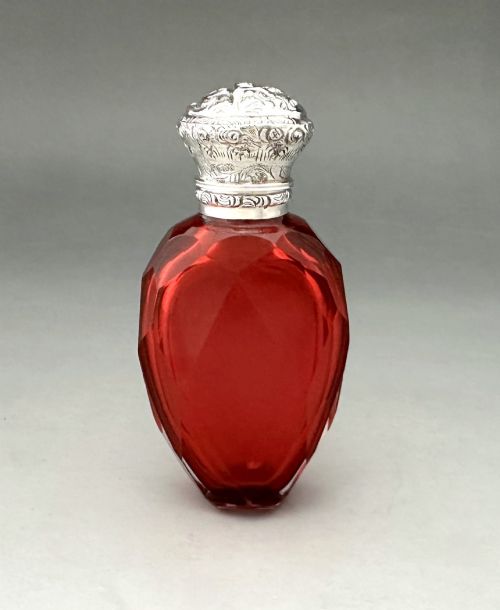
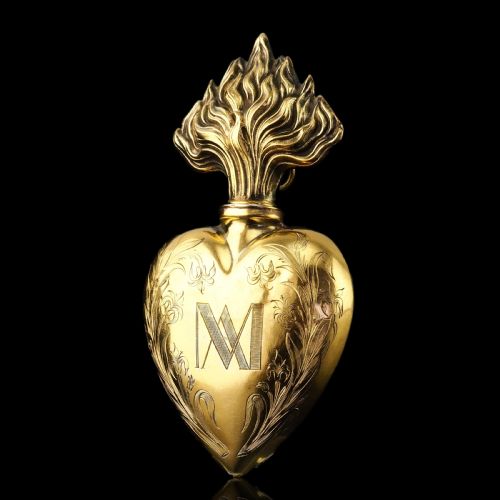
The versions you are most likely to meet on this page are Victorian pieces, often combining silver mounts with ruby or amethyst glass bodies. Alongside these standard shapes, the listings include novelty forms such as miniature violins from Holland and heart-shaped silver gilt flasks.
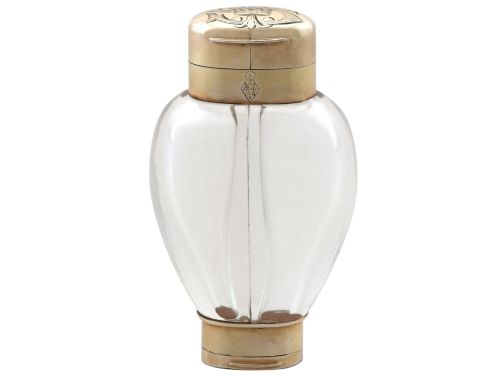
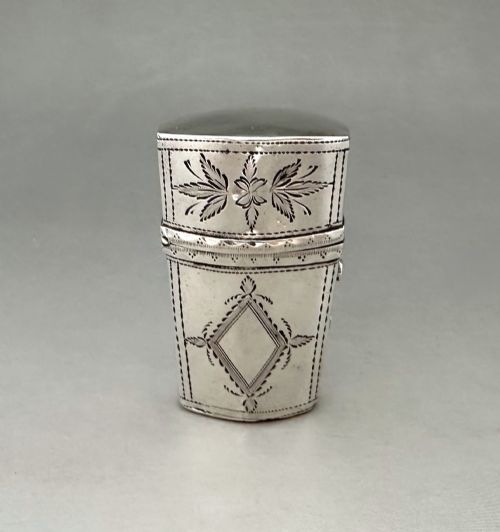
Makers housed these bottles in various formats, ranging from simple silver cased glass to double-ended vessels and silver gilt containers featuring coronet engravings or Kate Greenaway motifs. Their origins cross British workshops in London and Chester alongside continental French and Dutch output.
How they were made
Silversmiths constructed these objects using sterling silver, silver gilt, and glass, frequently pairing cut or etched glass with engraved metal casings. Ruby glass and amethyst glass provide rich colour beneath pierced or chased silver overlays.
Workshops applied detailed engraving and etching directly to the metal surfaces or protective cases, sometimes incorporating silk linings or leather elements in the surrounding fittings.
Engraved Silver Scent Flask Retail Price Guide 2026
Typical asking prices for engraved silver scent flask among the pieces listed under this phrase on Sellingantiques today, from the lower quarter to the upper quarter. They describe what is for sale here now, not the wider market.
One tiny Dutch silver flask takes the exact form of a miniature violin.
What varies in quality
Quality rests upon the crispness of the hand-engraving and the depth of the chased decoration on the silver mounts. Finer pieces display sharp, deliberate lines in heraldic or floral motifs rather than shallow or softened impressions.
The integration between the glass body and the silver casing determines the structural success of the flask. Superior examples maintain secure seating of the glass within intricate metalwork without wobble or excessive solder.
Horton & Allday·S. Morden & co london
The Engraved Silver Scent Flask Glossary
- Silver gilt
- Silver that has been coated with a thin layer of gold on its surface. This technique provides the rich warm tone seen on seventeenth-century and nineteenth-century French flasks.
- Double ended
- A bottle featuring two separate compartments accessed from opposite ends, typically used to carry two different scents simultaneously. These often combine cut glass bodies with hinged silver caps.
- Sterling silver
- An alloy consisting of silver and other metals, standardised for purity in British plate. Most nineteenth-century and Edwardian flasks rely on this durable material for their outer cases and lids.
- Ruby glass
- A deep red glass created by adding gold chloride to the molten mixture. It forms a striking contrast against engraved silver mounts in Victorian examples.
Engraved Silver Scent Flask: Frequently Asked Questions
What is an engraved silver scent flask?
These pieces are small, portable containers fashioned from silver and glass to carry liquid perfumes. They were designed for personal use and carried in pockets or attached to chatelaines.
Craftsmen decorated the exterior surfaces with hand engraving, chasing, or etching, often housing coloured glass bodies within protective silver cases.
How were double ended bottles used?
Double-ended bottles allowed the owner to carry two distinct fragrances in a single vessel. Each end featured its own hinged or screw cap opening to a separate compartment.
This format gained popularity in the nineteenth century, frequently executed in cut glass with engraved silver mounts at both terminals.
How do I identify a Victorian flask?
Victorian examples frequently pair sterling silver mountings with rich ruby or amethyst glass bodies. They often incorporate floral chasing or figurative motifs typical of the nineteenth century.
Examining the style of the engraving and any accompanying hallmarks helps anchor the piece within the Victorian period.
Did men use scent flasks?
Portable scent containers were carried by both men and women to mask unpleasant odours and refresh the senses during daily transit. Pocket-sized flasks suited waistcoat pockets.
Simpler silver-cased versions and sturdy double-ended designs often served this broader daily function across the nineteenth and early twentieth centuries.