




Engraved Floral Pendant
An engraved floral pendant brings together hand-carved botanical motifs and precious metals to wear close to the heart.
Engraved Floral Pendant
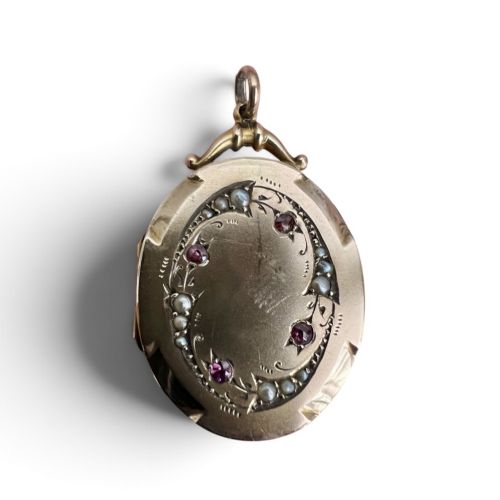
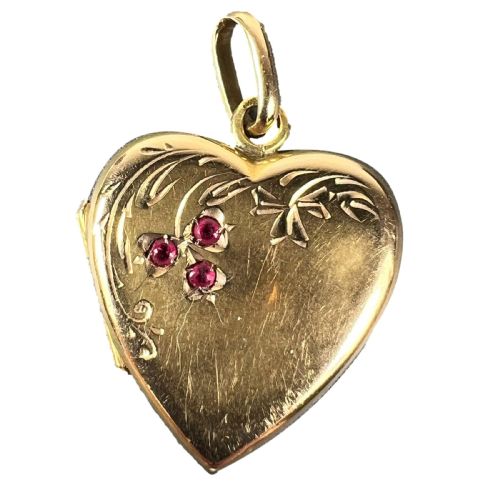
An engraved floral pendant encompasses lockets, medals, and charms shaped in gold or silver, designed primarily to be worn on a necklace chain. When looking for an engraved floral pendant, you encounter pieces spanning the Victorian, Edwardian, and Art Deco periods, alongside French antique designs.
The objects frequently take circular, oval, shield, or heart forms, often combining flowers, roses, leaves, wreaths, and swallow birds within their engraved surfaces. Gold variants appear in 9ct, 14K, 18ct, and 18K yellow or rose gold, while silver versions sometimes incorporate marcasite or glass.
Locket variants function simultaneously as pendants and small photo holders, while others integrate stones such as rubies, emeralds, turquoise, pearls, or diamonds. The selection ranges from substantial Victorian flower-engraved silver lockets to delicate French daisy charm pendants.
Materials and construction
Makers utilised precious metals, predominantly 9ct gold, 18K yellow gold, and sterling silver, shaping them into hinged lockets, stamped medals, and cast pendant bodies. Many items employ back and front gold construction or gilt layers over base components.
Surface decoration relies heavily on hand engraving, cutting floral baskets, swallows, and scrolling foliage directly into the metal face. Stones including rubies, diamonds, turquoise, and pearls are flush-set, bezel-set, or mounted in star settings to accent the botanical designs.
Listings span Victorian, Edwardian, and Art Deco eras, utilising 9ct gold, 18K yellow gold, and sterling silver.
What separates the examples
The crispness of the hand engraving dictates much of the visual distinction, separating deeply cut floral wreaths and feather-fine swallow details from shallow or worn surface scratching. Well-executed pieces maintain sharp relief in the petals and leaves even across heavily handled surfaces.
Structural integrity in hinges, bails, and locket bezels marks the difference between everyday durability and fragility. Pieces retaining original matched chains, secure snap closures, and uncompromised internal photo frames command greater regard.
The Engraved Floral Pendant Glossary
- Locket
- A hinged pendant designed to open and enclose a small photograph or keepsake. Many examples feature detailed floral engraving on the outer shell.
- Back and Front
- A method of jewellery construction where the outer plates are made of gold while the internal core consists of base metal for rigidity. This technique appears frequently in antique gold lockets.
- Marcasite
- Small faceted polished pyrites set into silver mounts to provide dark sparkle. It frequently borders Art Deco silver floral pieces.
- Fob watch
- A small pocket watch worn suspended from a chain or ribbon, often featuring decorative floral engraving to the face and back casing.
- Belle Epoque
- A period of ornate French jewellery design spanning the late nineteenth and early twentieth centuries, known for delicate floral and garland motifs.
Engraved Floral Pendant: Frequently Asked Questions
How do I open an antique locket?
Most lockets utilise a side hinge and a thumbnail catch or press-release mechanism along the opposing edge. Apply gentle pressure with a fingernail while supporting the bail to release the snap.
Avoid forcing stuck lockets with metal tools, as centuries of accumulated polish or slight metal warping can jam the bezel closure. A professional jeweler can safely ease a stubborn hinge.
Can I put a photo inside these lockets?
Historical lockets frequently retain their original metal rims and thin celluloid or glass covers designed to hold miniature photographs in place. You can trim modern printed images to fit the internal cavity.
Slide the paper behind the internal retaining frames rather than gluing it directly to the gold or silver backing. This preserves the interior metalwork and allows future replacement.
Are silver and gold pendants marked?
Many British and European pieces bear hallmarks, maker's stamps, or purity indicators such as 9ct, 18K, or sterling stamped on the internal bezel or suspension loop. Unmarked pieces were also common, particularly in older French medals and foreign imports.
Absence of a hallmark does not preclude precious metal status, as acid testing or historical context often confirms the material. Look for wear patterns and patination typical of genuine period metals.
How do I care for engraved jewellery?
Clean gold and silver pieces using a soft cloth and warm soapy water, avoiding harsh chemical dips that can damage softer stones like turquoise or pearls. Store them individually to prevent scratching the engraved surface.
Take care with hinged components and do not submerge antique photo lockets where moisture might seep behind old paper inserts.