




English Walnut Commode
An English walnut commode offers serious timber and rich grain, bringing a proper piece of historic furniture into a room.
English Walnut Commode
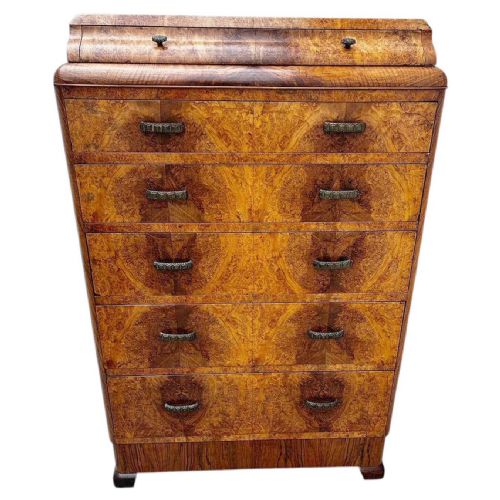
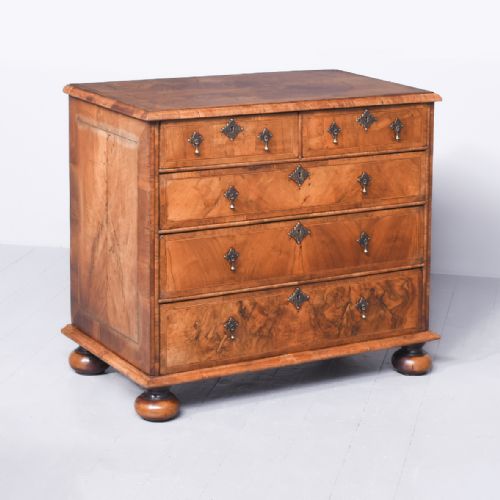
An English walnut commode brings together walnut, burr walnut, and fruitwood to form chests of drawers spanning the seventeenth century through to the art deco period.
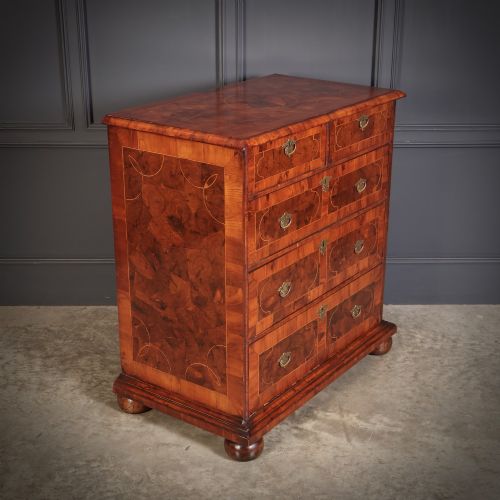
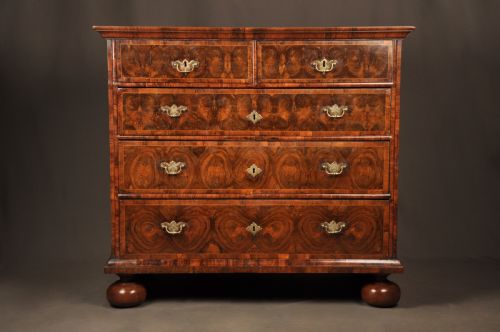
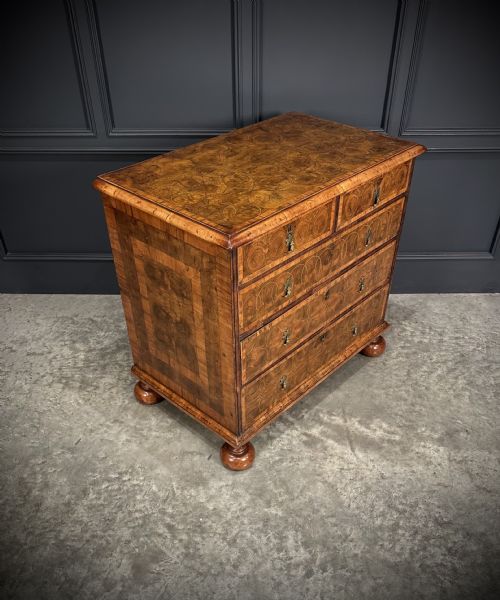
Buyers searching for an English walnut commode will encounter seventeenth-century oyster veneered examples alongside William and Mary, Queen Anne, and George I pieces.
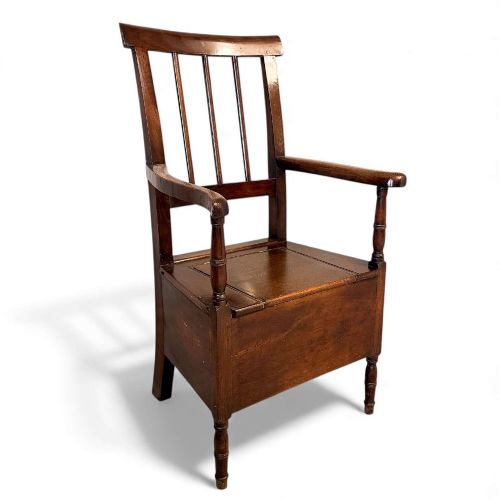
The selection ranges from early marquetry chests to later Georgian and Victorian tallboys, as well as occasional commode chairs.
Materials and construction
Cabinet makers utilised walnut, burr walnut, and olivewood veneers applied over secondary carcase timbers such as oak.
Decorative surfaces gained contrast through boxwood stringing, feather-banded borders, and intricate floral marquetry.
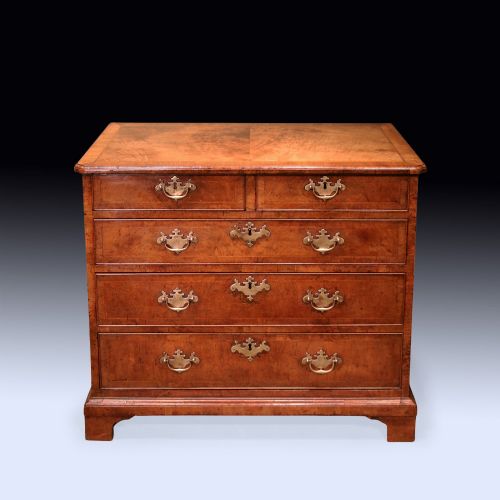
Hardware typically involved brass handles and escutcheons secured to drawer fronts built with dovetail joints.
Listings combine seventeenth-century walnut chests with later art deco burr walnut designs and mid-eighteenth-century Georgian pieces.
Judging quality
Quality rests in the crispness of the marquetry and the preservation of the oyster veneer patterns across the drawer fronts.
The choice of timber grain, particularly the depth of burr walnut or olivewood, dictates the visual strength of the piece.
Original brassware and untouched surface patination elevate an example far above one with replaced elements.
The English Walnut Commode Glossary
- Oyster veneering
- Cutting small branches obliquely to produce circular patterns resembling oyster shells. This technique defined late seventeenth-century cabinet making.
- Marquetry
- Inlaying various woods to form elaborate pictorial designs on furniture surfaces. Floral motifs frequently appear on William and Mary examples.
- Feather-banding
- Small strips of veneer laid diagonally to form a herringbone pattern around drawer edges. It frames the primary walnut grain.
- Burr walnut
- Wood taken from a tree growth that creates swirling, knotty grain patterns. It provided highly decorative surfaces for elite furniture.
English Walnut Commode: Frequently Asked Questions
How do I date a walnut chest?
Dating relies on examining the leg styles, drawer construction, and veneer types present on the piece.
Earlier seventeenth-century examples display oyster veneers or marquetry, while Georgian pieces often feature feather-banding and cleaner proportions.
Are commode chairs the same as chests?
Commode chairs are seating furniture built during the early periods that incorporate enclosed compartments rather than standard drawer sets.
They serve a different function within a room compared to the standard chests of drawers found in most listings.
Where should I place a walnut commode?
A walnut commode suits a hallway, living room, or bedroom where the rich timber tones can contrast against plain walls.
The warm hues of walnut and fruitwood pair effectively with both traditional and art deco interiors.