
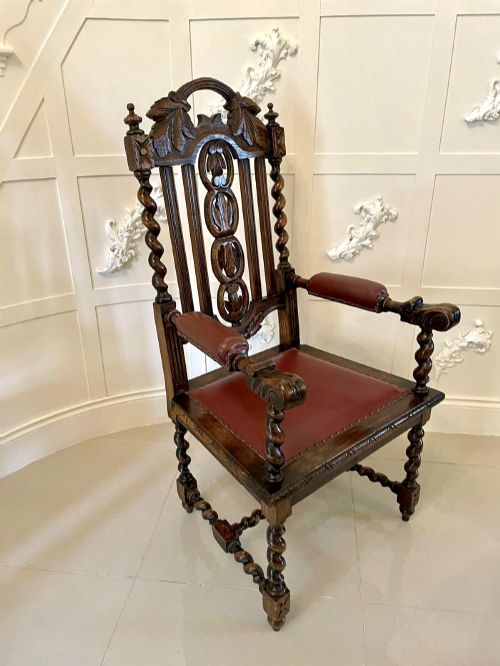
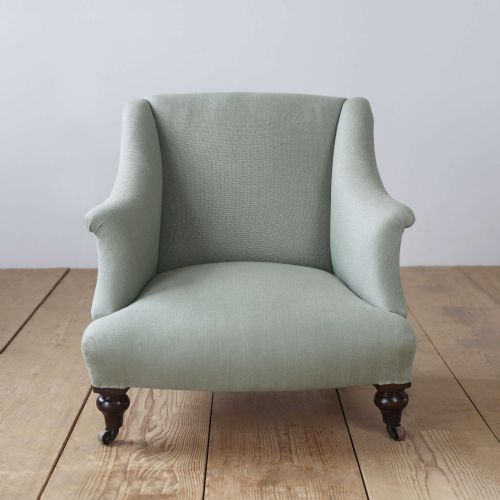
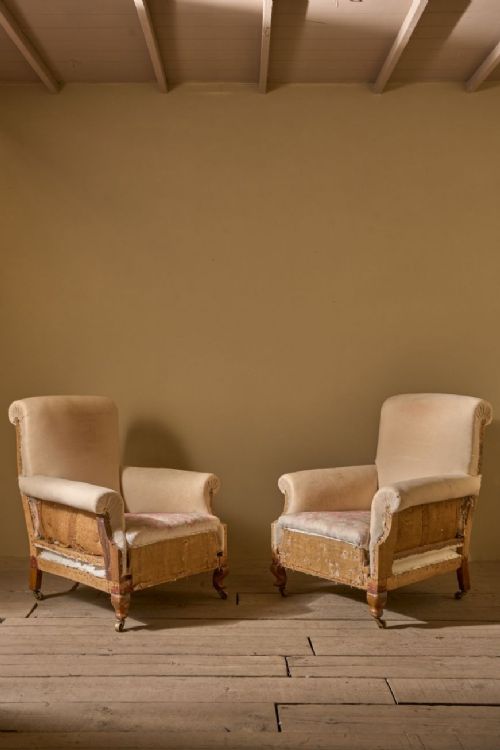
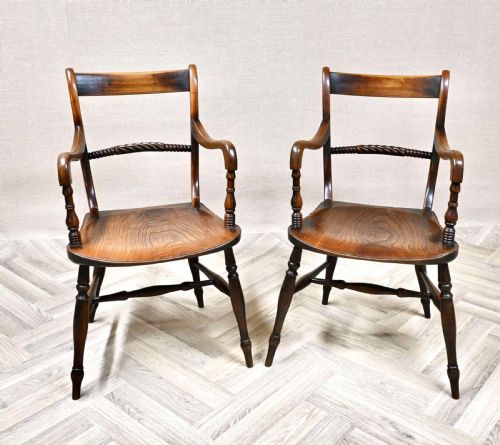

English Victorian Armchair
An english victorian armchair brings robust comfort and honest vernacular design into a room, offering sturdy seating built for longevity.
How they were made
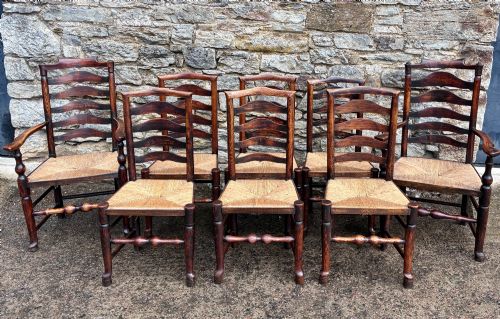
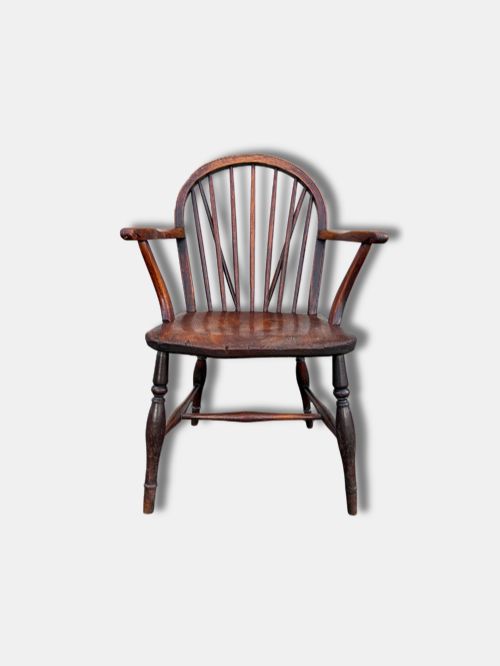
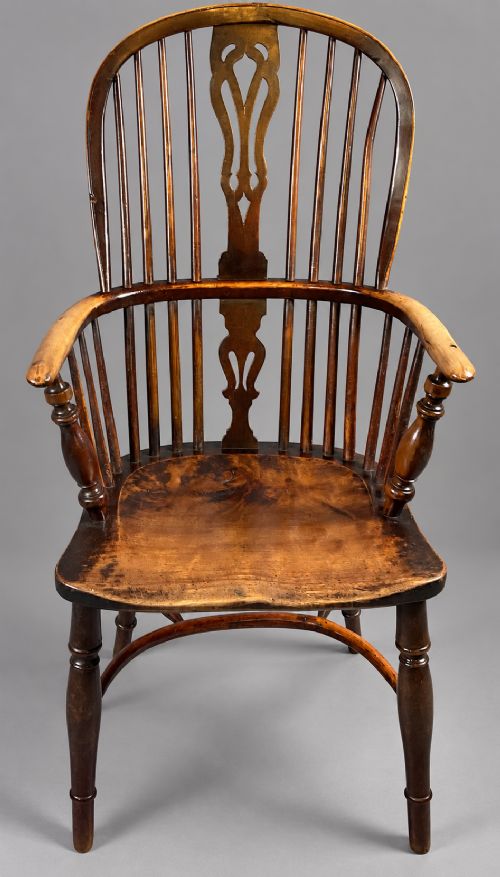
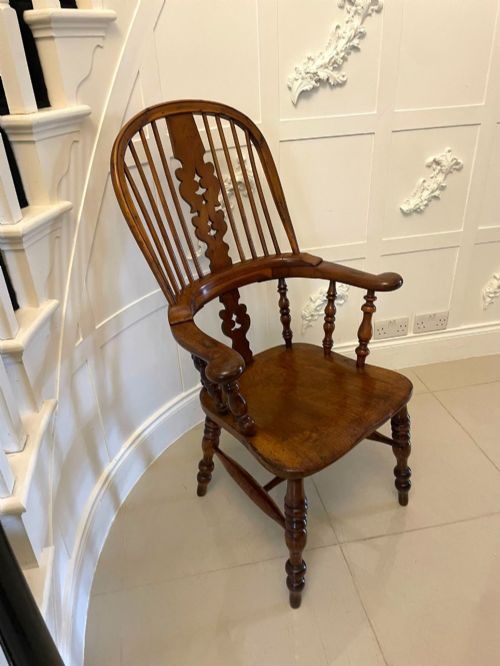
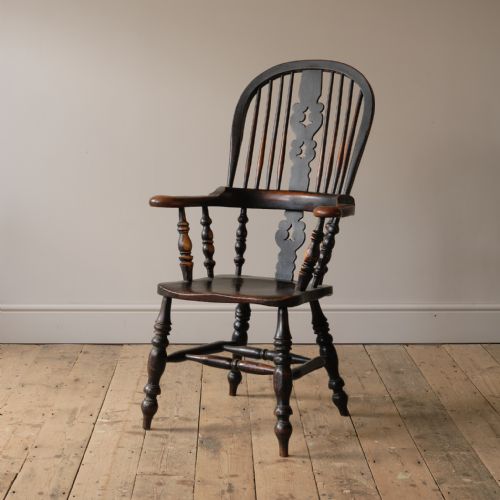
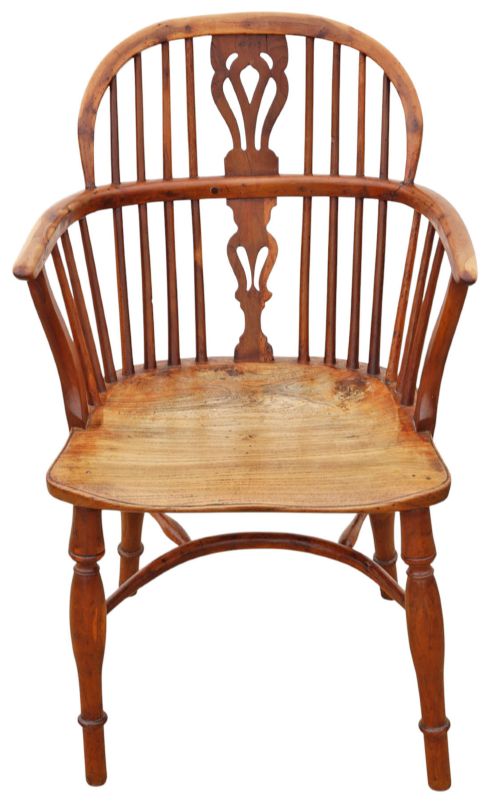
Makers utilised native hardwoods like elm, ash, beech, and oak for vernacular seating, employing steam-bending techniques to create curved rails and bows for Windsor armchairs. Turnery lathes shaped spindles and legs, while wedged through-tenon joints secured seats without relying solely on adhesives.
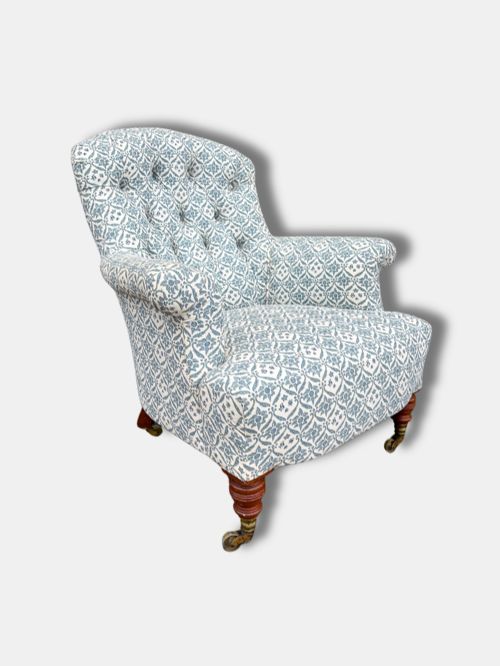
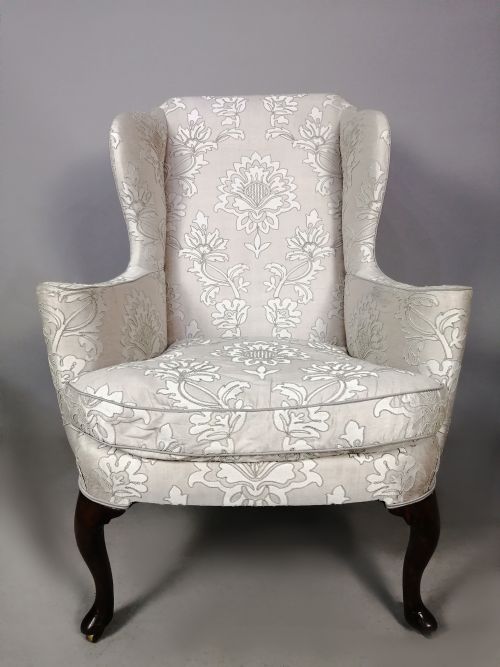
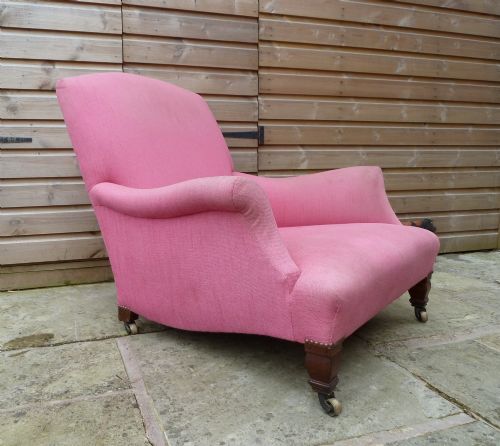
Upholstered forms combined mahogany, walnut, or beech frames with internal webbing, horsehair stuffing, and heavy cotton calico or leather coverings secured by brass tacks. Deep buttoning distributed tension across wool, velvet, or leather surfaces, creating resilient cushioning for daily use.
What varies in quality
Structural integrity depends upon the tightness of joint construction and the preservation of original timber, as excessive drying or past worm damage weakens load-bearing spindles and legs. Finely turned components display crisp chisel profiles and balanced proportions, whereas utility grades show simpler lathe work and thicker scantlings.
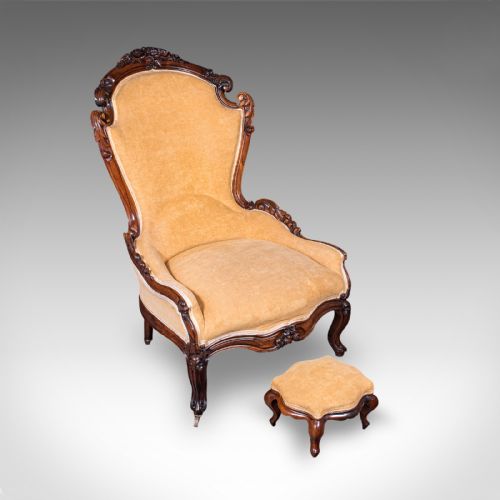
Upholstered specimens rely on the original tension of the internal webbing and the quality of the leather or fabric skin, where secondary timber frames beneath padding demonstrate the maker's underlying diligence. Stamped attribution marks or paper labels from established cabinet makers elevate historical interest and structural documentation.
Listings feature ash, elm, beech, and mahogany, reflecting the diverse material preferences of nineteenth-century regional makers.
Howard and Sons·Philip Clissett·Gillows·C Hindley and Sons·James Shoolbred
The English Victorian Armchair Glossary
- Windsor
- A timber armchair constructed with a solid sculpted wooden seat into which the legs, back spindles, and arms are separately tenoned.
- Smoker's bow
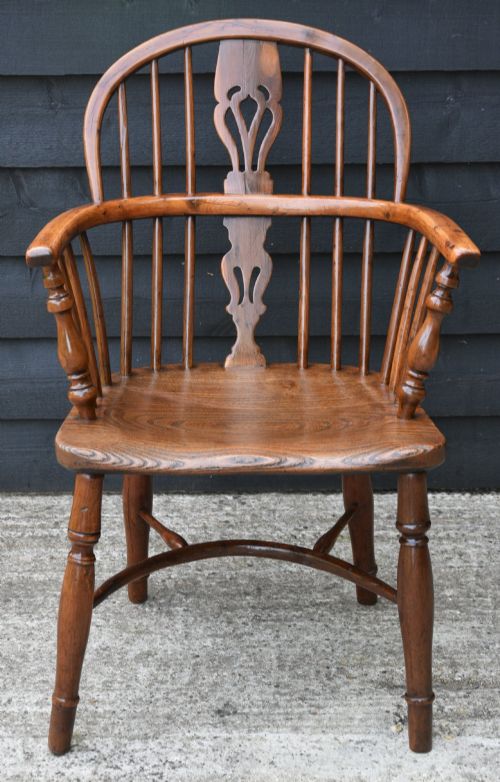
- A low sturdy wooden armchair featuring a continuous curved rail sweeping around to form both the arms and the upper back support.
- Spoon-back
- An upholstered Victorian chair back hollowed and shaped in profile to resemble the bowl of a spoon, fitting the contour of the human spine.
- Gothic revival
- A nineteenth-century design movement drawing inspiration from medieval architecture, characterised by pointed arches, tracery, and heavy carved oak.
- Buttoned back
- An upholstery technique where deep depressions are formed across the padded surface by pulling twine tightly through to the frame and securing with fabric buttons.
English Victorian Armchair: Frequently Asked Questions
How do I identify a genuine Windsor armchair?
Authentic nineteenth-century Windsors display a solid saddle-shaped elm seat with visible wedge joints where the legs pass through the top surface. The grain patterns and tool marks left by drawknives indicate hand-shaping rather than modern mass production.
Inspect the underside to verify that the legs and spindles are secured with wedges rather than modern metal fixings. Genuine country examples will show honest wear around the footrest areas from decades of daily use.
Where should I place a button-backed reading chair?
These sprung upholstered seats suit studies, libraries, or quiet corners where their deep padding provides comfortable support for prolonged reading. Their finished backs allow them to sit away from walls in the middle of a room.
Keep them away from direct heat sources such as radiators to prevent the leather or antique fabric from drying out and cracking. Pairing them with a small reading table creates a functional and historically sympathetic seating arrangement.
What is the difference between a captain's chair and a smoker's bow?
Captain's chairs typically feature a lower, rounded backrest supported by numerous turned spindles above a continuous curved arm rail. Smoker's bows generally have a slightly higher back and were traditionally used in domestic parlours or tavern settings.
Both forms utilise robust beech or elm construction designed to withstand heavy daily use. Their compact footprints make them versatile alternatives to larger desk or dining armchairs.
How do I care for leather upholstery on an antique chair?
Feed the hide periodically with a neutral leather balm to maintain flexibility and prevent the surface from flaking or splitting over time. Avoid modern chemical cleaners that strip the original patina and colour.
Ensure that buttoned tufts are brushed gently to prevent dust accumulation within the deep folds. Stable indoor humidity levels protect both the leather and the internal horsehair stuffing from moisture damage.