



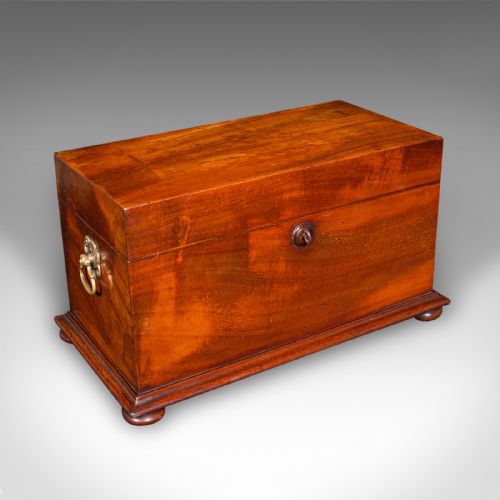

English Tea Chest
When you search for an english tea chest, you are looking at domestic receptacles built to store dried leaves safely.
English Tea Chest
The term english tea chest encompasses small caddies, dual compartment boxes, and larger sarcophagus forms designed for keeping dry leaf secure in the drawing room. These vessels appear across Georgian, Regency, and Victorian periods, often taking the shape of miniature chests or sarcophagi with fitted interiors.
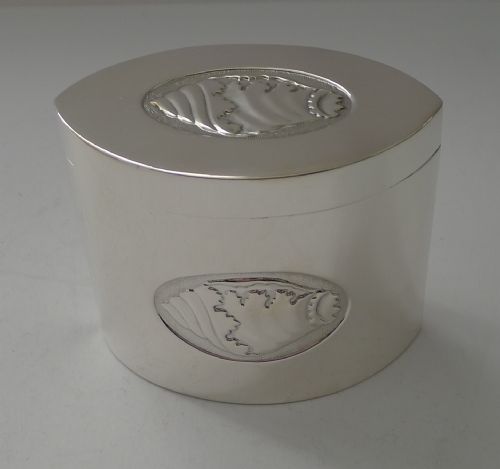
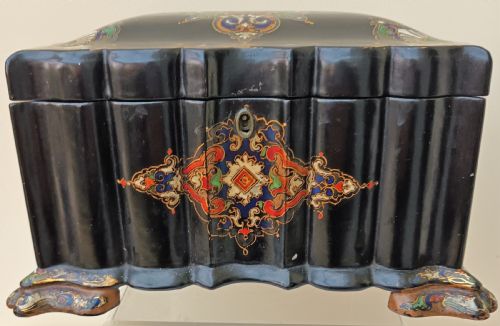
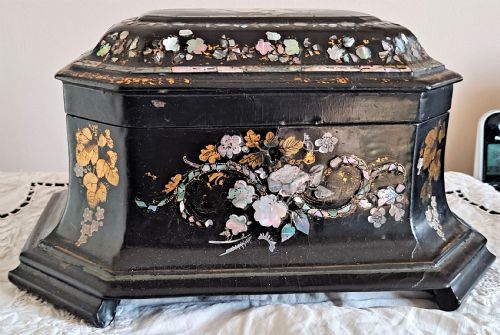
Buyers meet specimens fashioned from rosewood, mahogany, walnut, and tortoiseshell, alongside papier-mâché and solid sterling silver examples. Many incorporate internal mixing bowls, loose leaf canisters, or compartments for different leaf varieties.
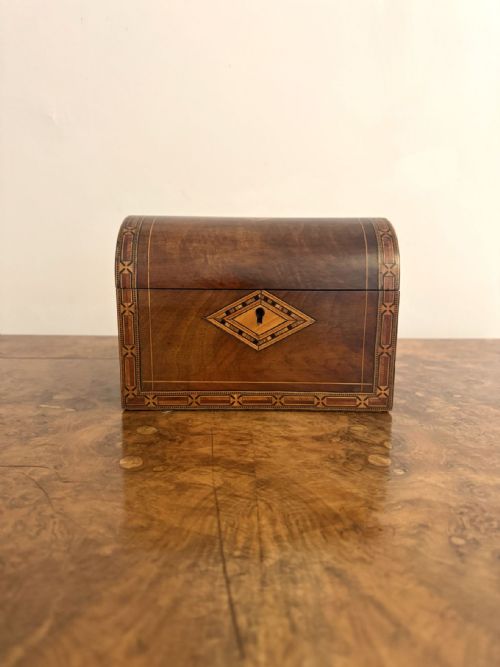
Makers utilised exotic timbers and precise joinery to protect the contents from moisture and light. The surviving selection ranges from plain mahogany boxes to elaborate Tunbridge Ware and brass-inlaid rosewood pieces.
Evaluating Quality
The integrity of the internal fittings, such as original mixing glasses, functional lids on interior canisters, and intact foil linings, separates exceptional examples from altered ones. The precision of the cabinetwork, particularly the alignment of brass inlay and the tightness of mitre joints, dictates the standard of execution.
The choice of timber grain, the complexity of mosaic or penwork decoration, and the presence of documented makers elevate certain pieces above standard domestic utility boxes.
Henry Hollamby·Gillows·W Insall and Sons·Boaz Moses Landeck
The English Tea Chest Glossary
- Sarcophagus
- A box form with a sloping lid resembling a stone coffin, popular during the Regency and William IV periods. This shape provided generous internal depth for multiple canisters.
- Tunbridge Ware
- A type of decorative woodwork characterised by mosaic designs formed from tiny tinted wood prisms. It originated in Kent and decorated many Victorian boxes.
- Teapoy
- A freestanding table with a caddy top mounted on a central pillar and pedestal base. These pieces stood in the drawing room to hold the day's tea selection.
- Penwork
- A decorative technique using fine ink drawings on wood surfaces, often finished with varnish. It appeared on various Regency pieces.
- Escutcheon
- A protective plate surrounding a keyhole, frequently cast from brass or carved from bone. It prevented the timber around the lock from splitting during use.
English Tea Chest: Frequently Asked Questions
How were these chests used?
Households used these containers to keep valuable tea leaves secure under lock and key, as tea was a costly commodity in earlier centuries. The mistress of the house typically held the key and dispensed the leaves for each pot.
Interior compartments held different varieties of tea, whilst central glass bowls allowed the host to blend leaves or rinse the pot between infusions.
How do I date an english tea chest?
Dating relies on architectural styles, construction methods, and materials visible in the piece. Regency examples often feature brass inlay and sarcophagus shapes, while Victorian versions frequently display Gothic Revival motifs or Tunbridge mosaics.
Silver versions carry legible hallmarks stamped with assay office symbols and date letters. These assay marks provide the exact year of manufacture.
Are interior canisters essential?
Original canisters or fitted lids inside the box contribute significantly to the completeness of the object. Many pieces retain their matching internal wooden covers with small turned knobs.
Some examples have lost their glass mixing bowls or internal containers over generations of use. Replacement fittings are common in surviving specimens.
How do I care for wooden caddies?
Keep wooden surfaces away from direct sunlight and sudden humidity changes to prevent veneer lifting and timber splitting. Dust gently with a dry cloth and avoid modern liquid polishes.
Maintaining a stable indoor climate preserves the delicate brass inlay and paper-mâché finishes found on these antique containers.