





English Stoneware Vase
An English stoneware vase brings substantial weight and tactile glaze to a room, grounding a mantel or side table with historic craft.
English Stoneware Vase
An English stoneware vase is a heavy, vitrified ceramic vessel designed for display or utility, frequently encountered in forms from the nineteenth century onward. Buyers exploring this phrase find robust jugs, jardiniere planters, and shaped cabinet vases spanning Victorian, Art Nouveau, and Arts and Crafts aesthetics.
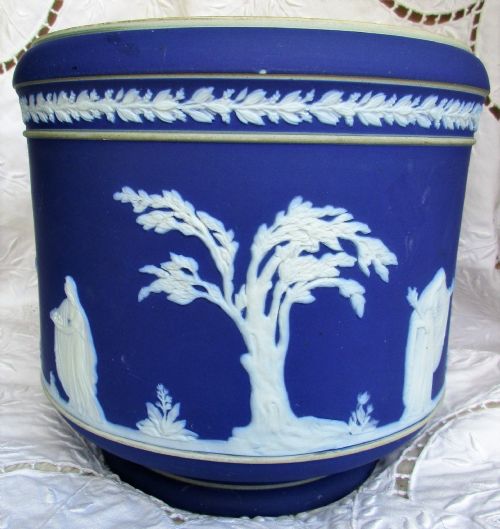
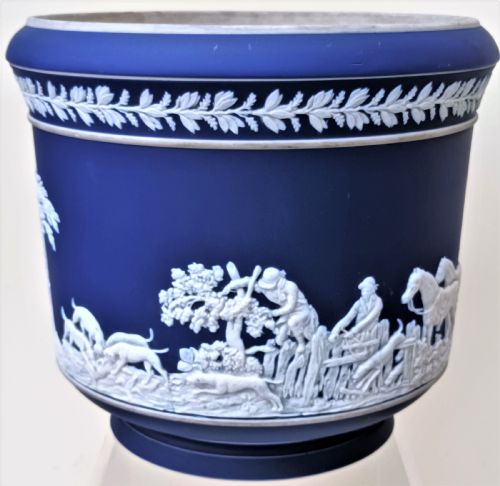
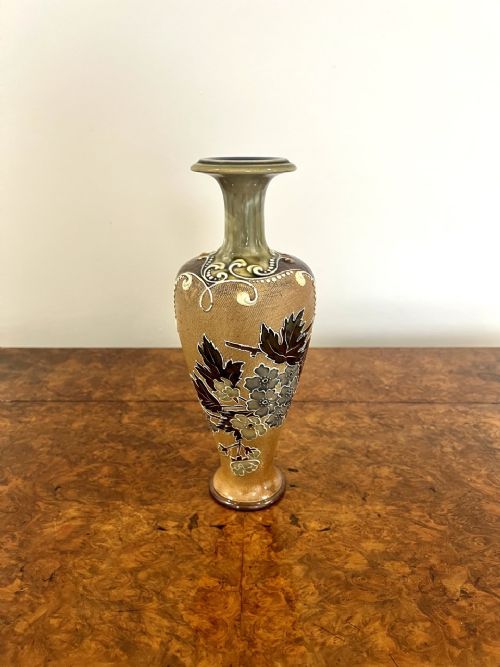
The pieces listed on this page skew heavily toward late nineteenth and early twentieth century studio and factory production. Doulton examples dominate the selection, alongside William Adams & Sons and Royal Lancastrian creations, demonstrating notable diversity in surface treatment and form.
Vessels range from salt-glazed exhibition jugs with cream sprigging to drip-glazed art pottery and lustre-painted surfaces featuring animal motifs. This category suits collectors drawn to dense, impervious clays finished with specialised glazes and applied decoration.
How they were made
Makers shaped dense clay bodies on the potter's wheel or in moulds before firing them at high temperatures to achieve a vitrified, non-porous finish. This intense heat fused the stoneware body directly with applied salt glazes or liquid ceramic coatings.
Surface ornamentation often involved sprigged relief work, where separate moulded clay motifs were applied by hand before firing. Artists also utilised intricate hand-painted enamels, gilding with gold leaf, and specialised lustre techniques to create metallic sheens.
English Stoneware Vase Retail Price Guide 2026
Typical asking prices for english stoneware vase among the pieces listed under this phrase on Sellingantiques today, from the lower quarter to the upper quarter. They describe what is for sale here now, not the wider market.
Listings feature stoneware and ceramic pieces spanning the nineteenth and twentieth centuries, encompassing Victorian, Art Nouveau, and Arts and Crafts styles.
What varies in quality
The distinction between standard production and top-tier examples rests upon the execution of the surface decoration and the renown of the decorator. Pieces bearing signatures from known artists like Eliza Simmance, Emma Shute, Ethel Beard, or Richard Joyce represent superior execution within the medium.
Exhibition pieces and large formats demand greater technical control during the high-temperature firing process to avoid distortion. Refinement in the application of sprigging, lustre, and intricate glaze patterns separates ordinary utilitarian vessels from masterworks of art pottery.
William Adams And Sons·Doulton Lambeth·Royal Doulton·Royal Lancastrian
The English Stoneware Vase Glossary
- Stoneware
- A robust, vitrified ceramic made from clay fired at high temperatures until the material becomes non-porous and extremely hard. This composition allows the vessel to hold water without interior glazing.
- Jasperware
- A fine-grained, unglazed stoneware developed with a distinctive matte texture and typically featuring contrasting applied white relief decorations. It appears on nineteenth-century jardinieres and decorative vessels.
- Salt Glaze
- A glossy, slightly textured finish achieved by throwing common salt into the kiln during high-temperature firing, which reacts with the silica in the clay. The resulting surface resembles the skin of an orange.
- Lustre
- A metallic glaze technique that produces an iridescent sheen on the ceramic surface through a secondary reduction firing. It is characteristic of early twentieth-century art pottery.
- Sprigging
- A decorative technique where moulded clay reliefs are applied to the wet body of a vessel using slip as an adhesive. These raised motifs add tactile contrast to the finished piece.
English Stoneware Vase: Frequently Asked Questions
Can these vases hold water for fresh flowers?
Most stoneware vessels are naturally water-tight due to the high firing temperatures that vitrify the clay body. This makes them inherently practical for holding fresh floral arrangements.
However, fragile exhibition pieces or those with delicate enamel work benefit from a small glass insert rather than direct contact with stagnant water.
How do I identify the period of a Doulton vase?
Examine the base for factory stamp marks, impressed culls, and artists' monogram signatures which help narrow down the production decade. Doulton pieces from the late nineteenth century often reflect Aesthetic or Arts and Crafts sensibilities.
Later examples from the early twentieth century shift toward Art Nouveau curves and rich lustre glazes. Comparing the stylistic motifs against documented factory timelines confirms the era.
What is the difference between stoneware and earthenware?
Stoneware is fired at significantly higher temperatures than earthenware, causing the clay to vitrify and become completely impervious to liquids. Earthenware remains porous unless heavily glazed across the entire surface.
This structural density gives stoneware vases a heavier weight and greater durability in daily use.