





English Music Cabinet
An English music cabinet is a dedicated piece of furniture designed to hold sheet music, which brings period character and practical storage to a home.
English Music Cabinet
When you search for an english music cabinet, you encounter pieces designed to store scores, folios and pianists' papers across the Georgian, Regency, Victorian, and Edwardian eras. These items serve as specialised storage that evolved alongside domestic music-making in English parlours and drawing rooms.
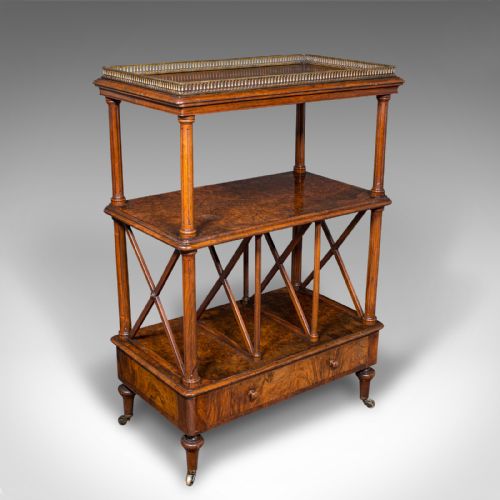
The versions most commonly met on this page span several decades, ranging from Georgian and Regency canterbury racks to Victorian fall-front cabinets and Edwardian glass-front display cases. They share a compact footprint with internal divisions suited to organising sheet music, newspapers and magazines.
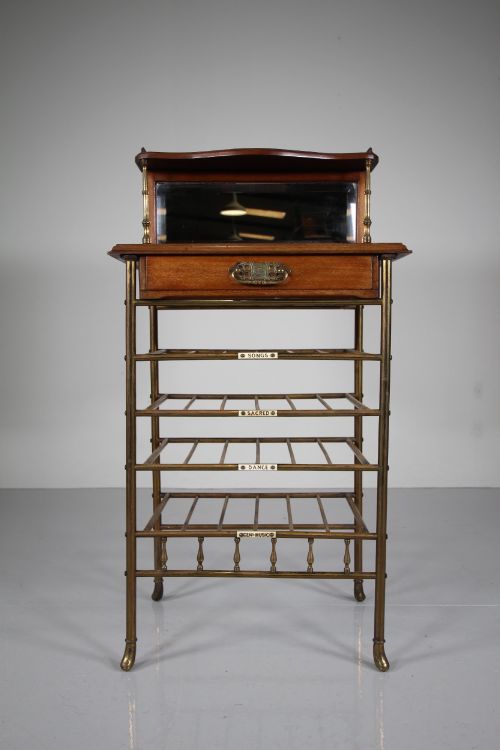
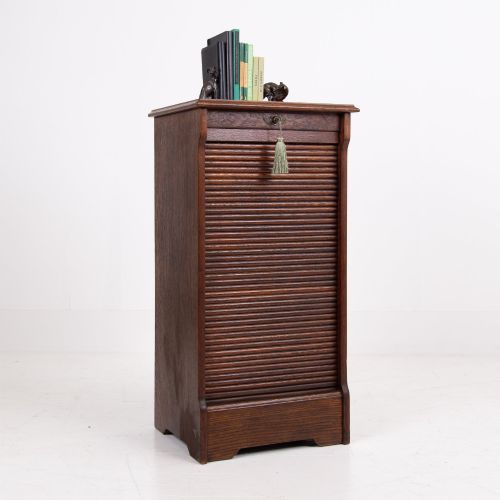
Makers adapted these cabinets into various forms, including mirrored duet cabinets, gentleman's folio cabinets, and tambour door units in oak or exotic timbers. Each variant reflects the specific furnishing tastes and musical habits of its original period.
How They Were Made
Cabinet makers utilised select hardwoods such as mahogany, walnut, burr walnut, oak, and birds eye maple to construct these pieces. Timber selection dictated the visual weight and finish of the furniture, from figured veneers to sturdy solid oak frames.
Construction involved brass hardware for handles, hinges and division rails, alongside inset glass panels and mirror plates. Tambour doors and fall fronts required precise joinery to ensure smooth operation within the compact frames.
English Music Cabinet Retail Price Guide 2026
Typical asking prices for english music cabinet among the pieces listed under this phrase on Sellingantiques today, from the lower quarter to the upper quarter. They describe what is for sale here now, not the wider market.
Listings feature items spanning six distinct periods: Georgian, Regency, Victorian, 1880, Edwardian and 1910.
What Varies in Quality
The grade of timber veneer and the complexity of the cabinetwork separate standard examples from finer commissions. Pieces featuring burr walnut or birds eye maple demonstrate higher decorative ambition than simpler utilitarian oak or mahogany models.
Internal arrangement and hardware quality indicate the standard of execution, from basic fixed shelving to articulated fall fronts, tambour mechanisms and finely turned divisions. The integration of stylistic elements like Art Nouveau carving or after-Liberty designs elevates the design pedigree.
The English Music Cabinet Glossary
- Fall Front
- A hinged panel that drops down to create a writing surface or to provide unobstructed access to internal compartments. It conceals interior document drawers or music slots when closed.
- Tambour
- A flexible shutter made of narrow vertical strips of wood glued to a canvas backing, allowing it to slide smoothly around a curved track. It provides concealed storage without requiring clearance for swinging doors.
- Folio Cabinet
- A large piece designed to store oversized sheets of paper, prints or musical scores flat rather than upright. These cabinets typically contain multiple shallow drawers.
- Etagere
- A set of open tiered shelves used for displaying decorative objects or small books. They appear in Regency and Victorian interiors alongside traditional closed cabinetry.
English Music Cabinet: Frequently Asked Questions
What is an english music cabinet?
An english music cabinet is a specialised piece of furniture built to organise and store sheet music, folios and pianists' papers in domestic settings.
These cabinets incorporate internal divisions, drawers or drop fronts tailored specifically for paper storage.
How were music cabinets used?
Households placed them in music rooms, drawing rooms and parlours to keep scores and folios close to the piano or music stand.
They kept delicate paper goods tidy and protected from dust and light when not in use.
How do I date a music cabinet?
Dating relies on identifying the stylistic markers, timber choices and construction methods characteristic of periods from the Georgian era through to Edwardian times.
Details such as Art Nouveau motifs, Regency canterbury forms or Victorian walnut veneers provide clear chronological clues.
Can these cabinets hold modern items?
Their internal compartments and shelves accommodate modern magazines, art supplies, documents and flat files alongside traditional sheet music.
The compact proportions make them adaptable as side tables or storage units in contemporary living spaces.