

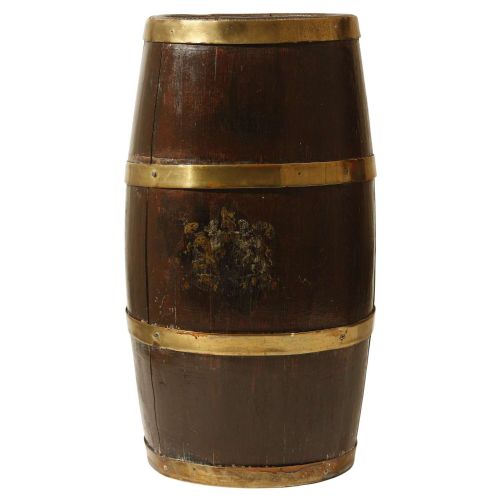


English Hallway Stick Stand
An English hallway stick stand organises wet umbrellas and walking canes in the entrance passage with sturdy metal or timber construction.
English Hallway Stick Stand
An English hallway stick stand serves as a practical entrance piece designed to hold umbrellas, parasols and walking canes. These items appear primarily in Victorian and Edwardian iterations, reflecting the domestic habits of nineteenth and early twentieth century homes.
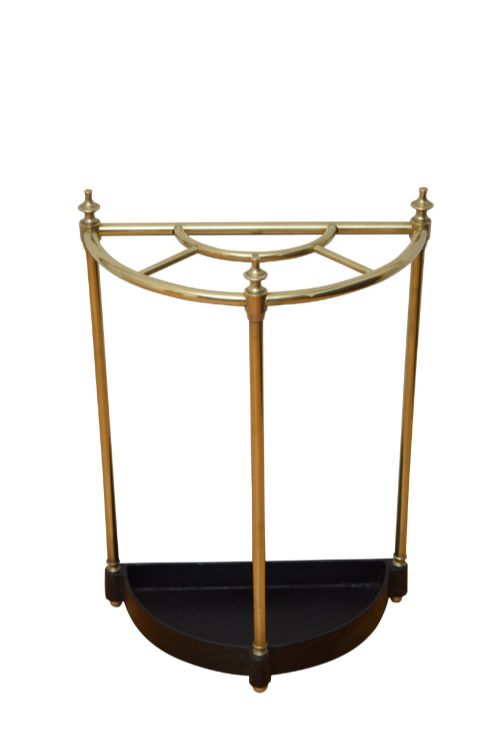
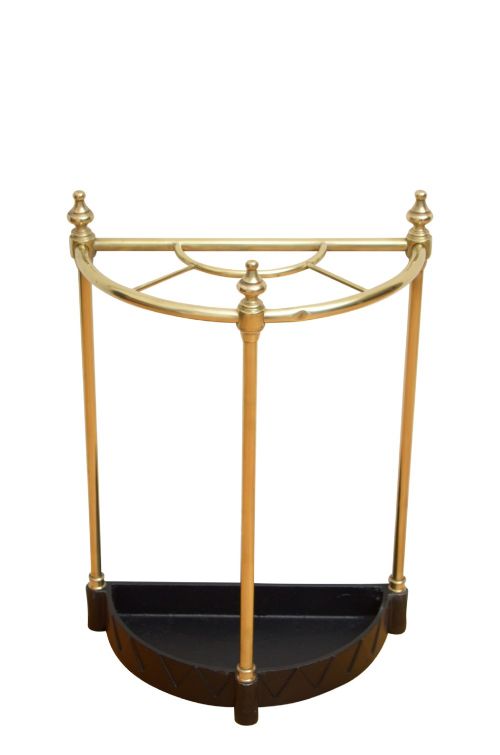
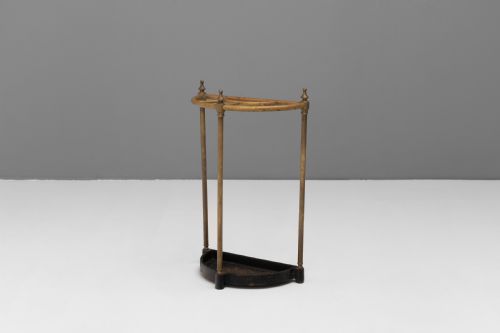
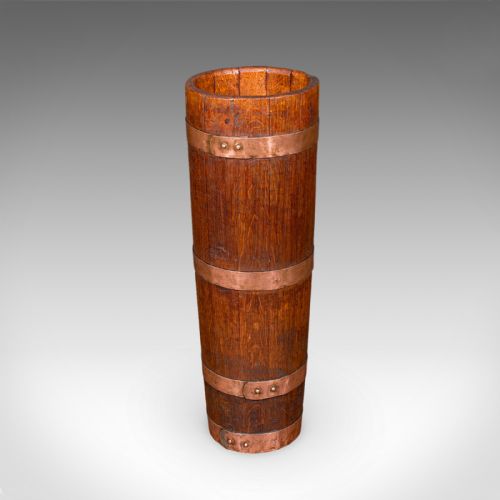
The inventory on this page consists predominantly of demi-lune brass designs, coopered oak barrels with metal reinforcement, and cast iron portico frames. Buyers regularly encounter both compact corner shapes and larger multi-division hall racks suited for substantial country houses.
Materials and Construction
Maker workshops utilised durable metals such as brass, cast iron and copper alongside dense timbers like oak, walnut and mahogany. Brass and copper components are often formed into tubular loops and drip trays, while iron versions utilise ornate casting techniques.
Wooden examples frequently employ coopered barrel construction, binding staves together with metal bands to create watertight or structurally sound holders. Paint finishes and ceramic elements like Burmantofts faience also appear within specific Arts and Crafts and decorative pieces.
Listings feature oak, walnut, brass, copper, and cast iron across Victorian and Edwardian periods.
Markers of Quality
The standard of a piece rests on the integrity of its joints, the weight of its cast or spun metal, and the crispness of any decorative ornamentation. Superior examples display robust assembly methods, such as secure brass bracing on coopered oak barrels and substantial gauge metal in the umbrella loops.
Design complexity also distinguishes the range, moving from plain utility models to ornate Gothic Revival, Art Nouveau or Coalbrookdale-influenced castings with integral drip trays and multiple divisions.
The English Hallway Stick Stand Glossary
- Demi-lune
- A half-moon shape allowing the stand to sit flush against a hallway wall. This profile conserves floor space in narrow entrance passages.
- Coopered
- Constructed using wooden staves bound together by metal hoops, similar to barrel-making techniques. This method provides robust structural integrity for wooden vessels.
- Stick loop
- The metal framework or upper divider that separates individual umbrellas and canes to keep them upright. It prevents the contents from leaning sideways.
- Portico
- An architectural framework style utilised for heavy cast iron stands, resembling a miniature classical porch. This structure offers exceptional stability for wet items.
- Faience
- Tin-glazed earthenware used in decorative panels or bodies on specific Arts and Crafts period stands. It introduces colourful ceramic texture to the metal and wood mix.
English Hallway Stick Stand: Frequently Asked Questions
How do I use a stick stand?
Place the stand near the main entrance door to drop in wet umbrellas and walking canes as you enter the house. The built-in base tray catches dripping water to protect hallway flooring.
Ensure that heavier items are distributed evenly across the divisions to maintain balance, particularly in lighter demi-lune brass or single-loop wall frames.
What periods do these stands come from?
The available selection spans the Victorian and Edwardian eras, with dates stretching from the mid-nineteenth century up to the nineteen-twenties. Common stylistic influences include Arts and Crafts, Art Nouveau and Gothic Revival.
Earlier pieces from around eighteen-fifty often feature heavy copper buckets and coopered oak, while later Edwardian examples lean towards decorative brass and cast iron frames.
How do I maintain wooden coopered stands?
Keep wooden barrel stands away from direct heat sources and sudden temperature shifts to prevent the staves from shrinking or cracking over time. Regular treatment with appropriate timber wax maintains the finish of the oak or walnut.
Check that internal metal liners or base trays are kept clean and dry to avoid moisture damage to the surrounding wood.
Are brass stands solid or plated?
Period pieces generally utilise heavy cast or sheet brass components rather than thin modern plating. The substantial weight of these metals ensures the stand remains stable when holding multiple heavy walking sticks.
Cleaning should be done gently with a soft cloth to preserve the natural aged patina developed over decades of hallway use.