

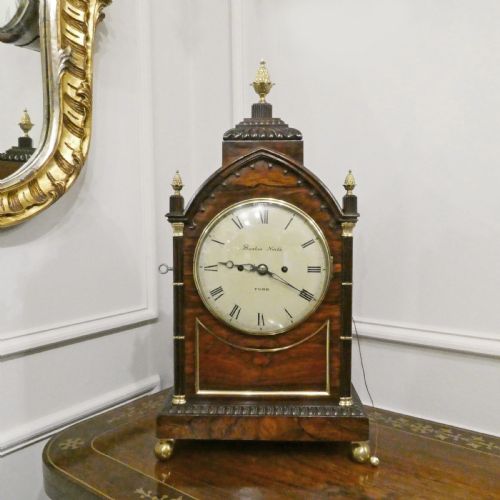


English Gothic Table
An English gothic table brings pointed arches, rich timber and ecclesiastical gravitas straight into a room.
English Gothic Table
An English gothic table draws on medieval architecture, church joinery and nineteenth-century revivals to create imposing furniture for libraries, halls and dining rooms.
The pieces on this page are most frequently built from oak or pine, often displaying the robust proportions and structural honesty characteristic of the Gothic Revival style.
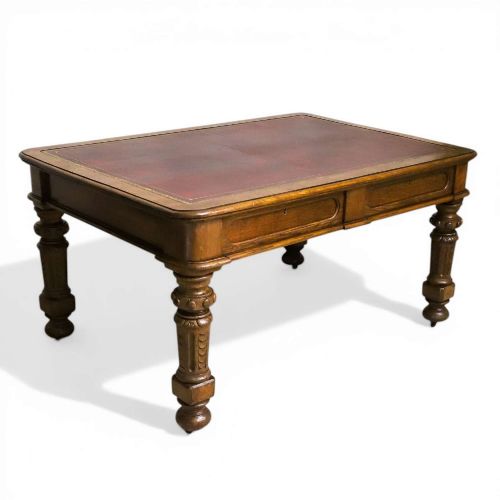
Buyers will encounter dining tables, library tables with leather surfaces, and simpler altar or occasional forms originating from the Victorian period.
Construction and timber
Cabinet makers relied primarily on solid oak and pine, shaping heavy timbers with traditional joinery to withstand daily household use.
Surfaces frequently feature carved detailing inspired by stone tracery, alongside inset leather writing panels or polished marble tops.
The construction avoids superficial veneer in favour of honest structural framing that honours the architectural roots of the design.
English Gothic Table Retail Price Guide 2026
Typical asking prices for english gothic table among the pieces listed under this phrase on Sellingantiques today, from the lower quarter to the upper quarter. They describe what is for sale here now, not the wider market.
Listings feature oak, pine, and pitch pine across Victorian and nineteenth-century periods.
Judging quality
Quality rests on the crispness of the architectural carving and the selection of timber, where tightly grained oak separates superior pieces from plain utilitarian work.
The integrity of the joints and the handling of gothic motifs - such as trefoils, lancets and quatrefoils - dictate whether a piece captures the true spirit of the revival or remains a basic copy.
Richard Winter of Chieveley·Barber and North of York·George Orpwood·Thwaites of London·Cording of London·E White of Manchester·Ganthony of London·Edwards of London
The English Gothic Table Glossary
- Gothic Revival
- An architectural and design movement that revived medieval forms from the mid-eighteenth through the nineteenth century. It heavily influenced domestic furniture with pointed arches and ecclesiastical details.
- Library table
- A large freestanding table designed for heavy books and writing, frequently fitted with a leather insert. These pieces often anchor a study or principal room.
- Altar table
- A narrow ecclesiastical table adapted for domestic use, typically featuring trestle supports or heavily carved friezes. They provide a striking architectural silhouette against a wall.
- Tracery
- Openwork stonework patterns translated into wood carving on panels and doors. It defines the decorative language of gothic furniture.
- Trestle
- A supporting framework consisting of a horizontal beam fixed to two pairs of slanted legs. This construction underpins many sturdy medieval-style tables.
English Gothic Table: Frequently Asked Questions
What is an english gothic table?
An English gothic table is a piece of furniture inspired by medieval architecture, featuring structural timber and decorative motifs like pointed arches.
These tables range from large dining surfaces to smaller library and occasional pieces created during nineteenth-century revivals.
How were these tables used?
They served practical household functions in libraries, dining rooms and halls, while also projecting an air of scholarly or ecclesiastical seriousness.
Larger variants accommodated meals or study, whereas narrower console and altar forms stood against walls to display objects.
How do I style an english gothic table?
Pair the substantial oak or pine timber with simple, neutral surroundings to let the architectural carved details stand out clearly.
Avoid overcrowding the surface, allowing the natural grain and period joinery to serve as the visual focal point of the room.
How do I date a gothic revival table?
Examine the timber preparation, tool marks, and the specific interpretation of gothic motifs, which often point to nineteenth-century revival periods.
Comparing the construction methods to known Victorian cabinet making practices helps establish the approximate decade of manufacture.