



English Georgian Cellarette
An English Georgian cellarette is a heavy, timber-built container designed to keep wine bottles cool and secure beside the dining table.
English Georgian Cellarette
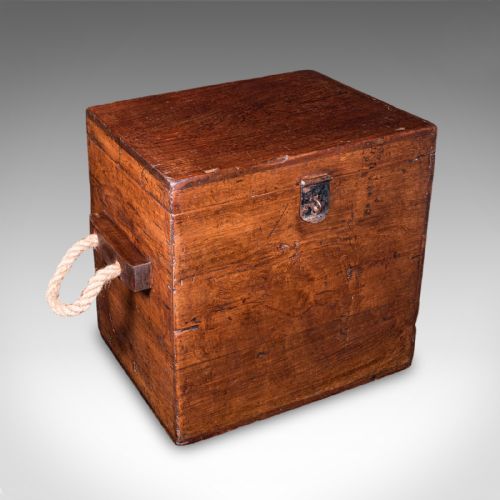
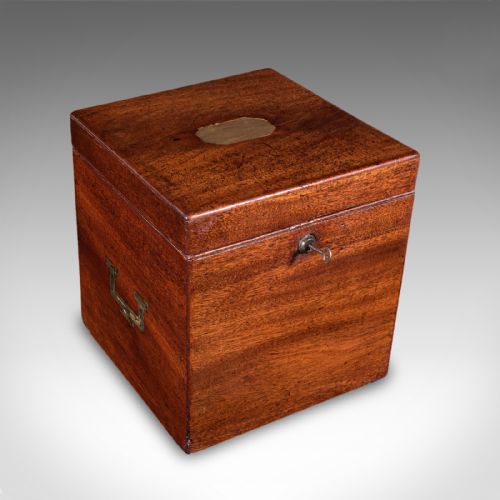
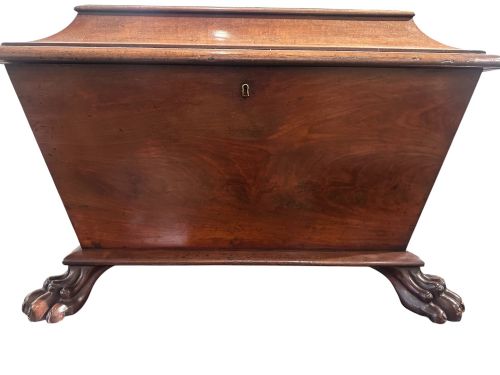
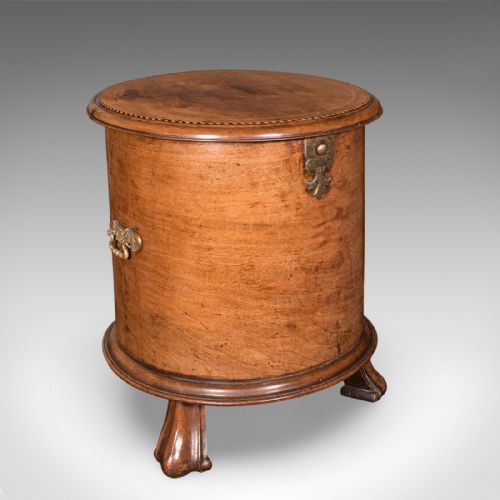
When you search for an english georgian cellarette, you are looking at substantial storage vessels designed to hold wine bottles near the dining table during the eighteenth and early nineteenth centuries. These pieces appear primarily as sarcophagus-shaped cases, oval brass-bound tubs, and smaller rectangular decanter boxes fitted with internal partitions. Most examples date from the Georgian and Regency periods, utilising rich timbers suited to formal dining rooms.
The form varies from grand freestanding floor models resting on paw feet or castors to compact tabletop boxes fitted with quality brass locks. Alongside traditional wine coolers, related forms such as fireside blanket stores and jardiniere stands occasionally share the inventory. Every piece reflects the domestic habits of elite households where wine was decanted and stored safely away from servants.
Assessing the standard
Quality rests upon the selection of timber, particularly the depth and figuration of the flame mahogany veneer used across the principal facades. Superior examples display crisp architectural carving, such as fluted borders or applied brass mouldings, rather than plain flat surfaces.
The sophistication of the internal joinery and the presence of original hardware, including handles and locking mechanisms, separate utilitarian containers from high-status furniture made for wealthy patrons.
English Georgian Cellarette Retail Price Guide 2026
Typical asking prices for english georgian cellarette among the pieces listed under this phrase on Sellingantiques today, from the lower quarter to the upper quarter. They describe what is for sale here now, not the wider market.
Several boxes include concealed locking mechanisms designed to keep thirsty household staff away from the master's brandy.
The English Georgian Cellarette Glossary
- Cellarette
- A lockable container or cabinet designed for storing wine bottles near the dining table. They frequently feature internal divisions or lead linings for ice.
- Sarcophagus
- A tomb-like form with a steep gabled lid and tapering sides popular during the Regency period. This architectural shape provided maximum internal volume for tall wine bottles.
- Flame mahogany
- A decorative veneer cut from timber where branches join the main trunk, producing a characteristic flickering flame pattern. Cabinet makers utilised this on prominent exterior surfaces to display wealth.
- Bramah lock
- A high-security patented lock invented by Joseph Bramah in the late eighteenth century. These complex mechanisms appear on finer storage boxes to protect valuable spirits.
English Georgian Cellarette: Frequently Asked Questions
What is an english georgian cellarette used for?
These vessels were kept in the dining room to hold wine bottles and ice during long meals. Servants would fetch bottles from the cellar and place them inside to chill before serving.
Today, collectors use them as side tables, blanket boxes, or decorative fireside storage for logs and magazines.
How do I tell a georgian cellarette from a regency one?
Georgian pieces often feature straight lines, oval brass-bound tubs, or subtle fluting reflecting classical restraint. Regency examples lean towards the heavy sarcophagus shape with paw feet, bold carved details, and classical revival motifs.
Exact dating relies on secondary timber choices, hinge types, and the overall architectural silhouette of the case.
Were these pieces lined with lead?
Many original wine coolers featured internal lead linings designed to hold melting ice without rotting the timber floor. These linings often leaked or suffered damage, leading to removal or replacement during later repairs.
An intact or historically relined interior adds to the functional authenticity of the piece.
How do I clean and maintain antique mahogany?
Maintenance requires simple dusting with a dry lint-free cloth and occasional application of traditional beeswax to nourish the dry timber. Avoid modern silicone polishes that build up a sticky residue and damage the historic polish.
Keep the timber away from direct heat sources and strong sunlight to prevent the mahogany veneer from warping or fading.