





English Gaming Box
An english gaming box brings the tactile pleasure of nineteenth-century parlor pastimes straight to your table.
English Gaming Box
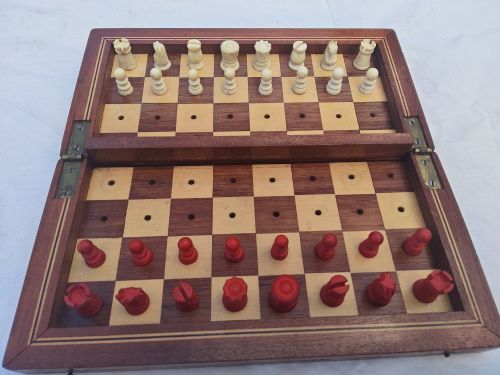
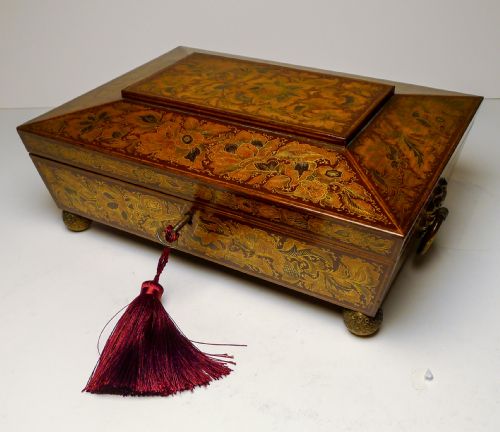
An english gaming box gathers the equipment for nineteenth-century pastimes into a single container designed for the parlor or travel. You will most frequently encounter mahogany, rosewood, and oak compartments housing chess sets, dominoes, and playing cards.
The selection ranges from compact travelling sets to elaborate Edwardian compendiums and country house organizer boxes. Many examples incorporate bone, boxwood, and ebony pieces alongside specialised brass hardware and fabric-lined interiors.
Materials and construction
Cabinetmakers utilised dense hardwoods such as mahogany and rosewood to protect the delicate gaming pieces stored within. Surface decoration often involved intricate penwork or Tunbridge Ware mosaic techniques applied to the timber exteriors.
Internal components relied on bone, boxwood, and ebony for chess sets and markers, shaped and turned by hand. Silver plate and sterling silver frequently appeared on mounts, hinges, and dedicated card boxes.
English Gaming Box Retail Price Guide 2026
Typical asking prices for english gaming box among the pieces listed under this phrase on Sellingantiques today, from the lower quarter to the upper quarter. They describe what is for sale here now, not the wider market.
Assessing quality
Quality rests upon the selection of timbers and the precision of the internal partitions fitted for specific games. Finer examples display meticulous attention to the turning of bone and boxwood pieces rather than mass-produced uniformity.
The integration of specialised elements, such as silver-plated markers or penwork decoration, elevates a simple wooden container into a sophisticated piece of social history.
The English Gaming Box Glossary
- Compendium
- A multi-game box housing equipment for several different pastimes in one fitted case. These containers often include folding boards and multiple card decks.
- Tunbridge Ware
- A type of decorative woodwork characterised by mosaic designs formed from tiny wood blocks of various natural colours. This technique created intricate geometric or pictorial patterns on box lids.
- Penwork
- Surface decoration created by drawing fine ink designs onto wood before sealing the surface with varnish. Regency makers utilised this method to depict classical scenes and motifs on game boxes.
- Cribbage Box
- A specialised container designed to hold playing cards and scoring pegs for the game of cribbage. These boxes frequently feature sliding lids and drilled scoring tracks.
English Gaming Box: Frequently Asked Questions
What games did these boxes hold?
An english gaming box typically contained equipment for chess, whist, cribbage, and dominoes. Many combined multiple pastimes into one fitted case.
Larger compendiums accommodated entire social evenings with playing cards, scoring markers, and complete board game sets.
How do I date a games box?
Dating relies on timber choices, construction methods, and stylistic cues from periods like the Regency or Victorian era. Rosewood and penwork point toward earlier nineteenth-century manufacture.
Later Edwardian examples often feature more robust tantalus combinations and standardised internal fittings for cards and counters.
Are travelling sets different?
Travelling versions utilise compact dimensions and secure internal compartments to keep pieces in place during transit. Materials like bone and mahogany withstood the rigours of journeys.
These pieces focus on practicality alongside craftsmanship, often featuring folding elements to minimise space.
How should I care for the wood?
Keep wooden boxes away from direct sunlight and extreme humidity changes to protect the delicate veneers and interior linings. Gentle dusting with a dry cloth maintains the polished timber surfaces.
Avoid liquid cleaners that might damage nineteenth-century varnishes, penwork, or Tunbridge Ware details.