





English Display Etagere
These English display etagere pieces bring tier upon tier of period elegance to any room.
English Display Etagere
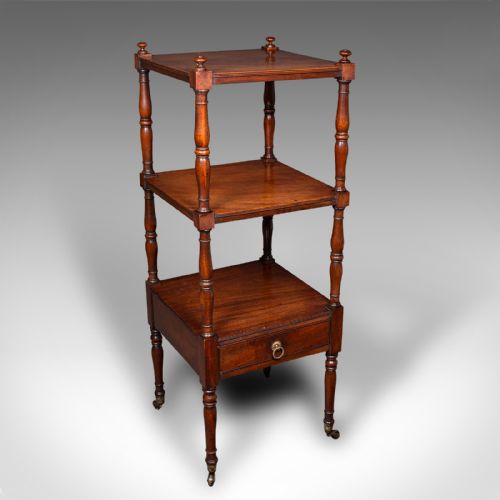
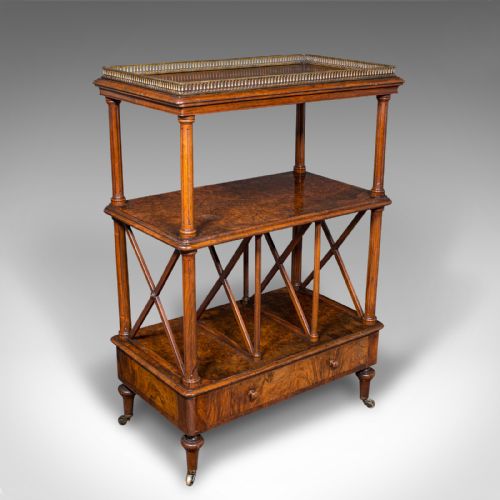
An English display etagere stands as a multi-tiered piece designed for storage and exhibition, commonly found in forms such as whatnots, bakers racks, and open display stands. These multi-level pieces serve to display porcelain, books, and decorative objects across several open platforms.
The versions most likely to be met on this page span the Georgian, Regency, and Victorian periods, along with the later Sheraton Revival and Victorian Industrial styles. Makers from these eras utilised various configurations, including corner units, tapering forms, and tray tables with three tiers.
Makers constructed these stands from a rich variety of woods and metals, resulting in pieces that function equally well as occasional tables or dedicated display furniture. The overarching form remains open and upright, prioritising visibility from multiple angles within a room.
How they were made
Cabinetmakers shaped these pieces from fine timbers such as mahogany, walnut, satinwood, and rosewood, frequently incorporating contrasting veneers and satin wood details. These rich woods provided the stable structural uprights and tiered platforms necessary for holding heavy collections of decorative items.
Metalworking played a significant role in industrial and commercial variants, utilising brass, wrought iron, and cast iron. Workshops combined these durable metals with glass components to create robust bakers racks and shop display stands intended for heavier daily use.
English Display Etagere Retail Price Guide 2026
Typical asking prices for english display etagere among the pieces listed under this phrase on Sellingantiques today, from the lower quarter to the upper quarter. They describe what is for sale here now, not the wider market.
Listings feature pieces spanning the Georgian, Regency, and Victorian periods, constructed from mahogany, walnut, rosewood, satinwood, brass, and iron.
What varies in quality
The distinction at the top of the range lies in the selection of timbers and the refinement of the joinery, where finely figured mahogany or burr walnut meets meticulous turning and carving. Lesser examples rely on simpler construction without the decorative inlay or sophisticated tapering forms seen in finer workshops.
Metal and glass iterations show divergence in the intricacy of their scroll-work and the weight of the cast iron or brass framework. Pieces possessing heavier gauge metal and more elaborate structural framing sit distinctly apart from simpler utility racks.
The English Display Etagere Glossary
- Etagere
- A piece of furniture consisting of a set of open shelves for displaying small ornaments. This form provides tiered platforms for exhibition.
- Whatnot
- A multi-tiered piece of furniture used for storing or displaying miscellaneous articles. It shares a close lineage with the etagere.
- Canterbury
- A low stand with partitioned vertical sections, frequently incorporated into multi-tiered whatnot furniture for holding folios or music sheets. This addition increases the functional capacity of the lower section.
- Satinwood
- A durable, yellowish wood used for fine cabinet making and decorative veneers. Its lustrous grain elevates the visual appeal of 19th-century pieces.
English Display Etagere: Frequently Asked Questions
What is an english display etagere?
An english display etagere is a multi-tiered shelving unit designed for exhibiting decorative objects and books in a room. These pieces provide vertical storage while keeping items visible from all sides.
Such furniture encompasses forms like whatnots, open display stands, and bakers racks across various 19th-century styles.
How were these stands used originally?
Original usage involved holding porcelain, silver, books, and small curiosities in principal reception rooms of country houses and town residences. Sturdier iron versions served functional roles in shops and bakeries.
Domestic variants functioned as occasional tables or decorative storage near seating areas.
How do I live with one today?
Living with these pieces involves placing them against walls or in corners to display collections of ceramics, glassware, or framed photographs. The open tiers allow light to pass through, keeping rooms feeling spacious.
Care simply requires dusting the multiple surfaces and placing heavy items on the lowest tier for stability.
How do I tell the periods apart?
Georgian and Regency examples tend to feature refined mahogany, rosewood, or satinwood with delicate tapering forms and classic turning. Victorian and later pieces often introduce heavier proportions, walnut veneers, or industrial iron and brass.
Stylistic markers such as Sheraton Revival details or Victorian scroll-work indicate the later decades of the nineteenth century.