



English Dairy Bowl
An english dairy bowl brings honest utilitarian warmth into a modern room through time-worn timber and glazed pottery.
English Dairy Bowl
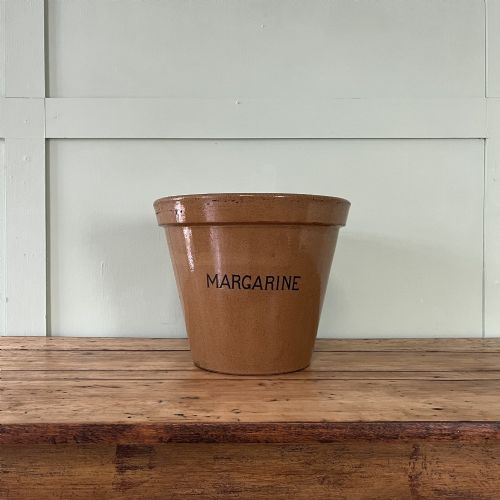
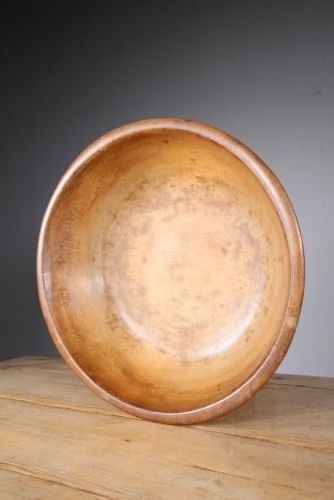
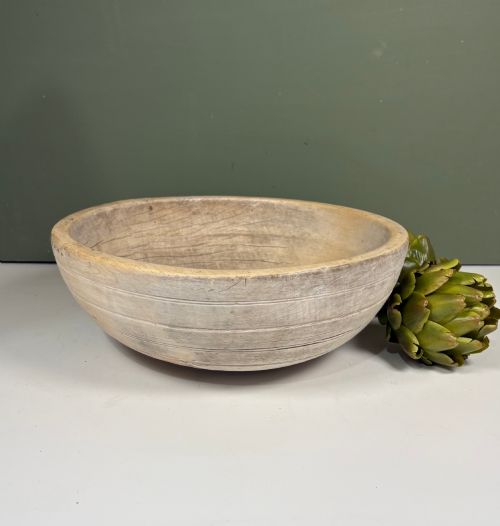
An english dairy bowl is a utilitarian vessel originally shaped for setting milk and skimming cream in rural dairies before the rise of industrial processing. These pieces typically manifest as wide, shallow wooden treen bowls turned from sycamore or heavy earthenware and stoneware vessels with robust internal glazes.
The versions most commonly met on this page span the nineteenth century and the Edwardian era, bearing the gentle scars of rural domestic labour. They survive in various forms ranging from pale sycamore timber to slip-glazed pottery and copper setting pans.
Materials and Construction
The wooden examples rely on lathe-turned sycamore, selected for its clean pale grain and stable nature when exposed to damp conditions and frequent scrubbing. Makers turned these large bowls with thick walls to withstand the daily weight of milk and cream.
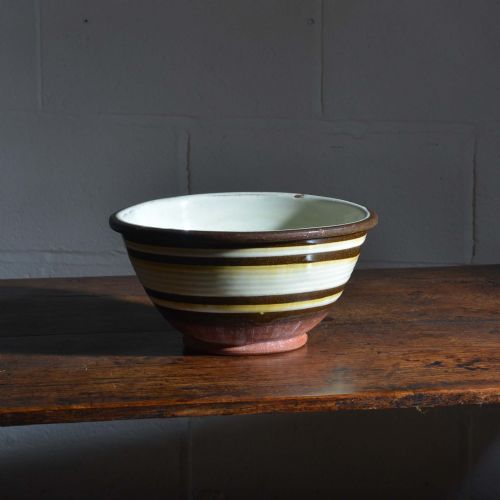
Ceramic variants employ dense earthenware and stoneware bodies coated in slip glazes or creamy lead glazes designed to hold liquids securely. Copper pans add a metallic alternative, beaten and shaped to handle kitchen and dairy tasks.
English Dairy Bowl Retail Price Guide 2026
Typical asking prices for english dairy bowl among the pieces listed under this phrase on Sellingantiques today, from the lower quarter to the upper quarter. They describe what is for sale here now, not the wider market.
Assessing Quality
Quality rests upon the integrity of the form and the depth of the surface patina accumulated through decades of practical use. Sycamore bowls with deep, warm tones and minimal distortion show superior preservation compared to those sanded down or heavily bleached.
Pottery examples depend on the richness of the glaze and the stability of the clay body without distracting alterations. The best pieces retain their original character, showing clear tool marks in wood or rich pooling in ceramic glazes.
The English Dairy Bowl Glossary
- Sycamore
- A dense, pale hardwood favoured by turners for dairy utensils because it imparts no taste to milk products. It resists splitting under alternating conditions of wet and dry use.
- Creamware
- A refined cream-coloured earthenware developed in the eighteenth century and continued through the Victorian period. Its warm hue comes from a transparent lead glaze over a pale body.
- Slip glaze
- A liquid clay mixture applied to pottery before firing to create a smooth, impervious interior surface. It often runs naturally, leaving pools of colour inside the vessel.
- Treen
- Small handmade wooden objects for domestic use, turned or carved from local timbers. Dairy bowls form a substantial part of domestic treen output.
English Dairy Bowl: Frequently Asked Questions
What was an english dairy bowl used for?
These wide vessels served primarily in farm dairies for holding fresh milk so the cream could rise to the top and be skimmed off easily.
Their broad surface area maximised exposure to the air, helping the separation process before mechanical centrifuges took over.
How do I care for a wooden dairy bowl?
Timber bowls require gentle cleaning with warm water and mild soap, avoiding long soaking that raises the grain. Occasional treatment with food-safe mineral oil keeps the sycamore from drying out.
Keep them away from direct heat sources and radiators to prevent the wood from splitting.
How can I tell a nineteenth-century bowl apart from later ones?
Nineteenth-century wooden bowls often display irregular tool marks from foot-powered or early steam lathes, along with deep wear to the rim. Edwardian and later ceramic versions show more uniform industrial shaping and standardised glazes.
Patina also helps indicate age, as genuine working wear develops slowly over generations of handling.
Can I use antique dairy bowls for food today?
Many wooden and ceramic bowls remain robust enough for holding dry goods, fruit, or bread on a kitchen table. Glazed earthenware should be checked for stability, while wooden vessels function best with dry or wrapped foods.
Daily utilitarian use is possible provided you avoid harsh detergents and dishwashers.