



English Crystal Pitcher
An english crystal pitcher brings weight and brilliance to the table, fashioned from lead crystal and cut glass.
English Crystal Pitcher
An english crystal pitcher encompasses wine jugs, champagne jugs, claret jugs, and serving ewers spanning the Victorian, Edwardian, and Mid-Century Modern periods. These vessels appear in forms designed for serving wine, champagne, and cordials at the table.
The pieces on this page emerge from the decades between eighteen-forty-five and nineteen-sixty, taking the shape of pint-sized jugs, large red wine vessels, and silver-topped claret containers. Makers shaped these items from clear and coloured glass, often mounting them with silver plate.
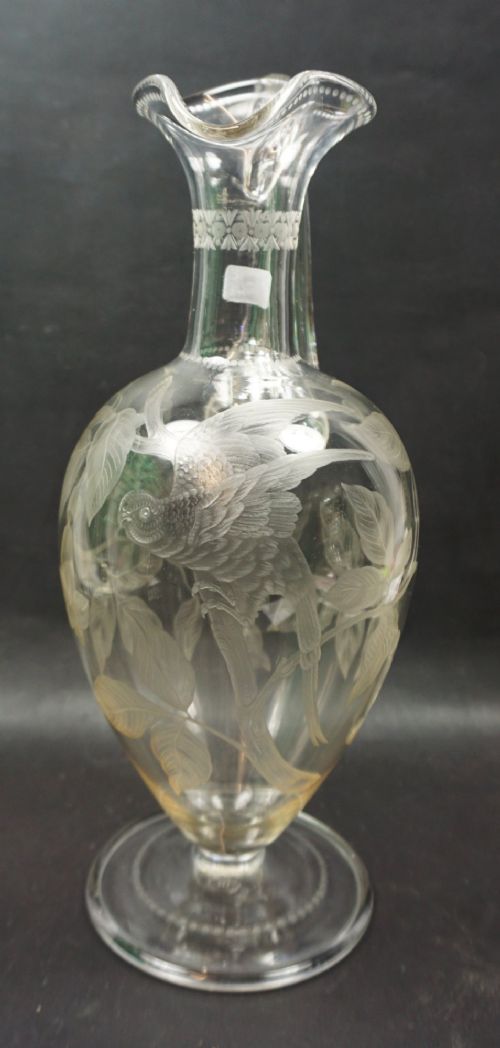
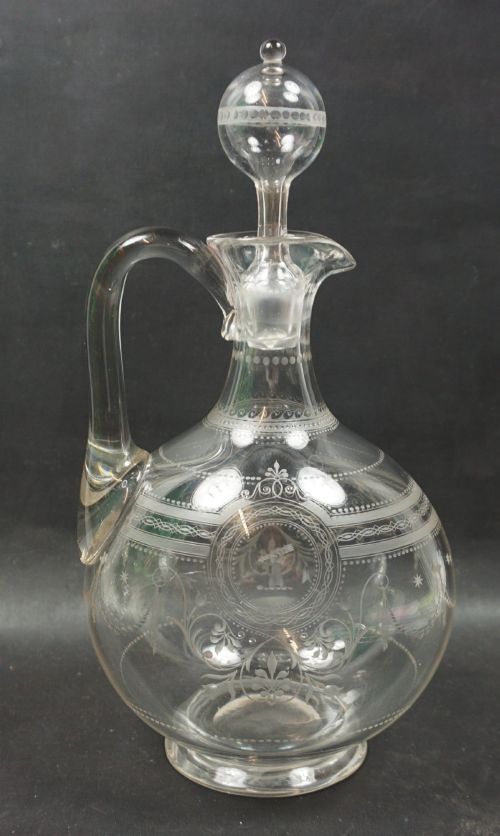
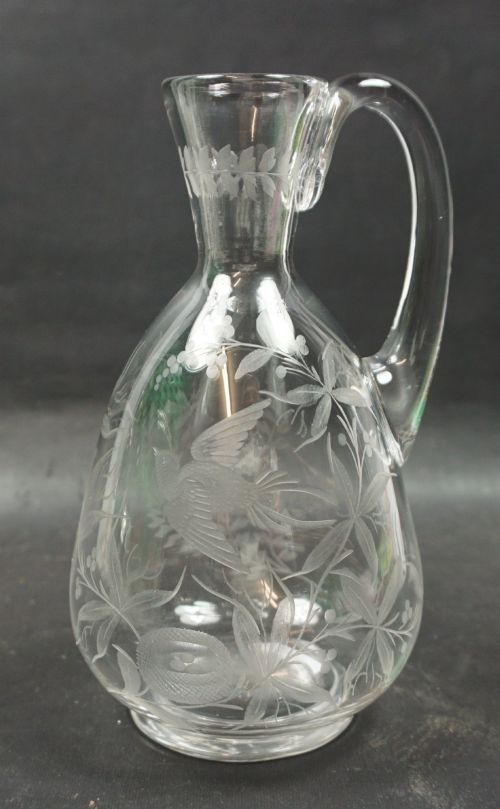
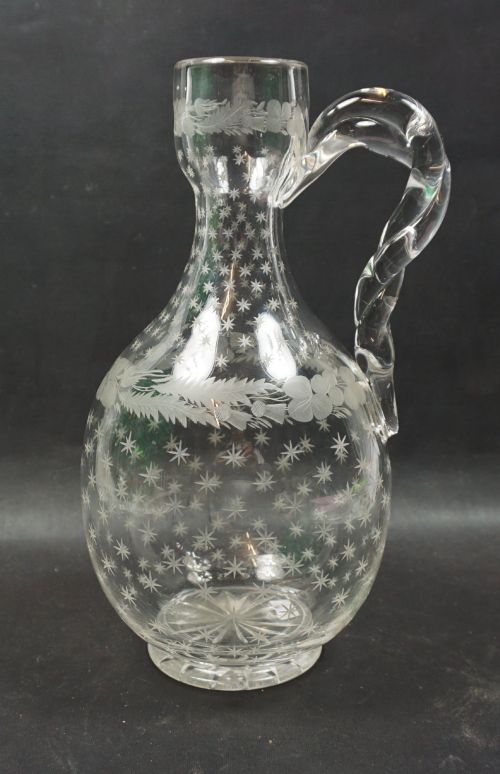
Buyers encounter examples engraved with crests, birds, dolphins, stars, and the flowers of the Union, alongside latticinio decoration and heavy cutting. These drinking vessels served practical dining functions while displaying ornamental glasswork.
How they were made
Glassmakers utilised lead crystal, crystal glass, and standard glass, shaping the metal by blowing and moulding before applying decorative treatments. Many vessels received hand wheel engraving, wheel cutting, and latticinio work directly onto the surface.
Mounts and hardware incorporate silver plate, fitted as rims, handles, and hinged tops on claret jugs and ewers. Workshops in Stourbridge and Birmingham executed the specialised wheel engraving and cutting seen on the finest examples.
English Crystal Pitcher Retail Price Guide 2026
Typical asking prices for english crystal pitcher among the pieces listed under this phrase on Sellingantiques today, from the lower quarter to the upper quarter. They describe what is for sale here now, not the wider market.
Listings feature vessels from the Victorian, Edwardian, and Mid-Century Modern periods, utilising lead crystal, silver plate, and cut glass.
What varies in quality
The clarity and weight of the lead crystal establish the foundational quality of each vessel, alongside the crispness of the wheel cutting. Heavy metal with high refractive properties separates superior pieces from standard glassware.
The depth and detail of the engraving dictate the artistry of the work, moving from simple stars to intricate birds, crests, and fruiting vines. The integration of silver plate mounts with the glass body further defines the standard of the manufacture.
Richardsons, Birmingham
The English Crystal Pitcher Glossary
- Lead crystal
- Glass containing lead oxide, which increases brilliance, weight, and workability for deep cutting. This material gives the vessel its resonant ring and heavy feel.
- Latticinio
- A decorative glass technique featuring fine opaque white or coloured glass threads twisted within the clear metal. This method creates delicate linear patterns inside the vessel wall.
- Claret jug
- A specialised serving pitcher designed specifically for pouring red wine at the dining table. These forms frequently feature silver-plated mounts and hinged lids.
- Silver plate
- A layer of silver fused to a base metal, commonly utilised for the handles, collars, and covers of serving ewers and jugs. This technique provided the appearance of solid silver at a lower cost.
- Hand wheel engraving
- A method of cutting designs into glass by holding the vessel against a rotating small abrasive wheel. Artisans used this technique to render detailed crests, birds, and floral motifs.
English Crystal Pitcher: Frequently Asked Questions
What is an english crystal pitcher used for?
These vessels served primarily for pouring wine, claret, champagne, and cordials during formal dining and entertaining. Their generous proportions and pouring lips allowed hosts to decant and serve beverages directly at the table.
Beyond functional service, many examples functioned as decorative table ornaments when not in active use. The combination of brilliant glass and silver plate made them centrepieces of Victorian and Edwardian dining arrangements.
How do I date an english crystal pitcher?
Dating relies on stylistic clues, cutting techniques, and the presence of silver plate mounts or factory marks. Victorian pieces often display deep hand wheel engraving with naturalistic motifs, while Edwardian items lean toward crisp geometric cut glass.
Mid-century examples show simpler, cleaner lines reflecting later design movements. Reference points like Birmingham makers or specific commemorative motifs help narrow the decade of production.
How do I care for my pitcher?
Wash the vessel by hand using warm water and a mild detergent, avoiding harsh abrasives that might scratch the crystal or damage the silver plate. Dry the piece thoroughly with a lint-free cloth to maintain the brilliance of the glass.
Store the pitcher away from direct sunlight and extreme temperature fluctuations. Take care when handling heavy lead crystal vessels, supporting the base rather than relying solely on the handle.