




English Country Shelf
An English country shelf brings honest utility to a wall, offering warmth and practical display through centuries of vernacular woodworking.
English Country Shelf
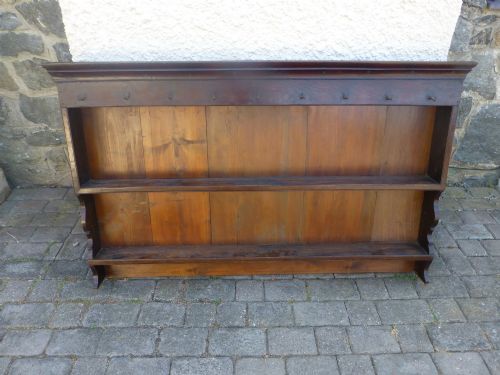
When buyers search for an english country shelf, they seek functional wall storage and display furniture rooted in domestic vernacular traditions. The pieces appearing here span the eighteenth and nineteenth centuries, taking the form of hanging racks, open bookcases, and delft plates racks.
Pine and oak predominate among these listings, often showing traces of old paint or rich patination gained through long domestic use. Forms range from simple eighteenth-century oak hanging racks to Victorian painted waterfall bookcases and mahogany bobbin shelves.
The aesthetic is unpretentious and direct, designed originally for farmhouse kitchens and country house sculleries rather than formal reception rooms. Buyers encounter everything from rustic pine potting tables with shelves to Georgian mahogany hanging shelves dating to around seventeen-ninety.
Materials and construction
Makers relied on native timbers such as oak, pine, yew, and mahogany, selecting each wood for its local availability and structural strength. Boards were jointed by hand using traditional methods, creating robust framework for holding heavy ceramic plates and volumes.
Surfaces were frequently finished with simple coats of paint, leaving brush marks and layered textures that survive beneath later wear. Details such as Corinthian columns on delft racks or delicate bobbin turnings show how rural joiners adapted formal architectural motifs into domestic vernacular items.
English Country Shelf Retail Price Guide 2026
Typical asking prices for english country shelf among the pieces listed under this phrase on Sellingantiques today, from the lower quarter to the upper quarter. They describe what is for sale here now, not the wider market.
Some country shelves still retain faint flour dust trapped in their joinery from decades spent above farmhouse baking tables.
Judging quality and character
Quality in these pieces rests in the integrity of the timber and the honesty of the construction rather than applied ornament. Superior examples retain their original hanging points, backboards, and untouched surface patination without excessive modern intervention.
Proportion and utility dictate the success of a design, where simpler country house pieces often display better visual balance than over-elaborate alternatives. The presence of early painted finishes or deep, wax-softened oak grain elevates a utilitarian rack into a piece of distinct character.
The English Country Shelf Glossary
- Vernacular furniture
- Objects made by local craftsmen for everyday domestic or agricultural use, prioritising function and regional material over metropolitan fashion. This tradition shapes the unpretentious character of country shelving.
- Potboard dresser
- A sideboard or dresser base featuring an open slatted lower shelf, traditionally used in country houses for draining pots and pans. The design allows air circulation beneath stored kitchenware.
- Bobbin shelving
- Display shelves supported or decorated with turned wood components resembling spools or bobbins threaded together. This decorative joinery became particularly popular during the Victorian period.
- Patina
- The deep sheen and surface alteration acquired by wood and paint through decades of handling, cleaning, and exposure to light. It serves as a visual record of a piece's age and history.
English Country Shelf: Frequently Asked Questions
Where should I hang a country shelf?
These shelves suit kitchens, dining rooms, or hallways where their linear forms can hold ceramics, books, or everyday objects.
Ensure the wall fixings engage securely with structural studs or masonry to support the weight of solid oak or pine timbers.
How do I clean an old painted shelf?
Dust gently with a dry, soft cloth to remove surface particles without disturbing fragile historic layers of paint or wax.
Avoid modern chemical detergents or excessive moisture, which can lift old finishes and damage the underlying softwood or hardwood.
Are these shelves sturdy enough for heavy books?
Most hanging racks and open bookcases were built from solid pine or oak to carry heavy domestic loads like dishware or ledgers.
Check the depth of the shelves and the fixing points to ensure stability before loading them with heavy volumes.
How can I tell an eighteenth-century rack from a Victorian one?
Eighteenth-century examples often feature pegged oak construction, wider boards, and hand-planed surfaces with deep accumulated patination.
Victorian pieces frequently utilise machine-sawn pine, simpler bracket assemblies, or decorative elements like bobbin turnings and applied paint.