





English Country Genre Painting
English country genre painting brings nineteenth-century cottage life, rural labour and domestic hearths into focus through detailed watercolours and oils.
English Country Genre Painting
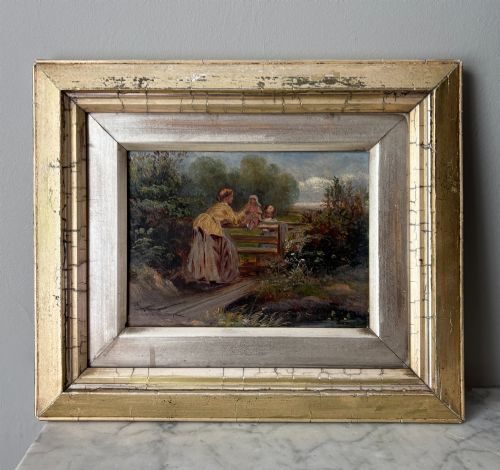
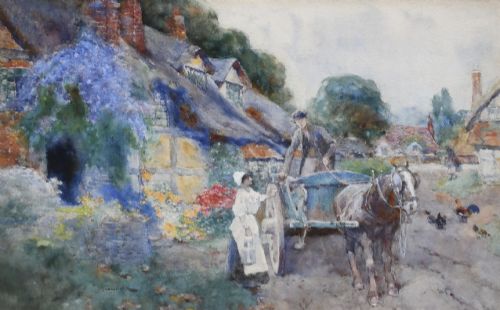
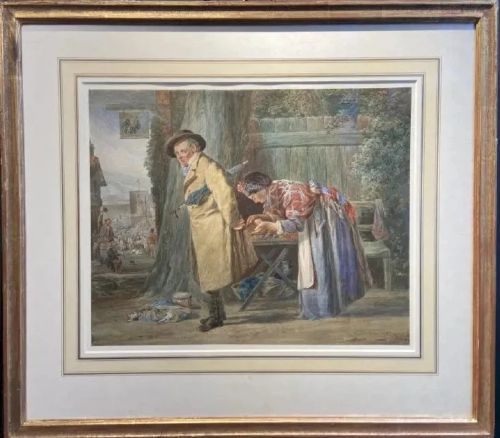
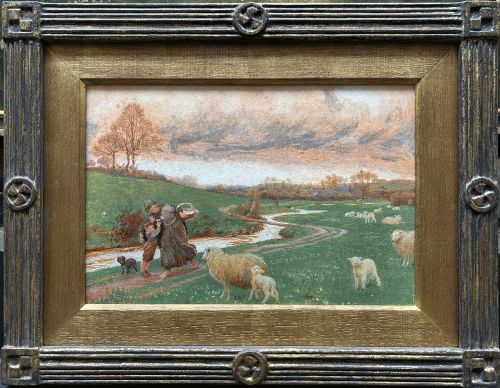
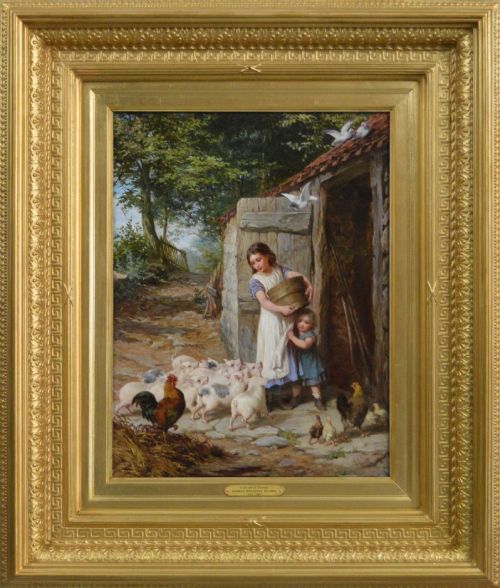
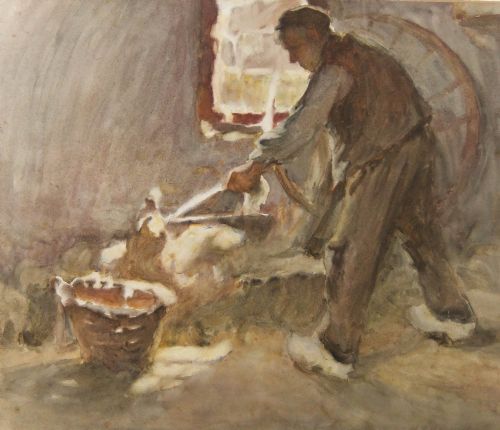
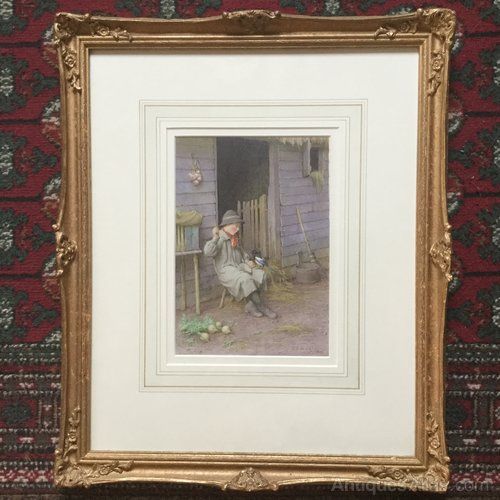
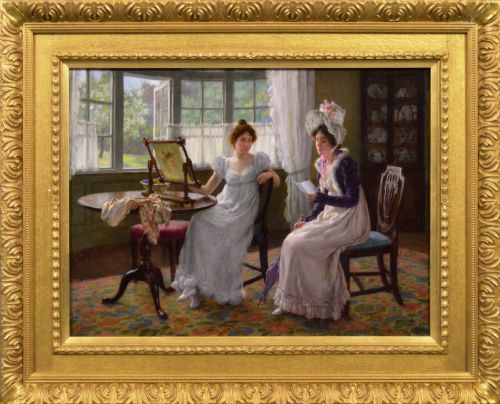
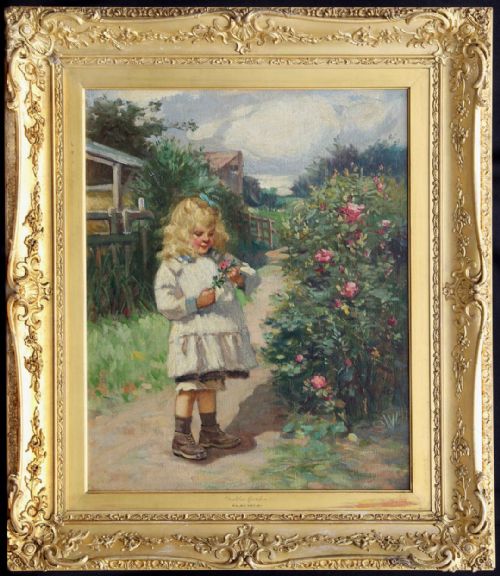
An english country genre painting depicts scenes of everyday rural life, cottage interiors, farmyards and village characters from the nineteenth and early twentieth centuries. These works record moments like children feeding farm animals, blacksmiths at work, or families gathered outside thatched cottages.
The most common formats found here are watercolours on paper and oil paintings on canvas or board, alongside occasional prints and chrystoleums. Most examples originate from the Victorian period up to the early decades of the twentieth century, reflecting a strong contemporary appetite for rustic sentiment and pastoral storytelling.
Materials and construction
Artists painted primarily using oil on canvas, oil on board, or watercolour on paper, capturing fine details of costume and expression with precise brushwork. Many of these works retain their period frames constructed from wood and gesso, finished with gold leaf or giltwood highlights.
Support materials range from heavy woven canvas stretched over wooden frames to absorbent watercolour papers. Glazed framing often protects works on paper, while oil paintings remain unglazed, allowing the textured build-up of pigment and varnish to show clearly.
English Country Genre Painting Retail Price Guide 2026
Typical asking prices for english country genre painting among the pieces listed under this phrase on Sellingantiques today, from the lower quarter to the upper quarter. They describe what is for sale here now, not the wider market.
Listings span the nineteenth and early twentieth centuries, featuring watercolours on paper and oil on canvas.
Judging quality and execution
Quality rests upon the artist's ability to render human anatomy, facial expressions and animal forms with convincing proportion and character, rather than relying on generic formulas. Superior works display confident brushwork and a balanced composition that draws the eye naturally through the narrative of the scene.
The handling of light and atmospheric depth distinguishes finer watercolours and oils from simpler illustrative pieces. Preservation of the original paint surface, minimal intervention from later restoration, and the presence of a matching period gilt frame elevate the overall integrity of a piece.
Henry Silkstone Hopwood·George Augustus Holmes·Joseph H Barnes·Frederick Walker·Miles Birkett Foster·Charles Edward Wilson·John Arthur Lomax·Charles Haigh Wood·Henry John Yeend King·James Hardy Junior·William Henry Knight·Arthur Longley Vernon·Helena Maguire·Linnie Watt·Frank Moss Bennett·John Henry Dell·Paul Jones·George Kilburne·Vernon Stokes·David Woodlock·John Masey Wright·Edward Killingworth Johnson·Arthur Claude Strachan·John Ritchie·George Cole
The English Country Genre Painting Glossary
- Genre painting
- Artwork that depicts aspects of everyday life by portraying ordinary people engaged in common activities. These scenes typically focus on domestic interiors, rural labour, or village festivities rather than historical or mythological events.
- Chrystoleum
- A specialised Victorian technique where a photographic print is pasted face down onto convex glass, made transparent with oils, and hand-tinted from the rear. This method created a luminous, three-dimensional coloured image popular in the late nineteenth century.
- Gesso
- A plaster-like preparation mixture used as a base for moulding decorative details on wooden picture frames before gilding. It provides a smooth surface that accepts gold leaf or paint.
- Giltwood
- Timber carved and coated with gold leaf or gold paint to produce a metallic decorative finish. It is frequently seen on period frames housing nineteenth-century artworks.
English Country Genre Painting: Frequently Asked Questions
What subjects appear in these paintings?
These works focus on human activity in rural settings, including farm labourers, children playing, blacksmiths at work, and domestic cottage scenes.
Animals such as horses, dogs, and farmyard poultry frequently share the composition with the human figures.
How do I distinguish watercolours from oils?
Watercolours are painted on paper, use translucent washes of pigment, and generally require protective glass framing to prevent moisture damage.
Oils are applied to canvas or board with thicker, opaque pigments and remain unglazed to show the textured brushstrokes.
Are these works dated accurately?
Many pieces carry signatures, dates, or biographical details of the artists that place them securely within the nineteenth or early twentieth century.
Stylistic cues, clothing styles, and framing materials also help confirm the period of execution.
How should I display these framed works?
Hang them away from direct sunlight and damp environments to protect delicate watercolours, paper supports, and nineteenth-century gilt frames.
Stable indoor temperatures prevent the wood and gesso of the frames from cracking or warping over time.