


English Country Cottage Art
English country cottage art brings the quiet charm of rural life onto paper and canvas through traditional watercolours and oil paintings.
English Country Cottage Art
English country cottage art encompasses paintings and framed works depicting rural scenes, village dwellings, and pastoral landscapes. These pieces record the everyday charm of the countryside through the eyes of various historical schools.
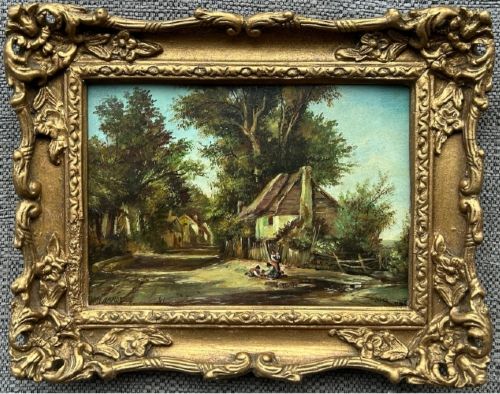
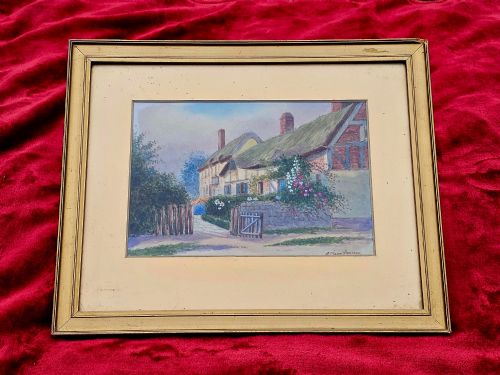
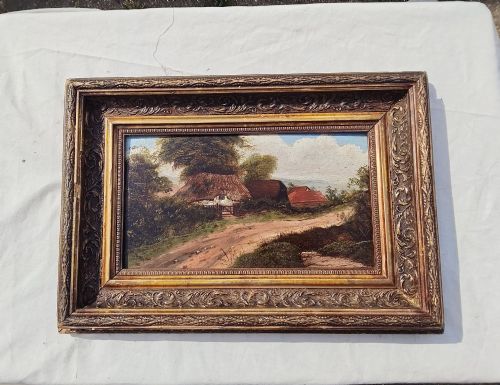
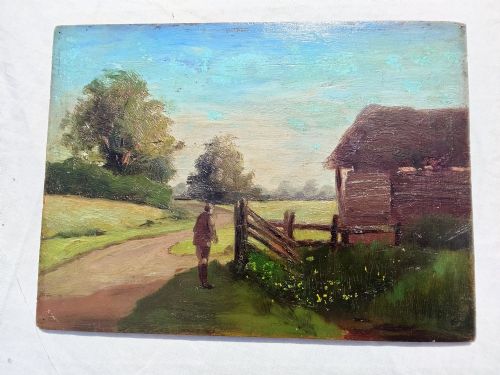
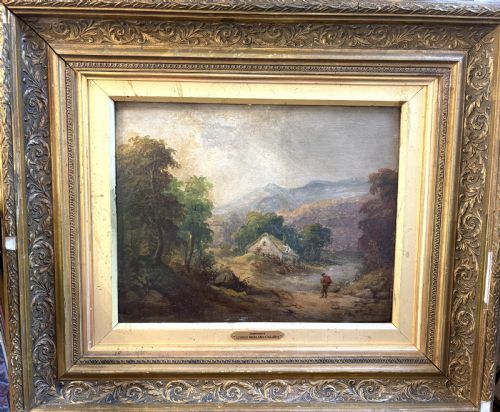
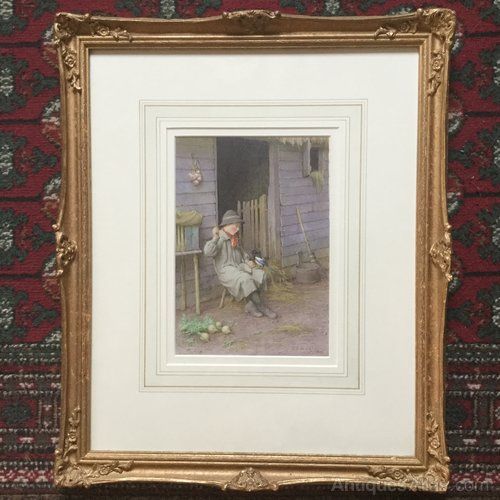
The version most frequently met on this page is the watercolour or oil painting on panel, card, or canvas dating from the nineteenth and early twentieth centuries. These works frequently capture thatched cottages, cottage gardens, and figures tending to livestock or daily rural tasks.
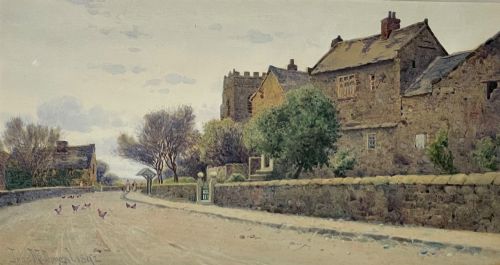
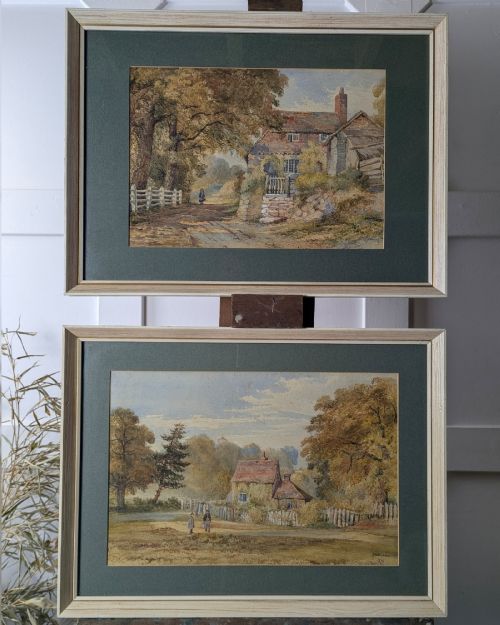
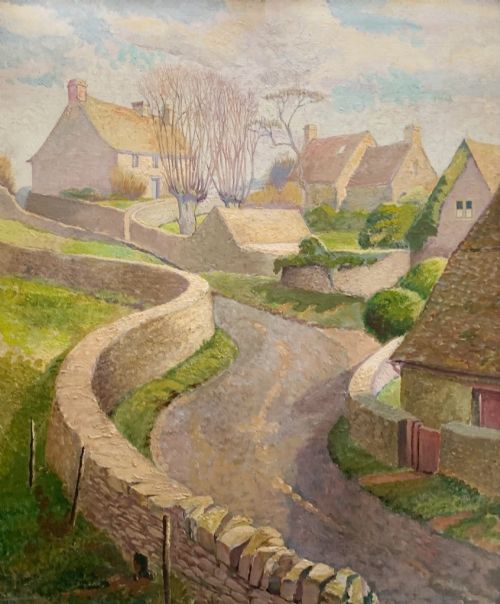
The selection ranges from Victorian pastoral studies to mid-twentieth-century village scenes. Each piece places the traditional English cottage at the centre of the composition, reflecting regional topography and local rural architecture.
How they were made
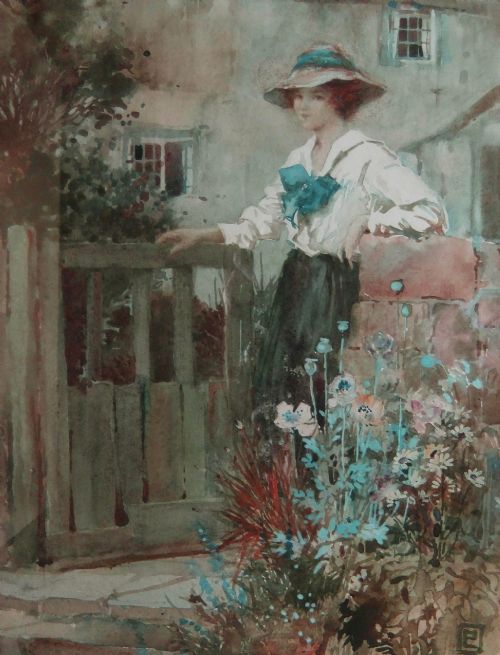
Artists worked primarily with watercolour pigment on paper or applied oil paint to canvas, wooden board, or card. These mediums allowed painters to capture the soft light of rural landscapes and the weathered textures of cottage walls.
Many works incorporate mixed media or lithographic techniques alongside traditional brushwork. Frames frequently utilise wood and gilt wood, completing the presentation of the artwork.
Listings feature works spanning from the eighteenth century through the Victorian era to the mid-twentieth century, executed in oil and watercolour.
What varies in quality
The strength of the composition and the artist's ability to render light and atmosphere distinguish the finer examples from standard decorative works. Skilled handling of watercolour pigment creates depth in foliage and skies, whereas weaker pieces rely on formulaic arrangements.
The preservation of the medium, whether paper, canvas, or wooden board, influences the overall integrity of the piece. Works with strong provenance and clear attribution to recorded painters carry distinct distinction within the field.
William Howard Hardy·A. Marie Parsons·John McDougal·Robert A. Nottingham·Percy Lancaster·George Morland·Charles Edward Wilson·J S Ainley·James Hardy Junior·Frederick James Knowles·William Greaves·William Henry Knight·Theresa Stannard·Helena Maguire·Linnie Watt·Owen Bowen·Ernest Higgins Rigg·Harry Sylvester Stannard·Henry Charles Fox·Will Anderson·Robert Hollands Walker·John Falconar Slater·Thomas James Lloyd·Abraham Hulk Junior·David Woodlock
The English Country Cottage Art Glossary
- Watercolour
- A paint consisting of colour pigments suspended in a water-based solution, traditionally applied to paper.
- Oil on canvas
- Pigments bound in a drying oil applied to a stretched fabric surface, allowing for rich colour layering and texture.
- Panel
- A flat piece of wood used as a rigid support for painting.
- Pastoral style
- An artistic genre depicting rural life and landscapes in an idealized or idyllic manner.
English Country Cottage Art: Frequently Asked Questions
What subjects appear in English country cottage art?
The artworks primarily depict rural thatched cottages, cottage gardens, village lanes, and pastoral landscapes. Figures engaged in daily country tasks frequently accompany these domestic and agricultural scenes.
Artists also recorded specific regional locations across England, capturing local architecture, rivers, and farmsteads from observation.
Which materials were used for these paintings?
Painters utilised watercolour pigment on paper, alongside oil paint applied to canvas, wooden boards, and card. Mixed media compositions also appear among the later works.
Support materials range from fine canvas to simple wooden panels, often housed within period wooden or gilt frames.
How can I date a cottage painting?
Dating relies on stylistic evidence, artist signatures, framing methods, and the support material used, such as card or wooden board. Victorian and Edwardian works often bear specific stylistic traits typical of British Impressionism and rural genre painting.
Inscribed titles and signatures on the reverse or front frequently point to the active working dates of the artist.
How do I display these artworks at home?
Watercolours require placement away from direct sunlight to prevent the fading of pigments on paper. Framing with conservation glass further protects the delicate medium from environmental moisture.
Oil paintings on canvas or panel offer greater durability but benefit from stable room temperatures and secure wall mounting.