



English Campaign Table
An English campaign table is a portable piece designed for travel, offering fold-away convenience in rich timbers suited for military life.
English Campaign Table
When you search for an english campaign table, you look for versatile furniture designed to dismantle or fold easily for transport during military campaigns or travel. The examples appearing here span periods from the early nineteenth century through the Edwardian era and into the nineteen-thirties.
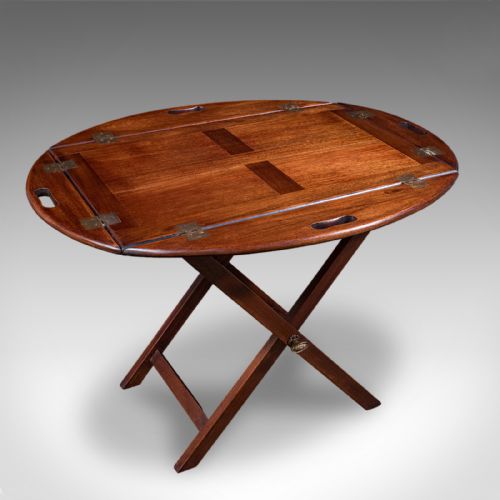
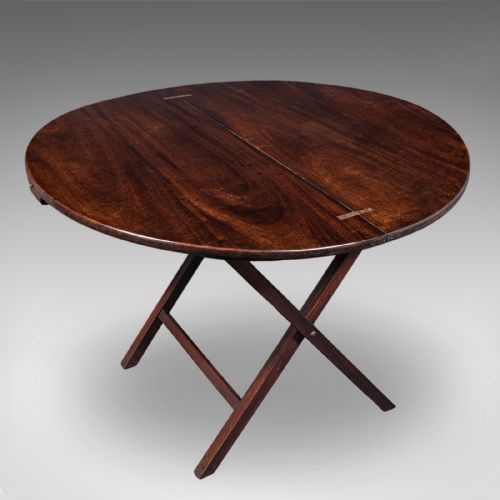
The most common forms you will meet include butler's tray tables with drop flaps, coaching tables, and folding serving stands. These practical items function well today as occasional tables, coffee tables, or writing desks within modern domestic interiors.
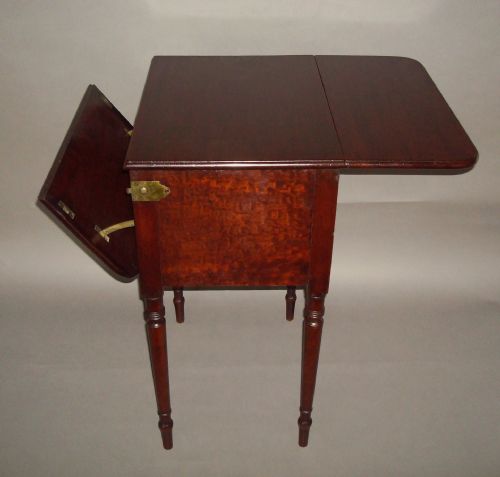
Originating from British military necessity, these pieces utilise traditional forms such as occasional tables, side tables, and plant stands. Styles range from Regency and William IV to Victorian Biedermeier and Regency Revival.
Materials and construction
Cabinetmakers constructed these pieces primarily using solid mahogany, selected for durability and resistance to warping during travel. Accents of burr maple occasionally appear to add visual interest to the surfaces.
Brass fittings, hinges, and corner brackets provide structural strength while allowing sections to fold flat or detach quickly. Inset leather surfaces frequently top writing desks and purser's desks to provide a smooth writing plane.
English Campaign Table Retail Price Guide 2026
Typical asking prices for english campaign table among the pieces listed under this phrase on Sellingantiques today, from the lower quarter to the upper quarter. They describe what is for sale here now, not the wider market.
The selection includes forms ranging from butler tray tables and coaching tables to torcheres and purser desks.
Judging quality in folding furniture
Quality rests primarily in the precision of the folding mechanisms and the tightness of the joints when assembled. Superior examples maintain rigid stability without wobble despite their portable design.
The choice of timber grain and the quality of the brass hardware distinguish finer workshops from standard utility pieces. Rich figuring in the mahogany and well-cast brass handles indicate higher standards of production.
The English Campaign Table Glossary
- Butler's tray
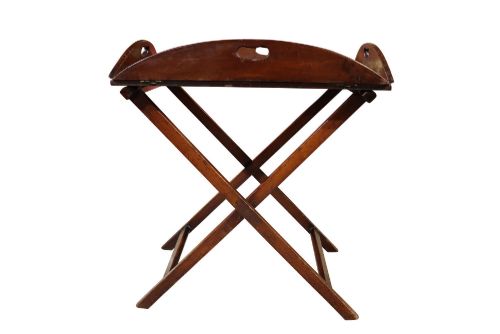
- A rectangular wooden tray with hinged sides that fold down, typically mounted on a separate folding X-frame stand. This design allowed servants to serve refreshments and pack away the furniture swiftly.
- Campaign furniture
- Portable furnishings built for officers on military campaign, characterised by folding frames, dismantling sections, and protective brass corners. These items enabled comfortable living in temporary quarters.
- Coaching table
- A lightweight, slatted table featuring a collapsible X-frame base designed for easy storage inside a carriage or luggage trunk. They served multiple functions during travel and at temporary encampments.
- Torchere
- A tall, slender stand designed to support a candelabrum, lamp, or plant. In campaign contexts, these portable stands brought elevated lighting to officers' tents.
- X-frame
- A structural base formed by two intersecting pieces of timber shaped like the letter X, allowing the support to fold flat. This clever engineering provides stable support while minimising packed volume.
English Campaign Table: Frequently Asked Questions
What is an english campaign table?
An english campaign table is a piece of portable furniture originally built for officers on military duty, featuring folding mechanisms for easy transport.
These pieces combine sturdy timbers like mahogany with brass hardware to withstand the rigours of travel while retaining domestic elegance.
How were these tables used?
Officers utilised these tables for dining, writing dispatches, and serving refreshments in temporary quarters or during travel.
Today, their compact and adaptable nature makes them popular as side tables, coffee tables, or serving stands in homes.
How do I identify the period?
Period identification relies on observing the timber choice, brass work, and stylistic details associated with eras like Regency, William IV, or Victorian.
Cabinetmaking techniques and specific turned leg profiles also help distinguish nineteenth-century pieces from later Edwardian revivals.
Are these tables stable when folded?
Well-designed folding frames use tight hinge tolerances and locking pins to ensure rigidity when fully opened for use.
Quality construction prevents unwanted movement, allowing portable tables to function as securely as fixed furniture.