

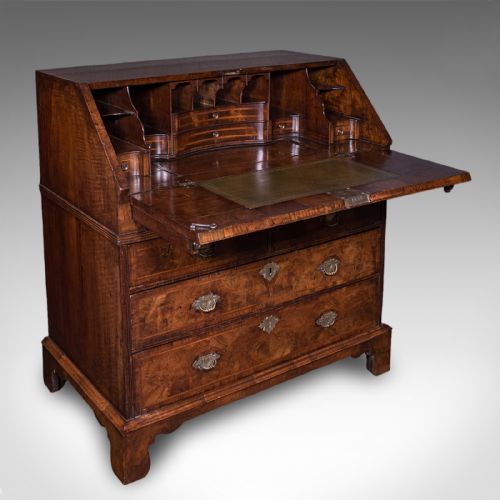


English Brown Wood Secretary
An English brown wood secretary is a practical antique writing cabinet designed to store papers and display books.
English Brown Wood Secretary
An English brown wood secretary brings together the utility of a writing desk and the storage of a tall cabinet. Collectors search for these pieces to find handsome walnut and mahogany furniture that anchors a room with period character.
The pieces appearing on this page span several centuries, reaching from the seventeenth century through the Georgian era to the Edwardian period. Formats include fall-front bureaus, bureau bookcases, and secretaire chests fitted with glass doors or tambour shutters.
Mahogany and walnut dominate the selection, often enriched with satinwood inlay, brass hardware, and burr wood veneers. Buyers encounter straightforward writing cabinets alongside towering glazed bookcases designed to house a gentleman's library.
How they were made
Cabinetmakers constructed these secretaries using dense timbers such as mahogany and figured walnut, frequently selecting burr wood for decorative drawer fronts and fall-front panels. Skilled hands applied fine satinwood inlay to create contrasting borders and geometric patterns.
The internal fittings required precise joinery to form pigeonholes, small drawers, and hidden compartments behind the drop-leaf writing surface. Glazed doors on the upper bookcase sections utilised slender wooden bars to hold individual panes of glass securely in place.
English Brown Wood Secretary Retail Price Guide 2026
Typical asking prices for english brown wood secretary among the pieces listed under this phrase on Sellingantiques today, from the lower quarter to the upper quarter. They describe what is for sale here now, not the wider market.
Secretaries frequently hide secret drawers behind pigeonholes, designed by cabinetmakers to keep a gentleman's love letters entirely out of sight.
What varies in quality
The visual appeal of an English brown wood secretary often depends on the choice of timber and the figure of the wood grain. Highly figured walnut and rich burr veneers elevate a piece far above simpler domestic examples.
Proportion and execution define the standing of a cabinet, from the elegance of the brass handles to the precision of the satinwood inlay. Pieces retaining their original glass panes and fitted desk interiors command greater admiration from purists.
The English Brown Wood Secretary Glossary
- Bureau bookcase
- A combination of a sloping-front desk and an upper shelving cabinet enclosed by doors. This form provides both writing space and elevated storage.
- Secretaire
- A piece of furniture containing a drawer or panel that folds down to reveal a writing surface and small pigeonholes. It often maintains the outward appearance of a standard chest of drawers or cabinet.
- Tambour
- A sliding shutter made of narrow vertical strips of wood glued to a fabric backing. It conceals small compartments within a desk or cabinet.
- Satinwood inlay
- Decorative woodwork where contrasting light-toned satinwood is set flush into the primary brown timber. It forms delicate lines and decorative motifs on drawer fronts.
English Brown Wood Secretary: Frequently Asked Questions
How do I use a secretary desk?
The drop-front or fall-front panel lowers to create a flat writing surface above the main drawers. Inside, small compartments and pigeonholes hold stationery and writing tools.
When writing is finished, the panel lifts back up and locks to keep papers neatly concealed. The upper shelves can display books or decorative objects.
How do I date an antique secretary?
Dating relies on examining the timber species, construction methods, hardware, and stylistic details. Pieces from the seventeenth century feature different structural framing compared to Georgian or Edwardian examples.
Cabinetmakers of each era utilised distinct veneer thicknesses and drawer linings. Reference materials and historical styles help narrow down the period of manufacture.
Are these desks good for daily use?
Yes, many collectors and homeowners use them as functional writing desks and storage units. The sturdy wooden construction accommodates modern paperwork and laptop use.
Care should be taken to protect the historic wood surfaces from moisture and direct heat. Regular waxing helps maintain the finish of walnut and mahogany furniture.