






English Breakfront
An english breakfront commands a room with its projecting central section, offering substantial display and storage space through refined cabinetwork.
English Breakfront
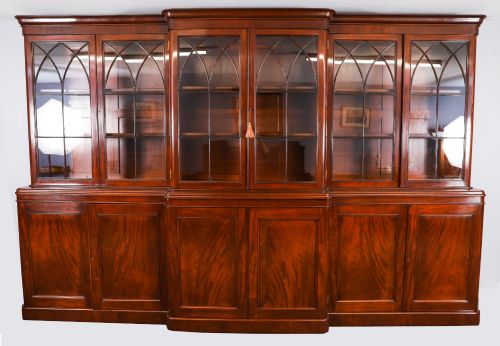
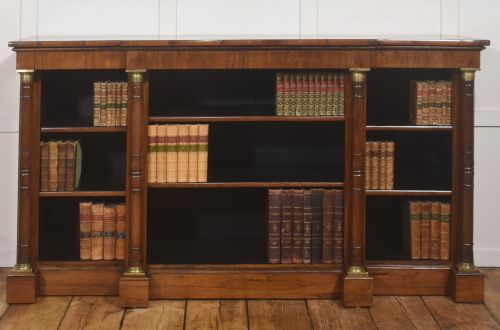
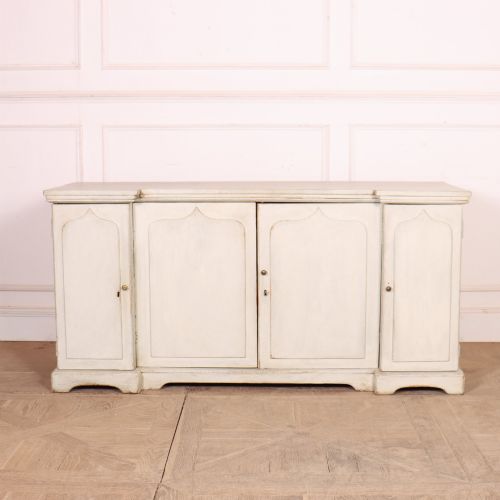
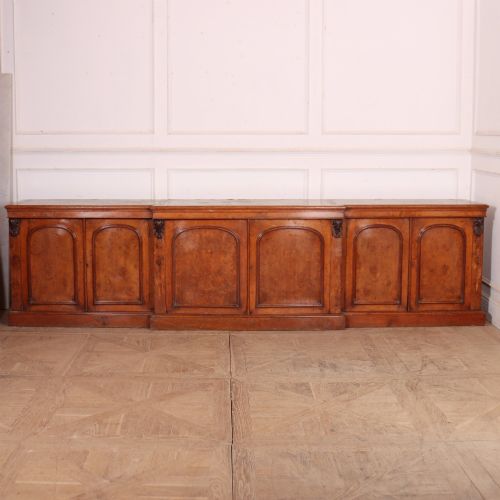
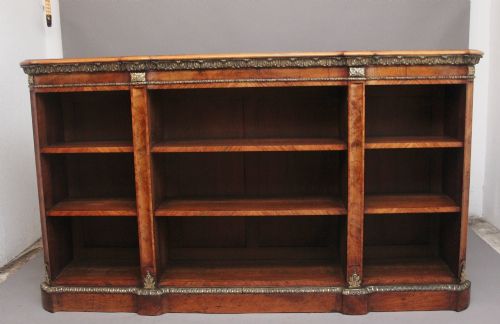
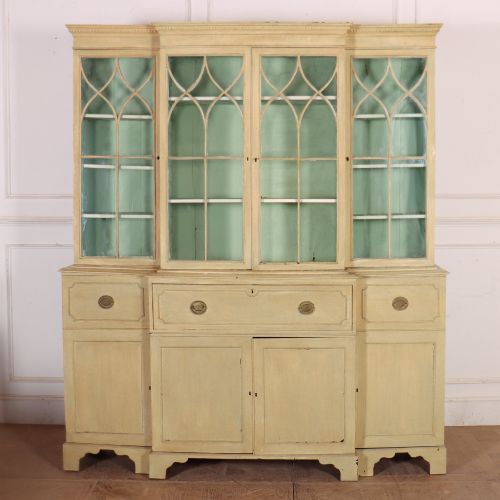
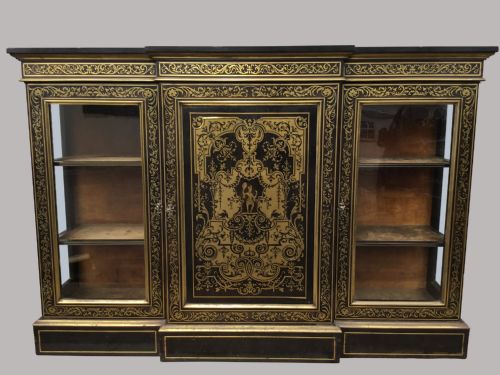
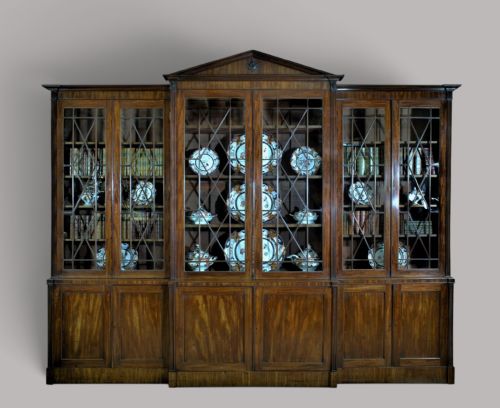
An english breakfront is a large cabinet piece defined by a central section that projects forward from the flanking wings. Buyers searching this phrase encounter bookcase libraries, credenzas, side cabinets, and housekeepers cupboards built with this characteristic stepped facade.
The pieces span several centuries and design movements, appearing in Georgian, Regency, and Victorian iterations alongside later revivals. Mahogany and rosewood library bookcases dominate the form, often fitted with glazed doors and brass mounts.
Makers utilised walnut, oak, and painted wood for domestic storage forms including dresser bases and linen cupboards. The projecting centre breaks the flat plane of a wall, creating depth and architectural presence within a room.
How They Were Made
Cabinetmakers constructed these frames using dense hardwoods like mahogany, rosewood, and oak, frequently applying burr walnut and satinwood veneers to prominent surfaces. Brass mounts, ormolu, and boulle work provided metallic contrast to the dark timber grains.
Glass panes were fitted into wooden lattice frames for library bookcases and display cabinets, whilst cupboards and dressers utilised solid timber panels. Marquetry and Tunbridgeware inlay decorated specific panels, demonstrating precise woodworking techniques across the Georgian and Victorian eras.
English Breakfront Retail Price Guide 2026
Typical asking prices for english breakfront among the pieces listed under this phrase on Sellingantiques today, from the lower quarter to the upper quarter. They describe what is for sale here now, not the wider market.
The listings show English breakfront pieces predominantly in mahogany, rosewood, and walnut, spanning Regency, Victorian, and 18th-century periods.
What Varies In Quality
The selection of timber grain sets apart superior examples, particularly where figured walnut, symmetrical mahogany, or rich rosewood veneers cover the facade. Finer pieces display meticulous attention to the matching of veneers across the projecting central breakfront and side sections.
Construction methods dictate longevity and structural integrity, visible in the joinery of the shelving and the fit of the doors. Elaborate brass details, fine marquetry, and original glazed panels distinguish high-status library bookcases from utilitarian storage cupboards.
Johnstone And Jeanes·Lamb of Manchester·Gillows
The English Breakfront Glossary
- Breakfront
- A cabinet design where the central section projects forward from the flanking ends. This architectural layout creates visual depth on large pieces such as bookcases and sideboards.
- Credenza
- A low cabinet or sideboard designed for display and storage, often featuring glass doors or decorative mounts. These pieces sit low against walls in principal rooms.
- Housekeepers Cupboard
- A large wooden storage piece traditionally used in country houses for linens and dry goods. They combine deep lower cupboards with upper shelving or hanging space.
- Boulle
- An elaborate form of marquetry using brass and tortoiseshell inlaid into dark woods. This decorative technique appears on refined nineteenth-century side cabinets.
- Tunbridgeware
- Small-scale mosaic woodwork formed from tiny coloured wood blocks to create geometric patterns. It appears as delicate inlay on Victorian cabinet doors.
English Breakfront: Frequently Asked Questions
How do I date an antique breakfront?
Dating relies on identifying the prevailing style, timber choices, and construction methods characteristic of periods like Regency or Victorian. Regency pieces often showcase rosewood and brass, whilst Victorian examples frequently use figured walnut.
Secondary woods inside drawers and backboards provide further clues regarding the period of manufacture and regional workshop origins.
Where were these pieces used?
These large cabinets served as primary storage and display furniture in grand libraries, dining rooms, and country house reception spaces. Bookcases housed extensive book collections behind glass doors.
Housekeepers cupboards stood in domestic service areas to hold household linens, while smaller side cabinets functioned in sitting rooms.
Are all breakfronts bookcases?
Not all breakfronts are bookcases, as the configuration applies equally to sideboards, credenzas, dressers, and linen cupboards. Whilst library bookcases dominate the form, storage cabinets utilise the same projecting facade.
Each furniture type adapts the stepped design to its specific domestic storage function.