



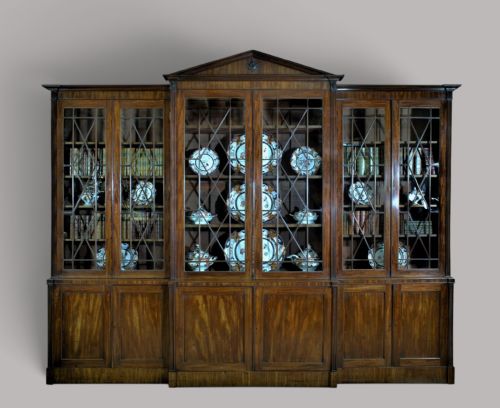


English Breakfront Bookcase
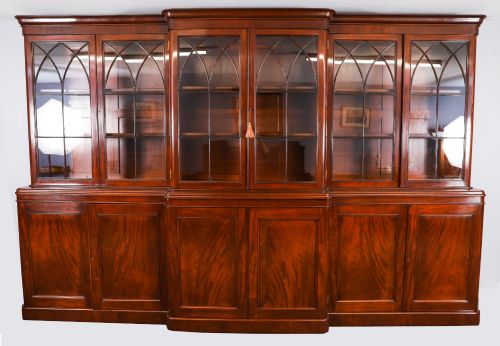
An english breakfront bookcase commands a room with its signature recessed central section and generous proportions.
English Breakfront Bookcase
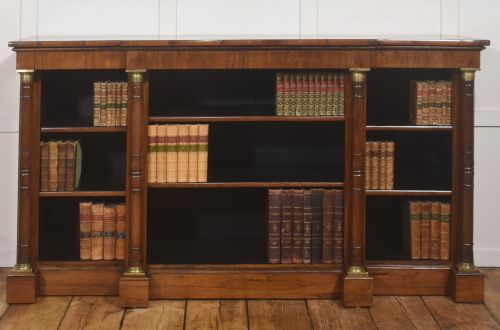
An english breakfront bookcase defines grand storage, offering a commanding presence with its characteristic projecting centre and recessed wings. The pieces gathered here span centuries, drawing on Regency, Georgian, and Victorian aesthetics to anchor a library or study.
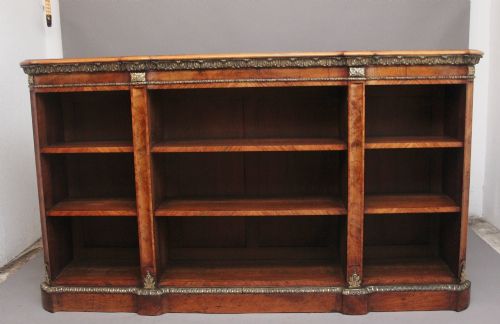
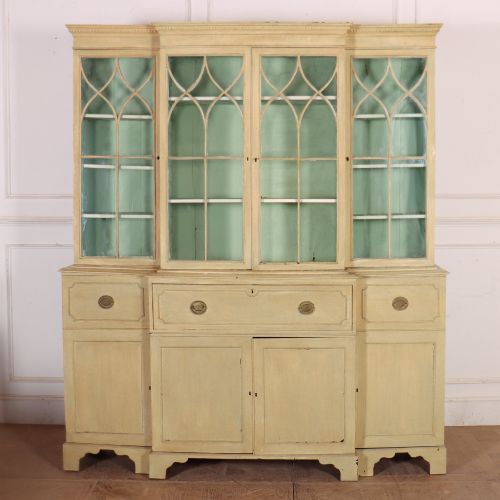
Most examples you will encounter combine glass-fronted display doors or open shelving with substantial lower cabinets. Mahogany, rosewood, and walnut form the structural core of these items, frequently accented with brass mounts or intricate inlay.
Makers utilised architectural proportions to balance massive scale with refined detail, creating furniture meant for serious collections. Whether constructed as towering library bookcases or lower sideboard configurations, each piece maintains the balanced symmetry essential to the form.
Materials and Construction
Cabinetmakers relied upon dense hardwoods like mahogany and rosewood, often enhanced by burr walnut veneers to provide rich surface movement. Glass panels and brass grilles protected valuable volumes while allowing visual access to shelved contents.
Joinery involved sturdy frame and panel construction designed to support heavy folio volumes without sagging. Ormolu mounts and Tunbridgeware inlays added decorative refinement to the structural carcass.
English Breakfront Bookcase Retail Price Guide 2026
Typical asking prices for english breakfront bookcase among the pieces listed under this phrase on Sellingantiques today, from the lower quarter to the upper quarter. They describe what is for sale here now, not the wider market.
The inventory includes open library shelving, glazed display doors, and integrated secretaire desks.
Judging Quality
The distinction between standard cabinetwork and exceptional output rests in the choice of timber figurations and the crispness of carved mouldings. Cabinetmakers who selected highly figured burr veneers or book-matched mahogany created surfaces of notable depth.
Hardware integration and internal fittings further separate grades of production, with superior examples featuring adjustable shelving and original brass work. Structural integrity in the large projecting central section ensures doors hang true and drawers operate smoothly.
Johnstone And Jeanes·Lamb of Manchester·Gillows
The English Breakfront Bookcase Glossary
- Breakfront
- A piece of furniture whose front projects in the centre section and recedes at the sides. This architectural arrangement creates dynamic shadow lines across large library cabinets.
- Ormolu
- Gilded bronze applied as decorative mounts on furniture. It provides bright metallic contrast against dark woods like rosewood and mahogany.
- Tunbridgeware
- A form of decorative woodwork utilising tiny coloured wood prisms to create mosaic patterns. It appears in geometric bands on nineteenth-century cabinets.
- Glazed
- Fitted with glass panes to enclose shelving. This protected valuable leather-bound books from dust while displaying them.
English Breakfront Bookcase: Frequently Asked Questions
How do I style a breakfront bookcase?
Allow the architectural mass of the furniture to dictate the surrounding room layout by keeping flanking walls relatively clear. Balance heavy leather-bound volumes with ceramic objects and curated collections across the open or glazed shelving.
Anchor the lower cabinets with larger art folios or concealed storage to maintain a clean visual line. Adequate ceiling height is essential to let the proportions breathe without overwhelming the domestic space.
What rooms suit an english breakfront bookcase?
Traditional libraries, studies, and substantial drawing rooms provide the natural scale required for these large cabinet pieces. Their imposing footprint demands a room with generous dimensions and sufficient wall space to accommodate the projecting centre.
Positioning the bookcase away from direct heat sources protects the aged hardwoods and delicate veneers from warping. Proper placement ensures the doors and secretaire drawers open fully without obstruction.
How do I care for antique rosewood and mahogany?
Maintain stable indoor humidity levels to prevent the dense timbers and complex veneer work from drying out and splitting. Apply high-quality microcrystalline wax sparingly to nourish the wood surface without building up heavy residues.
Dust regularly with a soft, dry cloth along the grain to protect delicate inlays and ormolu mounts. Avoid placing objects on the polished top that might scratch the historical finish.
Can I adjust the internal shelving?
Many nineteenth-century library cabinets feature fixed internal partitions, while others incorporate traditional ratchet support systems for movable shelves. Inspect the cabinet interior to determine whether shelf heights can be modified to suit modern book sizes.
Exercise caution when altering historical joinery to preserve the original integrity of the cabinet interior. Professional consultation ensures any shelving adjustments respect the construction methods of the period.