






English Barometer London
An english barometer london brings precise scientific measurement and cabinet-maker joinery together into a single instrument for the wall.
English Barometer London
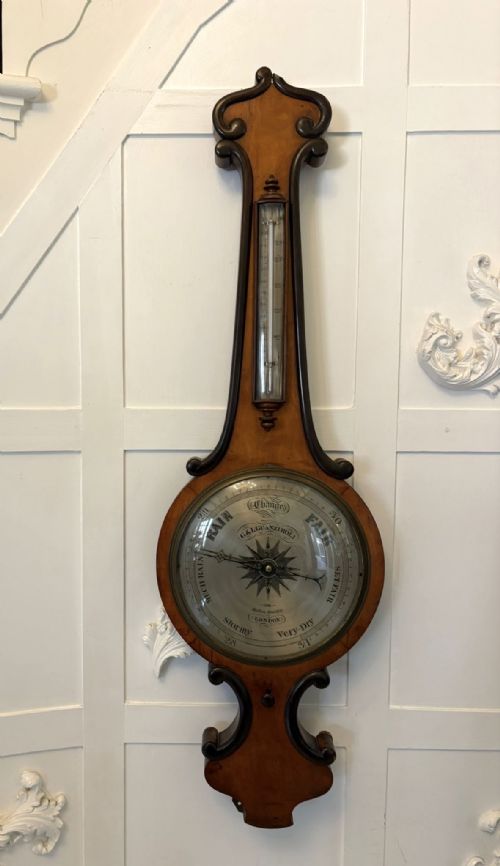
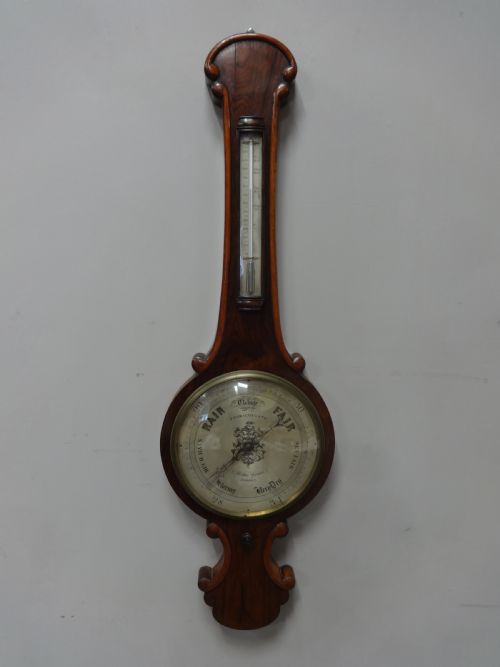
An english barometer london combines scientific utility with domestic furniture, recording atmospheric pressure while serving as a prominent interior fixture. These instruments range from slender stick barometers to sweeping wheel barometers and mechanical barographs housed in glazed timber enclosures.
The pieces appearing on this page originate primarily from the eighteenth, nineteenth, and early twentieth centuries, spanning the Georgian, Victorian, and Edwardian periods. Makers working in the capital produced both mercury-filled columns and aneroid dials, utilising workshops across London to supply domestic and scientific markets.
Materials and Construction
Makers constructed the enclosures predominantly using solid and veneered timbers such as mahogany, walnut, oak, and occasionally rosewood or boxwood. These cabinet bodies frequently incorporate brass bezels, silvered metal dials, glass viewing panels, and delicate bone or ivory adjustment indicators.
Internal mechanisms relied upon precise glass barometric tubes containing mercury or sophisticated aneroid diaphragms connected to brass linkages and steel pivots. Carpenters and instrument makers fitted these working parts into precisely channelled wooden cases designed to protect the sensitive barograph drums or mercury columns.
English Barometer London Retail Price Guide 2026
Typical asking prices for english barometer london among the pieces listed under this phrase on Sellingantiques today, from the lower quarter to the upper quarter. They describe what is for sale here now, not the wider market.
Listings feature mahogany, walnut, oak, and rosewood cases housing mercury columns and aneroid movements from the Georgian to the Edwardian eras.
Evaluating Quality
Quality rests in the precision of the maker's signature engraved upon the silvered dial and the structural integrity of the timber housing. Instruments signed by prominent London scientific firms display finer graduations, cleaner glasswork, and more refined cabinet proportions than unmarked utilitarian pieces.
The sophistication of the case joinery, including boxwood stringing, carved walnut scrolls, and well-fitted chart drawers, separates standard utility instruments from high-status drawing-room pieces. Preserved original mercury tubes or intact mechanical barograph movements likewise elevate the standing of the instrument.
Short & Mason·G & L Guanziroli·Casella London·Negretti & Zambra·Joseph Somalvico & Co·George Dollond
The English Barometer London Glossary
- Barometer
- An instrument that measures atmospheric pressure to forecast weather changes. Mercury and aneroid versions represent the two primary formats found in historic London workshops.
- Stick Barometer
- A tall, narrow instrument enclosing a vertical glass tube of mercury. This form provides a direct reading of barometric height without mechanical multiplication.
- Wheel Barometer
- A domestic instrument featuring a large circular dial where a float on the mercury column turns a pointer via a silk thread and pulley. These often incorporate subsidiary hygroscopes or thermometers.
- Barograph
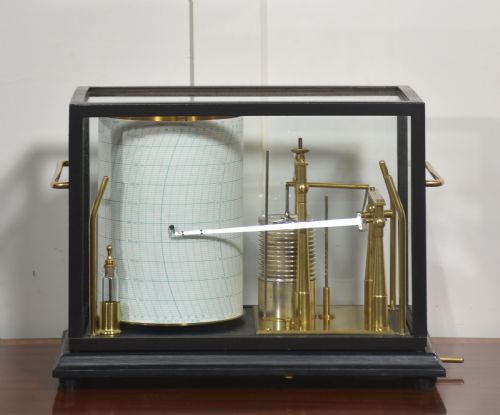
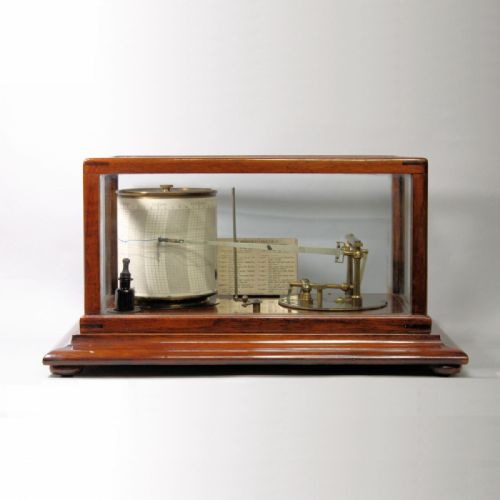
- A self-recording aneroid barometer that charts atmospheric pressure over a weekly period onto a revolving paper drum. They are typically housed beneath a multi-glass mahogany case.
English Barometer London: Frequently Asked Questions
How do stick and wheel barometers differ?
A stick barometer displays the direct vertical height of a mercury column within a narrow wooden trunk, offering a straightforward reading.
A wheel barometer translates that vertical movement through a pulley to sweep a pointer across a large circular dial for easier viewing.
What is a barograph?
A barograph is a mechanical instrument that records atmospheric pressure continuously onto a paper chart fitted around a rotating drum.
Enclosed in a glass and mahogany case, it maps trends over a week rather than showing just the current reading.
How can I date an English barometer?
Dating relies on the style of the timber case, the shape of the pediment, and the typography engraved upon the metal dial.
Georgian instruments favour clean mahogany lines, while Victorian examples often feature heavier carved walnut or aneroid dials.
Are these barometers still accurate?
Many historic instruments retain functional movements, though mercury barometers require careful handling if relocated.
Aneroid mechanisms and barographs can often be calibrated to local barometric pressure by an experienced specialist.