



English Architectural Artwork
When you search for english architectural artwork, you find historic depictions of buildings and landscapes rendered in watercolour, oil, and ink.
English Architectural Artwork
English architectural artwork encompasses paintings and drawings focusing on historic buildings, street scenes, castles, and churches across Britain. These pieces capture structural forms ranging from medieval abbeys to Victorian civic properties.
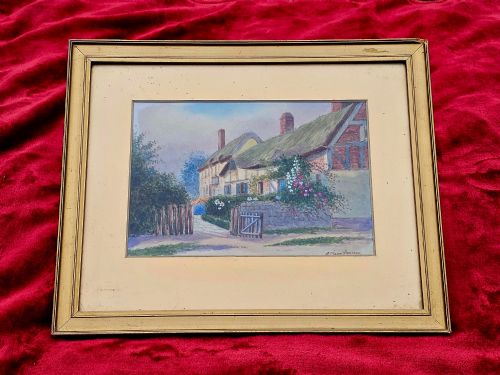
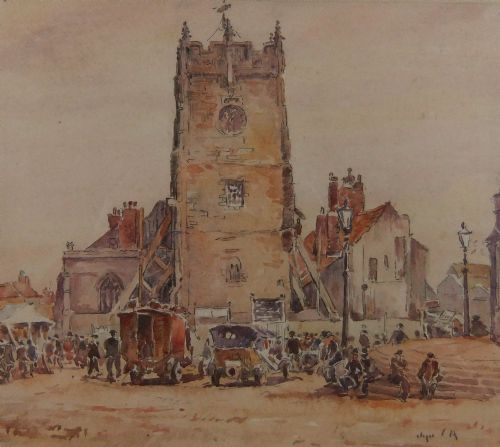
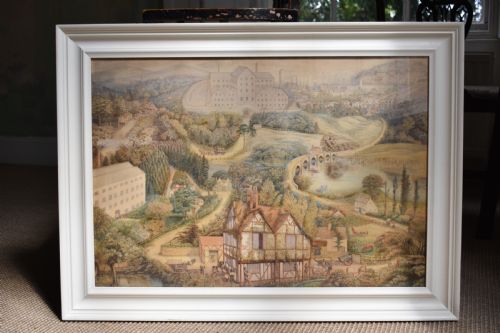
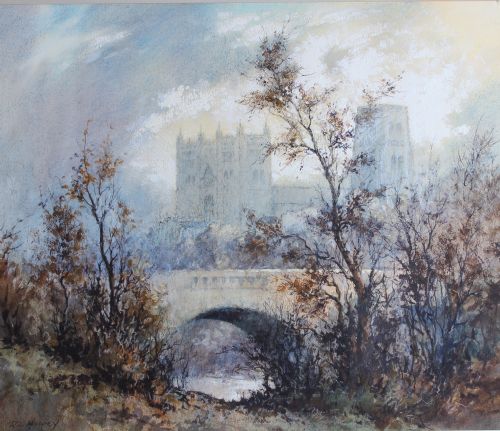
The selections available here lean heavily toward watercolours and oil paintings created during the nineteenth and twentieth centuries. Artists documented specific local views, cathedrals, and village cottages using traditional paper and canvas supports.
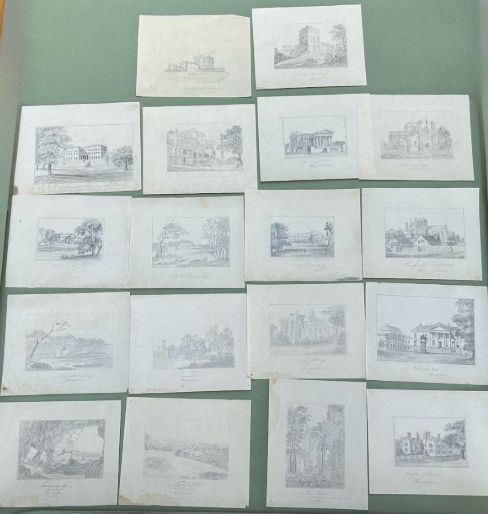
Works on this page include signed watercolours of Yorkshire landmarks, oil paintings of London monuments, and detailed ink sketches of historic houses. Each piece serves as a visual record of British topography and built heritage.
How They Were Made
Artists applied watercolour pigment and ink to paper to achieve transparent washes and precise architectural lines. These mediums allowed painters to record fine details of stonework, windows, and roof tiles efficiently on location.
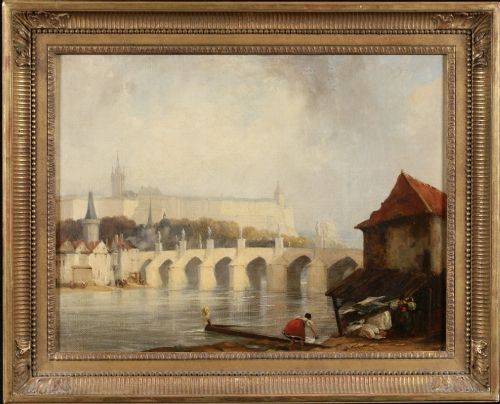
Oil paintings on canvas and oak panel utilised heavier pigments to build texture and depth within landscape and interior compositions. Painters layered oils to depict the play of light across brick, masonry, and surrounding foliage.
Draftsmen also employed pencil and charcoal on paper for preparatory studies and monochrome sketches of townscapes. These works relied on shading and contour lines to define structural perspective without relying on colour.
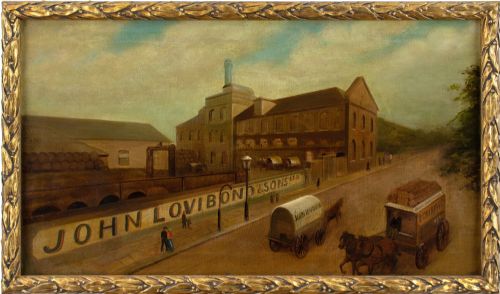
Several artists clearly paused outside historic inns and breweries to sketch before capturing the local cathedral.
What Varies in Quality
Quality in these works rests upon the artist's command of perspective and spatial proportion when rendering complex structures like cathedrals and bridges. Masterful handling ensures that arches, towers, and facades maintain structural conviction.
The preservation of the pigment and the condition of the paper or canvas support influence the overall visual impact. Works retaining their original colour intensity without heavy fading offer a more direct connection to the artist's intent.
A. Marie Parsons·John Smith Atherton·Robert Leslie Howey·Fred Lawson·Stanley Orchart·Louie Stanley Maurice Prince·George Whyatt·Florence Hess·A.A. Finch·John Lovibond and Sons·John Sowden·Tom Dudley·James Canter·George Lambert·Ernest Cox·John Cawthorn·Rowland Henry Hill·Beatrice Parsons·J. Tim Macdonald·Annie L. Lee
The English Architectural Artwork Glossary
- Watercolour
- A painting method where fine pigment is suspended in a water-based solution and applied to paper. This medium produces translucent washes suited to capturing atmospheric English light.
- Oil on Canvas
- A technique involving slow-drying pigments bound in oil applied to stretched fabric. It allows for rich colour saturation and textured brushwork in larger landscape and architectural scenes.
- Monochrome
- A painting or drawing executed in a single colour or shades of one tone, such as ink or charcoal. This approach emphasises form, shadow, and line over chromatic variation.
- Provenance
- The documented history of ownership surrounding an artwork. Tracing this record helps confirm the origin and authenticity of historic paintings.
English Architectural Artwork: Frequently Asked Questions
What periods do these artworks cover?
The inventory spans from the early nineteenth century through the mid-twentieth century, encompassing Victorian and Edwardian eras. Most pieces reflect nineteenth-century and early twentieth-century British artistic traditions.
Creators during these decades documented both ancient ruins and contemporary urban expansions. Their styles range from early nineteenth-century topographical studies to mid-twentieth-century British impressionism.
How were these architectural paintings used?
Artists created these works to record specific buildings, monuments, and streetscapes across England for collectors and local archives. Many served as finished exhibition pieces or detailed preparatory studies.
Owners typically framed these watercolours and oils to display within domestic interiors, celebrating local topography. They functioned as both personal mementos of travel and appreciations of architectural heritage.
How should I care for historic watercolours?
Works on paper require protection from direct sunlight to prevent the fading of watercolour pigments. Displaying them away from moisture sources safeguards the paper support from degradation.
Using conservation-grade framing materials ensures the artwork remains stable over time. Acid-free mounts prevent chemical damage to the paper margins and backing.
How do I identify a townscape versus a landscape?
Townscapes focus primarily on human-built environments, such as city streets, bridges, market crosses, and architectural facades. Landscapes emphasise natural scenery, foliage, rivers, and open terrain.
Works featuring historic buildings like cathedrals or inns fall firmly into the architectural townscape category. Many English pieces combine both elements by placing structures within a rural or river setting.