



English Thermometer
An English antique thermometer is a practical scientific instrument housed in timber or stone, prized for monitoring weather and temperature with period style.
English Thermometer
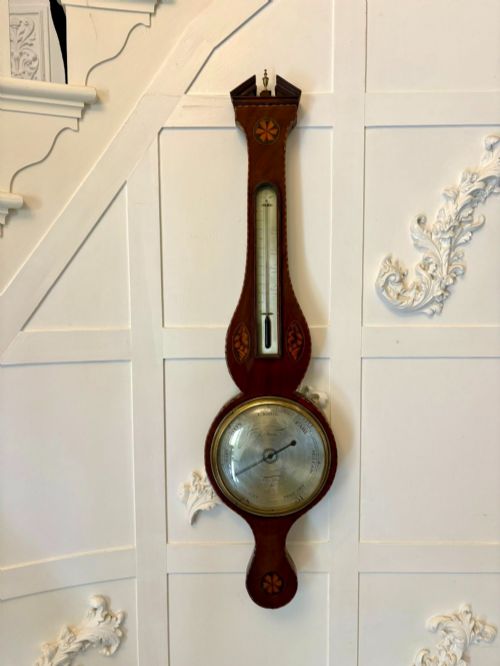
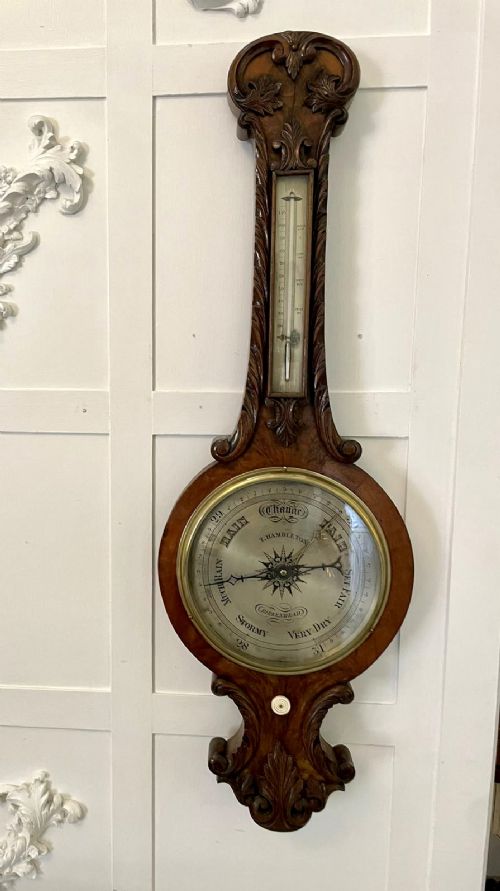
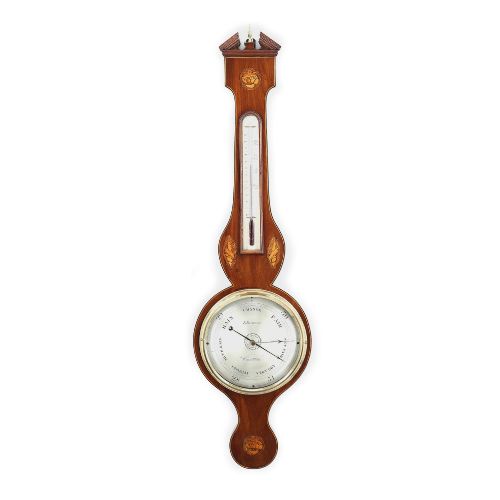
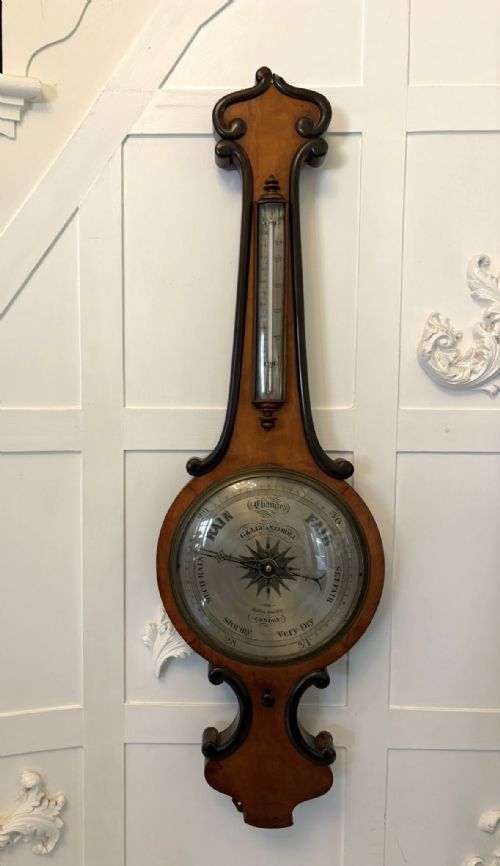
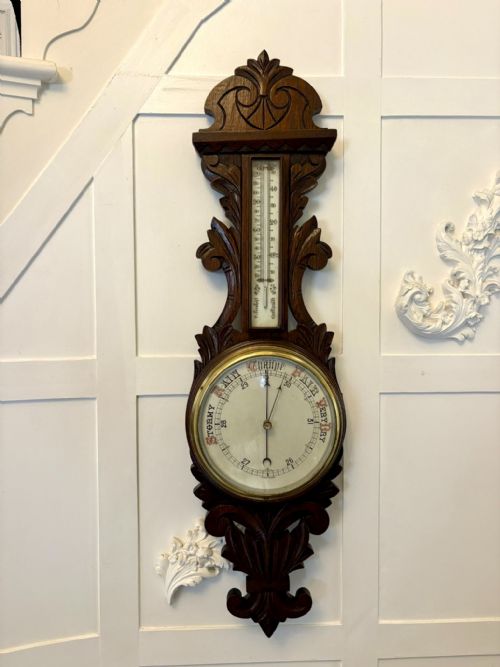
An English antique thermometer appears frequently integrated into larger wheel barometers, banjo barometers, and desk instruments from the Georgian, Victorian, and Edwardian eras. Buyers searching for an english antique thermometer often encounter these combined weather glasses alongside standalone travel cases.
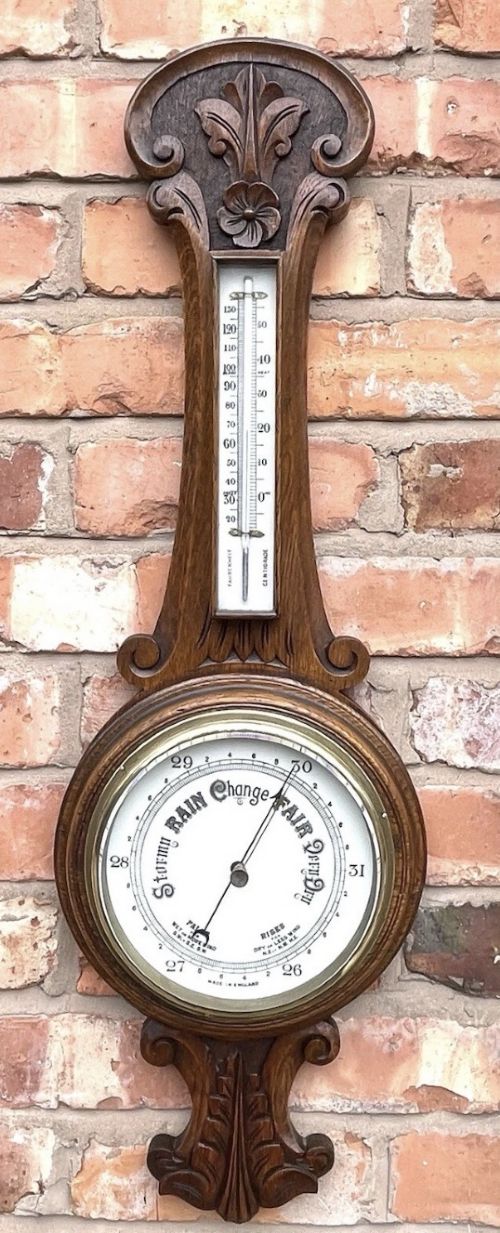
The selection ranges from early mahogany wheel barometers and stick barometers to later oak aneroid pieces and Art Deco desk combinations made from onyx. Makers span provincial towns and London workshops, covering periods from the late eighteenth century through to the nineteen-thirties.
Most examples serve a dual purpose, combining a mercury or spirit thermometer tube with a dial for atmospheric pressure or a clock face. Oak, mahogany, and walnut dominate the casework, reflecting the prevailing furniture styles of their respective decades.
How they were made
Cabinetmakers constructed the wooden housings from solid mahogany, oak, and walnut, frequently applying veneers of burr walnut, satinwood, or shell inlay to the curved and banjo-shaped bodies. Selected pieces feature carved foliage or onion-top pediments.
Instrument makers mounted calibrated paper, ivory, or silvered brass scale plates behind glass doors to display the thermometric readings alongside barometric measurements. Leather cases protect portable travel thermometers designed for pocket use.
Listings feature timber cases in mahogany, oak, walnut, burr walnut, and satinwood alongside stone onyx forms.
What varies in quality
Quality rests on the crispness of the cabinetwork, the depth of wood figuring such as burr walnut or mahogany grain, and the legibility of the engraved or printed scale plates. Finer pieces retain their original glass, mercury tubes, and signed brass dials.
Makers who signed their work on the barometer scales or thermometer plates generally indicate a higher standard of scientific calibration and decorative finish, ranging from provincial makers to established London opticians.
B Besozzi of Weymouth·G & L Guanziroli London·Prada of High Wycombe·Molton of Norwich·Luisetti of London·W Watson & Sons·J Hughes London·Thomas Harris & Son·Negretti & Zambra·WE Pain of Cambridge·Dominic Gatty·George Dollond of London
The English Thermometer Glossary
- Aneroid barometer
- A barometer that measures atmospheric pressure using a flexible metal box without liquid.
- Banjo barometer
- A domestic weather glass housed in a case shaped like a banjo, typically combining a thermometer and hygrometer.
- Stick barometer
- A vertical wall instrument containing a long glass tube filled with mercury to measure air pressure.
- Wheel barometer
- An instrument using a siphon tube and a pulley mechanism to turn a pointer on a dial face.
- Chinoiserie
- A decorative style reflecting Chinese artistic motifs, applied here in coloured lacquer finishes.
English Thermometer: Frequently Asked Questions
How do I read an old thermometer?
Read the mercury or spirit column against the engraved scale plate to find the ambient temperature in Fahrenheit or Celsius.
Older instruments may use different scale divisions, so observe the marked freezing and boiling points to calibrate your reading.
Where should I hang a wall barometer?
Mount the instrument on an interior wall away from direct sunlight, central heating radiators, and damp exterior stone.
Stable indoor temperatures ensure the delicate wooden case and internal mechanical parts remain undamaged over time.
How do I identify the period?
Examine the timber species, case silhouette, and the style of the engraved lettering on the dial plate.
Mahogany shell inlay points to the Georgian era, while heavy carved oak and aneroid movements typically indicate Victorian or Edwardian manufacture.
Were these made for travel?
Certain specialised specimens, such as leather-cased pocket items, were designed specifically for portable use by travellers.
Larger banjo and wheel barometers were built as fixed domestic furnishings intended to remain stationary in a hallway or parlour.