



Enamelled Silver Links
These enamelled silver links are wearable statements of colour and metalwork, prized for their sharp geometric designs and miniature craftsmanship.
Enamelled Silver Links
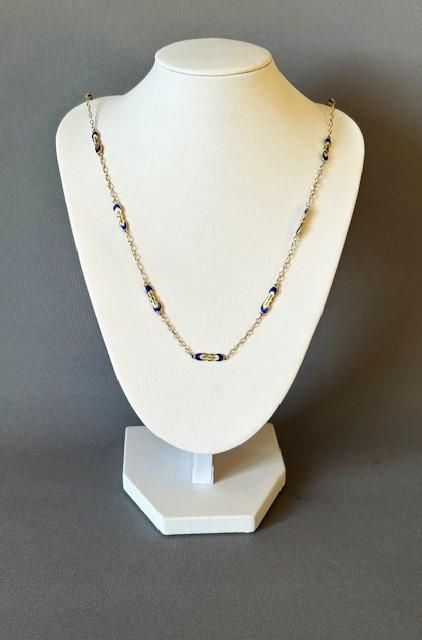
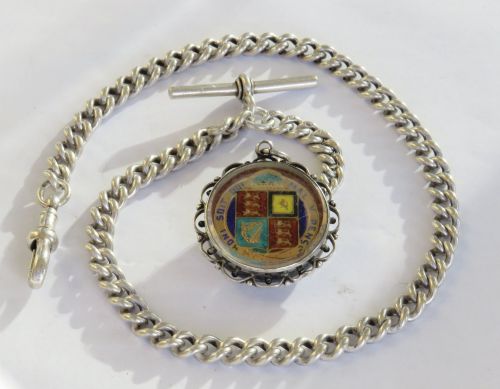
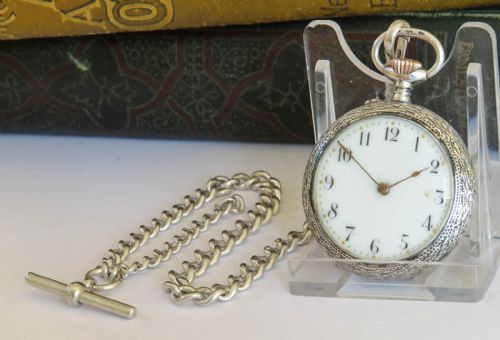
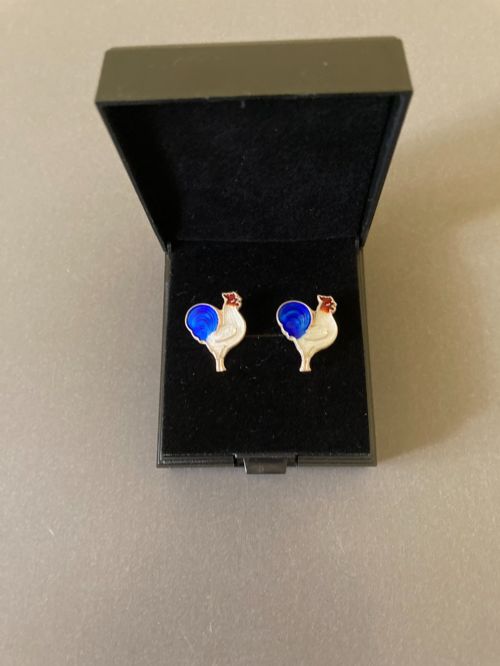
When you search for enamelled silver links, you encounter a selection of interconnected ornaments spanning bracelets, watch chains and matching pairs of gents cufflinks. These pieces range from Victorian fob chains and Arts and Crafts panels to bold Art Deco geometric creations and mid-century Scandinavian modernist designs.
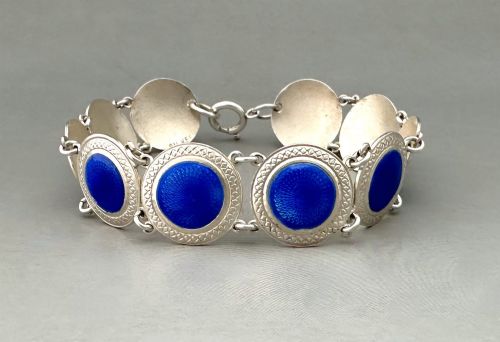
The version you are most likely to meet on this page is the Art Deco bracelet or cufflink set from the 1930s, often showcasing vibrant vitreous enamel on solid silver or chrome settings. Alongside these, earlier twentieth-century pieces demonstrate delicate filigree, hand-painted miniature panels and traditional niello work.
Originating from English, German and Scandinavian workshops, these articulated designs rely on individual connected segments to form a flexible band around the wrist or fasten a cuff securely. Each item represents a distinct period of decorative art, uniting metal smithing with fused glass colour.
How they were made
Silversmiths constructed these interconnected links using sterling silver, silver plate and chrome, shaping the metal into intricate brickwork patterns, filigree frames and solid geometric mounts. Individual segments were soldered or hinged together to ensure flexibility while maintaining structural integrity across the length of a bracelet or the face of a cufflink.
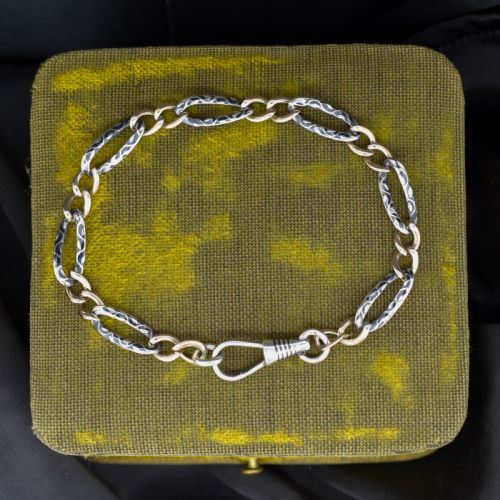
Vitreous enamel, glass and hand-painted miniature panels supplied the colour, fused to the metal base through high-temperature firing techniques that produced durable, glossy surfaces. Guilloche engraving beneath translucent enamel added shimmering depth, while niello provided stark black metallic contrasts against polished silver.
Enamelled Silver Links Retail Price Guide 2026
Typical asking prices for enamelled silver links among the pieces listed under this phrase on Sellingantiques today, from the lower quarter to the upper quarter. They describe what is for sale here now, not the wider market.
Materials documented across these pieces include sterling silver, chrome, glass, vitreous enamel and traditional niello.
What varies in quality
The standard of these pieces rests on the precision of the metal construction and the depth of the enamelling work, separating standard production items from master-designed workshop outputs. Superior examples display crisp geometric alignment in brickwork or filigree alongside flawless vitreous enamel free from clouding or uneven thickness.
Attribution to known designers or prominent regional workshops elevates certain pieces, particularly when accompanied by clear hallmarks and intact original dog clips or fastening mechanisms. The complexity of the surface decoration, such as intricate guilloche engraving or hand-painted miniature details, dictates the overall refinement of the item.
Jakob Bengel·Murrle Bennett·J W Benson·Fahrner and Bennett
The Enamelled Silver Links Glossary
- Vitreous enamel
- Glass powder fused to metal at high temperatures to create a smooth, coloured decorative surface. This technique produces the glossy panels seen across many Art Deco and Arts and Crafts pieces.
- Guilloche
- A decorative engine-turning technique that etches precise geometric patterns into metal. When covered with translucent enamel, it creates a radiant, shimmering background.
- Niello
- A black metallic alloy used as an inlay on engraved silver surfaces. It highlights intricate designs by creating stark, contrasting dark lines against bright metal.
- Filigree
- Delicate openwork jewellery created by twisting and soldering fine silver wire into lace-like patterns. This method appears frequently in lighter, ornamental panel bracelets.
- Dog clip
- A spring-loaded fastener commonly found on antique watch chains and bracelets. It allows the wearer to securely attach fobs, pendants or connect the ends of a chain.
Enamelled Silver Links: Frequently Asked Questions
How do I wear enamelled silver links?
These articulated bracelets and cufflinks pair well with both formal tailoring and casual attire, adding a measured splash of historic colour to the wrist or cuff.
Ensure that bracelets are fastened securely using their original dog clips or clasps, and store them away from hard metals to protect the delicate enamel surfaces.
What periods do these pieces span?
The selection covers items created from the late Victorian era through the Edwardian period, peaking in the bold geometric designs of the 1930s Art Deco movement and extending into mid-century Scandinavian modernism.
Each era brings distinct stylistic traits, moving from naturalistic Arts and Crafts motifs to industrial modernist block patterns.
How do I care for silver and enamel?
Maintain the polished silver using a soft cloth, taking care to avoid harsh chemical dips that can damage the surrounding glass enamel or niello inlay.
Store each piece individually in a lined box or pouch to prevent scratching between connected links.
What is the difference between watch chains and bracelets?
Pocket watch chains were originally designed to secure a timepiece in a waistcoat pocket, often featuring a T-bar or fob attached via longer interconnected silver links.
Bracelets are constructed specifically for wrist wear, utilising tighter connection methods and secure clasps to sit comfortably against the skin.